North Korea Sub Cruise Missile Test Masks Structural Flaws
The 30-Second Skim7 points
- What happenedNorth Korea's first submerged cruise missile test in three years showcases its push for a sea-based nuclear deterrent, but analysts say the retrofitted Hero Kim Kun Ok carries structural flaws that limit its tactical value — with a nuclear-powered successor still years away.
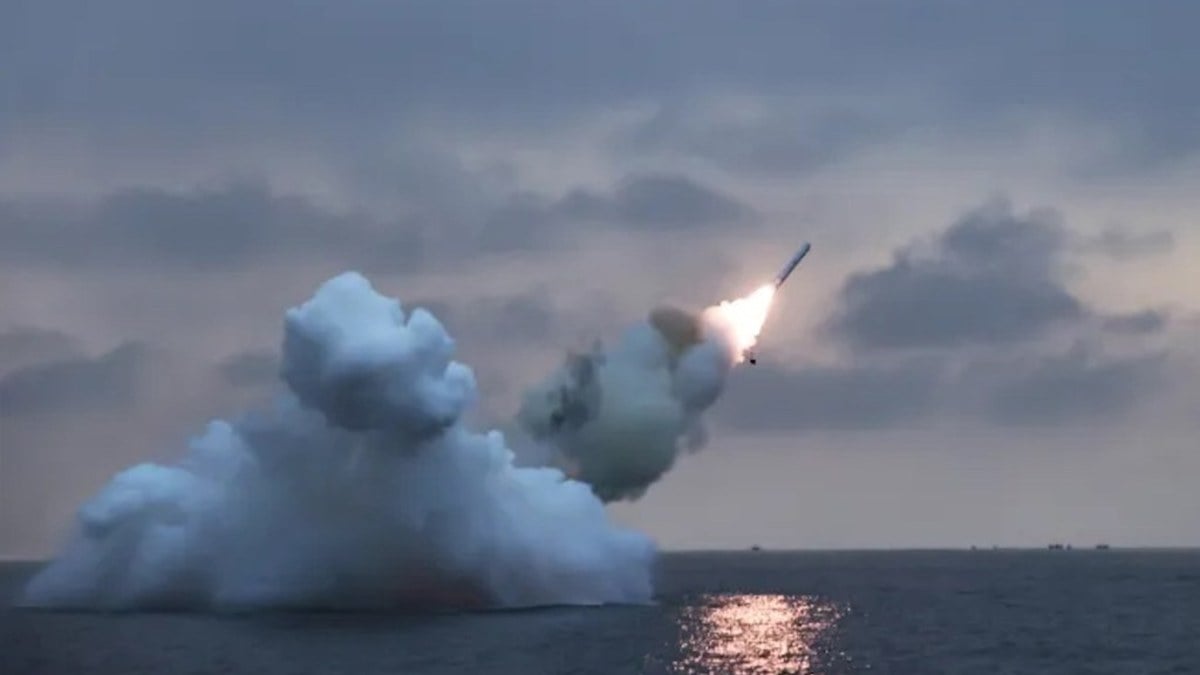
- Key facts & numbersNorth Korea test-fired two submarine-launched strategic cruise missiles into the Sea of Japan from the 3,000-ton Hero Kim Kun Ok diesel submarine — its first public underwater cruise missile test in nearly three years, overseen by senior defense officials Kim Jong Sik and Jang Chang Ha. South Korea's Joint Chiefs of Staff assessed that one missile was fired from a vertical launch system while the second was deployed horizontally from a torpedo tube, a staggered tactic designed to complicate air defense radar detection. Sukjoon Yoon's October 2023 RSIS report identifies structural weaknesses in the Hero Kim Kun Ok: it breaks the standard Romeo-class 10:1 length-to-width ratio, has an elevated center of gravity, an unreliable superstructure, and added stabilizers making it considerably noisier and easier to detect.
- What happens nextThe test is a milestone, but the sub itself is a leaky compromise: broken hull ratio, elevated center of gravity, noisy stabilizers. The real story is the unbuilt 8,700-ton nuclear sub.
- North Korea test-fired two submarine-launched strategic cruise missiles into the Sea of Japan from the 3,000-ton Hero Kim Kun Ok diesel submarine — its first public underwater cruise missile test in nearly three years, overseen by senior defense officials Kim Jong Sik and Jang Chang Ha.
- South Korea's Joint Chiefs of Staff assessed that one missile was fired from a vertical launch system while the second was deployed horizontally from a torpedo tube, a staggered tactic designed to complicate air defense radar detection.
- Sukjoon Yoon's October 2023 RSIS report identifies structural weaknesses in the Hero Kim Kun Ok: it breaks the standard Romeo-class 10:1 length-to-width ratio, has an elevated center of gravity, an unreliable superstructure, and added stabilizers making it considerably noisier and easier to detect.
- Hong Min's September 2023 KINU report outlines North Korea's dual-track naval strategy: retrofitting approximately 20 aging Romeo-class submarines with vertical launch tubes for short-term tactical deployment, while pursuing true nuclear-powered SSN/SSBN submarines as a long-term goal.
Why It Matters
North Korea's distributed cruise missile launch capability across both surface ships and retrofitted submarines complicates South Korean, US, and Japanese anti-submarine tracking across multiple coastal axes, but until Pyongyang fields a quiet, domestically proven nuclear propulsion system — potentially with Russian reactor assistance — its undersea deterrent remains structurally compromised and detectably noisy.
Sources Cited
Related Coverage
Ask SkimNews
The day’s news in one short email, every morning.
Free. One email a day. Unsubscribe in one click.