Gulf Turns to China as Iran War Shakes US Security Pact
The 30-Second Skim7 points
- What happenedFollowing nearly two months of Iran war strikes that exposed the fragility of the US security umbrella, Gulf states are accelerating economic and financial ties with China as a pragmatic hedge, though military dependence on Washington remains intact.
- Key facts & numbersThe Iran war struck all Gulf states with missile and drone attacks over nearly two months, materially weakening both the region's stability-based economic model and the decades-old US oil-for-security architecture, the article argues. China-GCC trade reached approximately $300 billion in the year following Xi Jinping's 2023 Riyadh GCC Summit visit, cementing Beijing as the region's primary trading partner and launching a comprehensive strategic alignment. Green energy is the first pillar of deeper integration, with China holding over 80% of global solar manufacturing capacity, 70% of global EV production, and roughly 50% growth in wind turbine exports in 2025.
- What happens nextThe piece frames this as a hedge, not a replacement. US still owns 54% of regional arms and ~45,000 troops. Real story is diversification anxiety, not a bloc switch.
- The Iran war struck all Gulf states with missile and drone attacks over nearly two months, materially weakening both the region's stability-based economic model and the decades-old US oil-for-security architecture, the article argues.
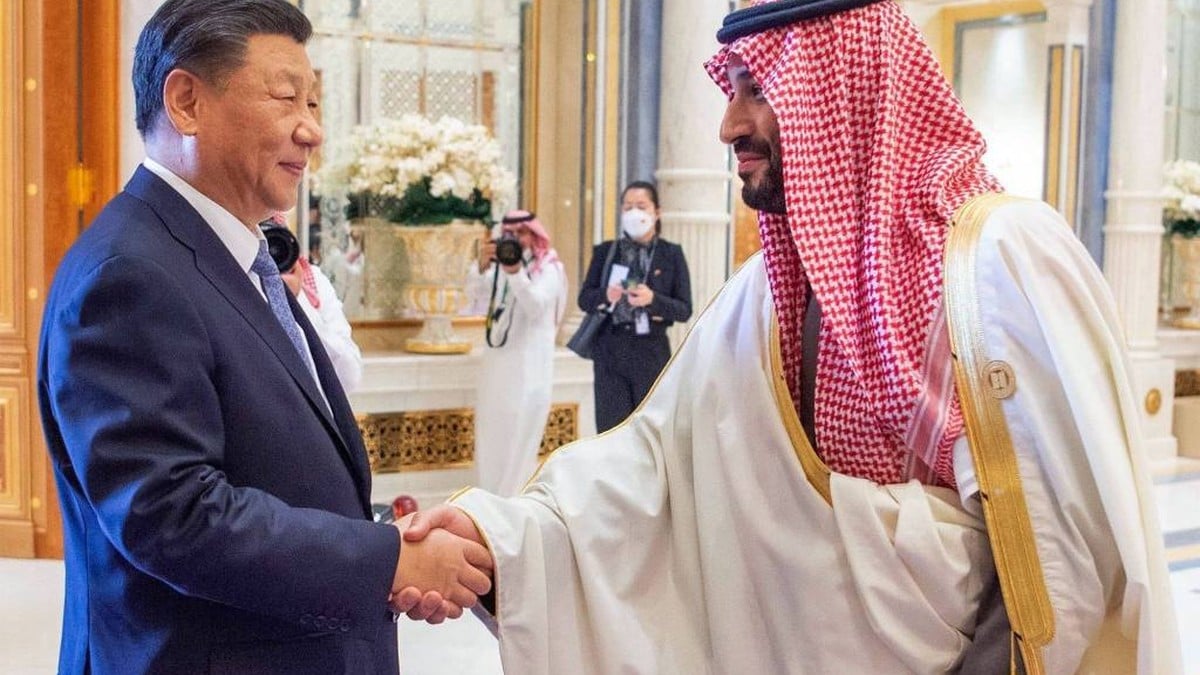
- China-GCC trade reached approximately $300 billion in the year following Xi Jinping's 2023 Riyadh GCC Summit visit, cementing Beijing as the region's primary trading partner and launching a comprehensive strategic alignment.
- Green energy is the first pillar of deeper integration, with China holding over 80% of global solar manufacturing capacity, 70% of global EV production, and roughly 50% growth in wind turbine exports in 2025.
- The mBridge project, a digital currency platform between the central banks of China and the UAE, is testing cross-border settlement without Western intermediary banks as part of BRICS+ financial integration efforts.
Why It Matters
By deepening a $300 billion trade relationship with China while still hosting 40,000-50,000 US troops, Gulf states are building a multipolar insurance policy — diversifying economic dependence on Beijing without surrendering Washington's security umbrella. The mBridge digital currency experiment and CPEC corridor integration now test whether the petrodollar system can coexist with parallel financial rails.
Background & Timeline
- ContextThe erosion of regional stability, rather than specific geopolitical events, appears to be the primary driver for Gulf nations seeking new economic and strategic alignments.
Sources Cited
Related Coverage
Ask SkimNews
The day’s news in one short email, every morning.
Free. One email a day. Unsubscribe in one click.