Israel Strikes Iran's Nuclear Sites; Iran Retaliates
The 30-Second Skim7 points
- What happenedIsrael struck roughly 100 targets across Iran with about 200 aircraft and pre-planted Mossad drones, killing 78 people including Iran's top military commanders, before Iran retaliated with waves of ballistic missiles killing at least three in Tel Aviv and Rishon LeZion.
- Key facts & numbersIsrael launched an aerial assault on Iran's nuclear program and military leadership using about 200 aircraft against roughly 100 targets, with Mossad having pre-positioned explosive drones inside Iran to take out air defenses; Iran's UN ambassador said 78 people were killed and more than 320 wounded. Iran retaliated by firing waves of ballistic missiles and more than 100 drones at Israel, killing at least three people — one woman at Beilinson Hospital in Tel Aviv and two in Rishon LeZion — and wounding dozens, including one woman critically injured under rubble in the Tel Aviv area. Among those killed were three of Iran's top military commanders: armed forces chief Gen. Mohammad Bagheri, Revolutionary Guard commander Gen. Hossein Salami, and the head of the Guard's ballistic missile program, Gen. Amir Ali Hajizadeh.
- What happens nextIran is blaming the U.S. — not Israel — for derailing the Oman nuclear talks: 'The U.S. did a job that made the talks become meaningless.' That single quote reframes Trump's 'make a deal' pressure.
- Israel launched an aerial assault on Iran's nuclear program and military leadership using about 200 aircraft against roughly 100 targets, with Mossad having pre-positioned explosive drones inside Iran to take out air defenses; Iran's UN ambassador said 78 people were killed and more than 320 wounded.
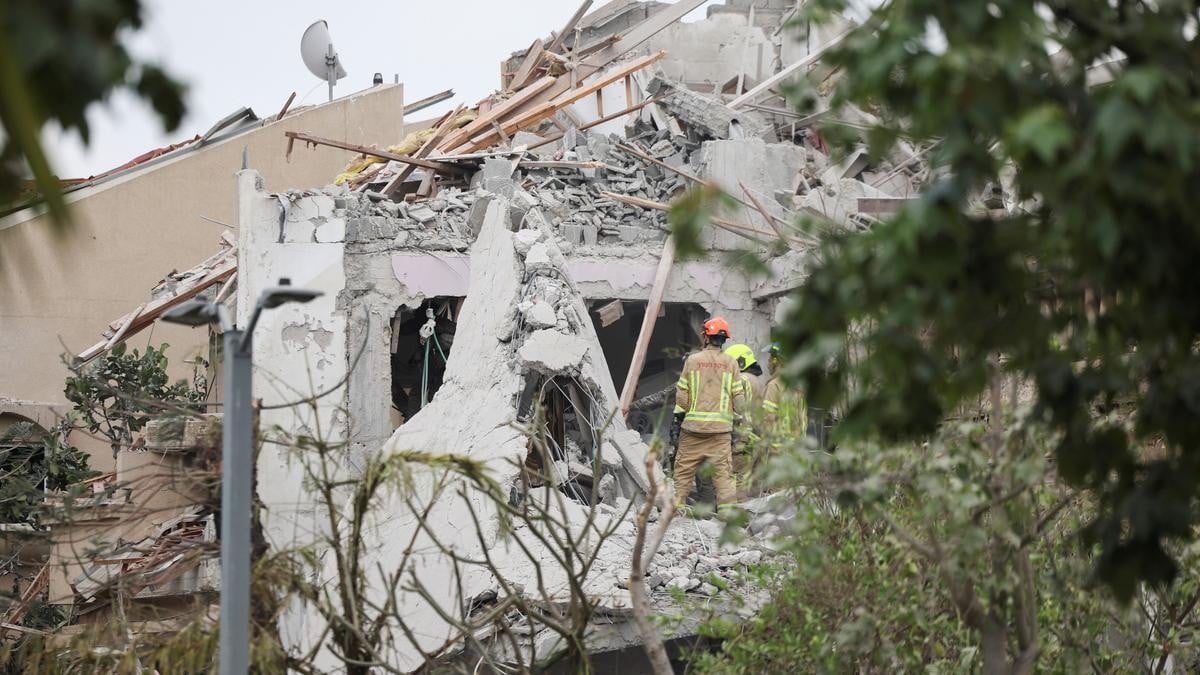
- Iran retaliated by firing waves of ballistic missiles and more than 100 drones at Israel, killing at least three people — one woman at Beilinson Hospital in Tel Aviv and two in Rishon LeZion — and wounding dozens, including one woman critically injured under rubble in the Tel Aviv area.
- Among those killed were three of Iran's top military commanders: armed forces chief Gen. Mohammad Bagheri, Revolutionary Guard commander Gen. Hossein Salami, and the head of the Guard's ballistic missile program, Gen. Amir Ali Hajizadeh.
- UN nuclear chief Rafael Grossi told the Security Council the above-ground section of the Natanz enrichment facility was destroyed along with its electrical infrastructure and a section that enriched uranium up to 60%, though the underground centrifuge hall did not appear directly hit.
Why It Matters
Iran's planned Sunday nuclear talks in Oman collapsed into 'meaningless' rhetoric as three of its top military commanders — including the Revolutionary Guard's ballistic missile chief — were killed and Natanz's above-ground enrichment infrastructure was destroyed. Israeli officials told media the operation is built to last up to two weeks, signaling the conflict is nowhere near a single-day exchange.
Sources Cited
Related Coverage
Ask SkimNews
The day’s news in one short email, every morning.
Free. One email a day. Unsubscribe in one click.