Japan Deploys Missiles Capable of Hitting Shanghai
The 30-Second Skim7 points
- What happenedJapan’s deployment of long-range missiles and hypersonic weapons, backed by U.S. support, is escalating tensions with China ahead of the Trump-Xi summit, raising risks of unintended conflict in East Asia.
- Key facts & numbersJapan deployed its new Type 25 long-range missile with a 600-mile range to Camp Kengun on March 31, capable of reaching Shanghai and marking a major shift from its previous 120-mile-range missiles. Japan deployed the Hyper Velocity Gliding Projectile (HVGP), its first hypersonic weapon, at Camp Fuji on March 31, with the State Department approving $340 million in U.S. equipment sales to support the program a week earlier. China condemned Japan’s long-range missile deployments as exceeding self-defense needs, warning that 'neo-militarism is casting a long shadow over regional peace and stability'.
- What happens nextOther sources highlight Japan’s hawkish turn and nuclear posture shift, but downplay that U.S. support—like the $340M hypersonic sale—is what makes Japan’s reach truly dangerous to China.
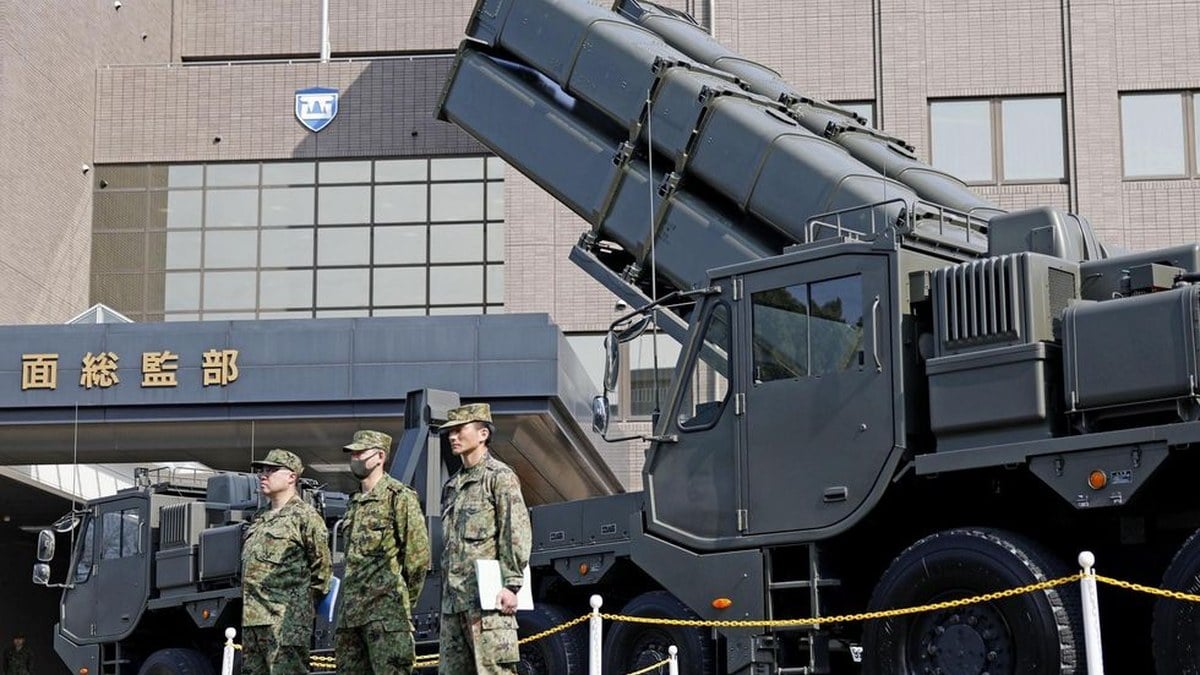
- Japan deployed its new Type 25 long-range missile with a 600-mile range to Camp Kengun on March 31, capable of reaching Shanghai and marking a major shift from its previous 120-mile-range missiles.
- Japan deployed the Hyper Velocity Gliding Projectile (HVGP), its first hypersonic weapon, at Camp Fuji on March 31, with the State Department approving $340 million in U.S. equipment sales to support the program a week earlier.
- China condemned Japan’s long-range missile deployments as exceeding self-defense needs, warning that 'neo-militarism is casting a long shadow over regional peace and stability'.
- Prime Minister Sanae Takaichi affirmed Japan’s willingness to militarily intervene if China blockades Taiwan, breaking with decades of restraint and prompting China’s foreign minister to say Japan had 'crossed a red line'.
Why It Matters
Japan’s new counterstrike posture, backed by U.S. equipment and basing support, increases the likelihood of miscalculation in a crisis—where a single incident could trigger a chain reaction pulling the U.S. into conflict. The $340 million U.S. sale and shared bases make Washington a direct enabler, not just a bystander.
Sources Cited
- Responsible StatecraftJapan's new long-range missiles put US-China on collision course
Related Coverage
Ask SkimNews