Japan’s Nuclear Submarine Push Draws U.S. Pushback
The 30-Second Skim
- What happened: Lyle Goldstein argues that Washington should restrain Tokyo’s push for nuclear submarines, favoring advanced air defenses, mine countermeasures and base hardening over a more offensive submarine posture in East Asia.
- Key facts & numbers: Japan is considering whether to create a nuclear-submarine program modeled on Australia and South Korea after its decades-old, self-imposed ceiling of about 1% of GDP for defense spending fell away. Global Times published an early-November editorial calling Japanese Defense Minister Shinjiro Koizumi "obsessed" with nuclear submarines, arguing that their fuel cycle and nuclear-material management overlap with a nuclear-weapons path and that Washington seeks to arm Japan as a "forward-deployed spearhead." AUKUS is the existing 2021 program among the United States, Australia and the United Kingdom into which Japan could integrate for joint nuclear-submarine construction; Tokyo already has the trained workforce and industrial capabilities to build such a force.
- What happens next: The overlooked upside: nuclear boats could prevent Japan’s own bomb and fit AUKUS; the author still rejects the political escalation.
- Japan is considering whether to create a nuclear-submarine program modeled on Australia and South Korea after its decades-old, self-imposed ceiling of about 1% of GDP for defense spending fell away.
- Global Times published an early-November editorial calling Japanese Defense Minister Shinjiro Koizumi "obsessed" with nuclear submarines, arguing that their fuel cycle and nuclear-material management overlap with a nuclear-weapons path and that Washington seeks to arm Japan as a "forward-deployed spearhead."
- AUKUS is the existing 2021 program among the United States, Australia and the United Kingdom into which Japan could integrate for joint nuclear-submarine construction; Tokyo already has the trained workforce and industrial capabilities to build such a force.
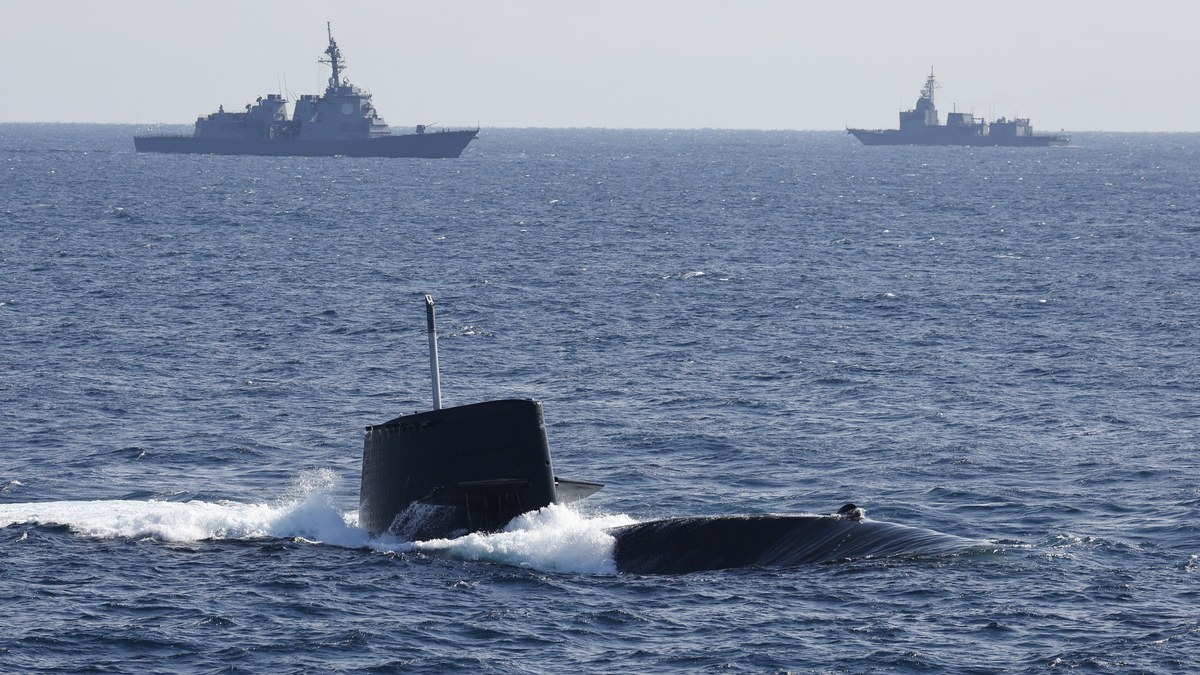
- Japan already operates some of the world’s most advanced air-independent-propulsion diesel submarines; nuclear boats carrying land-attack missiles would divert scarce conventional-defense resources, shift the Maritime Self-Defense Force toward offense and face shallow-water constraints along much of the East Asian littoral.
Why It Matters
Washington must balance Japan’s defense buildup against the risk of deeper China-Japan tensions. Three defensive priorities—air defenses, mine countermeasures and base hardening—fit Japan’s defensive mission, while a nuclear fleet carrying land-attack missiles would divert scarce resources and turn the Maritime Self-Defense Force toward offense.
Sources Cited
Related Coverage
Ask SkimNews