North Korea tests solid-fuel ICBM with carbon-fibre body
The 30-Second Skim
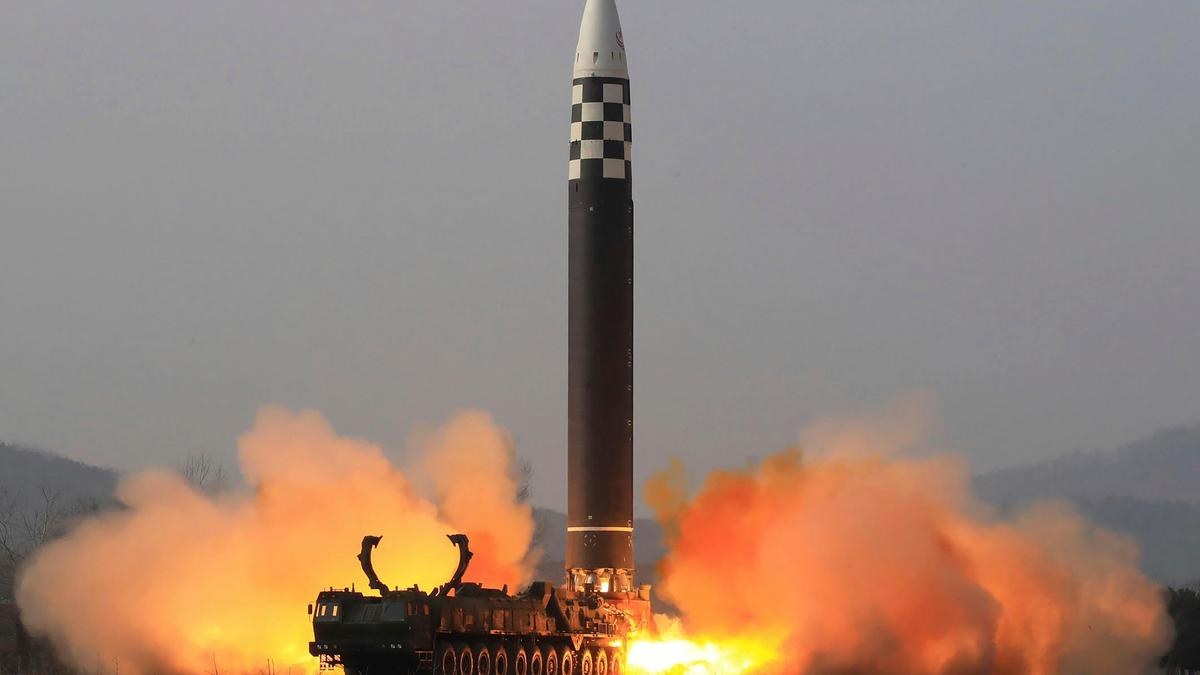
- What happened: North Korea is developing a new carbon-fibre intercontinental ballistic missile powered by a solid-fuel engine, designed to carry multiple warheads and strike anywhere in the U.S., according to South Korean lawmakers briefed by intelligence officials.
- Key facts & numbers: North Korea conducted a ground test of a solid-fuel rocket engine on March 28, 2026, which Seoul assesses is intended for a new intercontinental ballistic missile (ICBM). North Korea built the new ICBM’s airframe with carbon fibre, a lightweight yet strong material that allows for extended range and the potential to carry heavier or multiple warheads, according to South Korean lawmaker Park Sun-won. Kim Jong Un personally oversaw the March 28 engine test and described it as a significant upgrade to the country’s strategic forces, state media confirmed.
- What happens next: Other sources frame this as another ICBM test, but the real story is the combo: carbon fibre + solid fuel = harder-to-stop, faster-launching nuke missiles. That’s a game-changer the headlines are underselling.
- North Korea conducted a ground test of a solid-fuel rocket engine on March 28, 2026, which Seoul assesses is intended for a new intercontinental ballistic missile (ICBM).
- North Korea built the new ICBM’s airframe with carbon fibre, a lightweight yet strong material that allows for extended range and the potential to carry heavier or multiple warheads, according to South Korean lawmaker Park Sun-won.
- Kim Jong Un personally oversaw the March 28 engine test and described it as a significant upgrade to the country’s strategic forces, state media confirmed.
- South Korea's National Intelligence Service (NIS) briefed lawmakers that the new solid-fuel engine likely has greater thrust than the 2024 model, which was already capable of reaching the U.S. mainland.
Why It Matters
Solid-fuel engines allow faster launches than liquid-fueled systems, reducing detection time for adversaries. Combined with carbon-fibre construction enabling multi-warhead delivery, this shift marks a qualitative leap in North Korea’s ability to threaten the U.S. mainland with less warning, altering deterrence calculations for Seoul and Washington.
Sources Cited
Related Coverage
Ask SkimNews