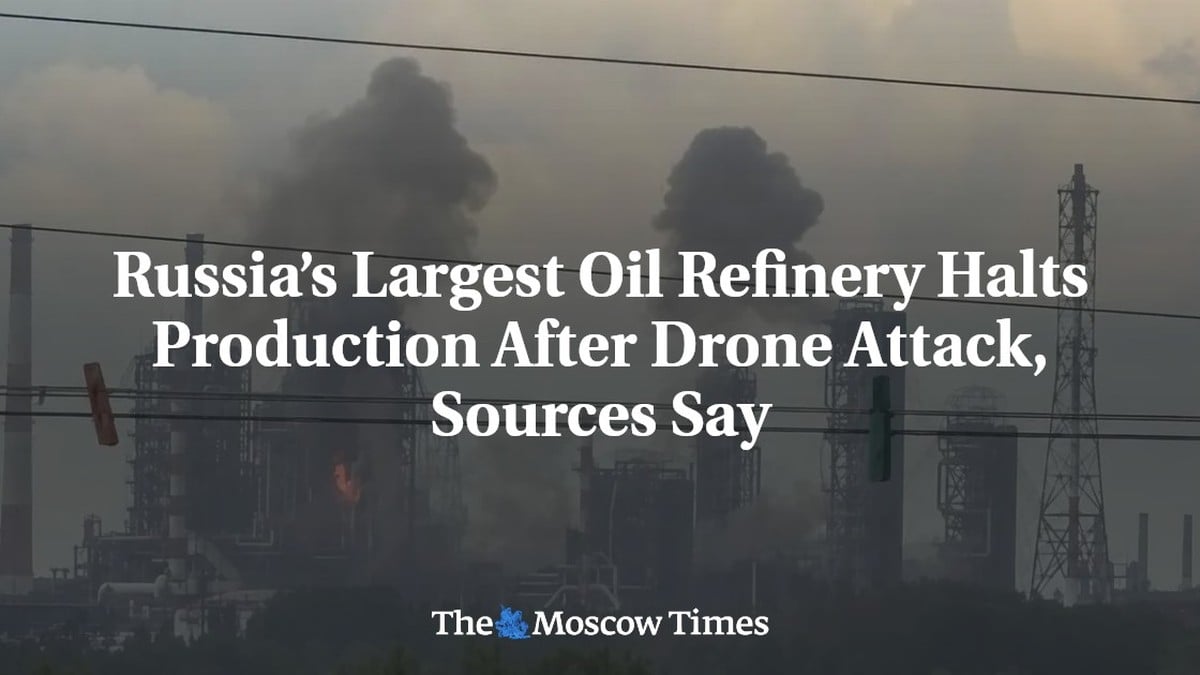
Ukraine Drones Hit Russia's Largest Refinery
The 30-Second Skim7 points
- What happenedUkraine's drone strike forced Russia's largest oil refinery in Omsk, Siberia, to halt operations, with two primary processing units accounting for 75% of capacity taken offline, likely worsening fuel shortages across the country.
- Key facts & numbersUkraine struck Russia's largest oil refinery in the Omsk region of western Siberia on Monday, one of its longest-range attacks in a conflict now well into its fifth year, according to industry sources. CDU-10, which accounts for 38% of the plant's capacity at 24,580 metric tons per day, caught fire and was damaged in the attack, while CDU-11 (37% of capacity, 24,000 tons/day) was also taken offline because essential network links were hit and could resume "in the near future." Anatoly Seryshev, President Vladimir Putin's representative in Siberia, confirmed facilities were damaged with no personnel injured and said damage assessment and restoration work are underway.
- What happens nextUkraine hit Russia's biggest refinery thousands of miles from the front. 75% of capacity is offline, and Gazprom Neft won't even comment.
- Ukraine struck Russia's largest oil refinery in the Omsk region of western Siberia on Monday, one of its longest-range attacks in a conflict now well into its fifth year, according to industry sources.
- CDU-10, which accounts for 38% of the plant's capacity at 24,580 metric tons per day, caught fire and was damaged in the attack, while CDU-11 (37% of capacity, 24,000 tons/day) was also taken offline because essential network links were hit and could resume "in the near future."
- Anatoly Seryshev, President Vladimir Putin's representative in Siberia, confirmed facilities were damaged with no personnel injured and said damage assessment and restoration work are underway.
- Gazprom Neft, which owns the Omsk refinery, did not immediately respond to a request for comment, and the plant stopped selling gasoline and diesel on the St. Petersburg International Mercantile Exchange on Tuesday.
Why It Matters
The loss of roughly 75% of primary refining capacity at Russia's top gasoline producer — its largest facility, in Siberia — directly deepens the country's existing fuel shortages, with the only theoretical backup being two mothballed units that would still leave a significant production gap.
Sources Cited
Related Coverage
Ask SkimNews
The day’s news in one short email, every morning.
Free. One email a day. Unsubscribe in one click.