Trump, Iran's Ghalibaf Trade Threats at Switzerland
The 30-Second Skim7 points
- What happenedPresident Trump and Iran's lead negotiator Mohammad Bagher Ghalibaf exchanged sharp public warnings as the first round of direct US-Iran talks opened in Lucerne, Switzerland, aimed at reaching a final deal within 60 days.
- Key facts & numbersTrump and Iran's lead negotiator Mohammad Bagher Ghalibaf exchanged threats as a first round of direct US-Iran talks opened in Lucerne, Switzerland, following the initial agreement to end the war signed earlier in the week. Trump threatened to "hit Iran very hard again" if Hezbollah did not stop clashing with Israeli troops in southern Lebanon; Ghalibaf dismissed the threat and said Iran's armed forces were prepared for confrontation. The initial agreement commits both sides to reach a final deal within 60 days, reopen the Strait of Hormuz (through which 20% of the world's oil and gas travels), end fighting on "all fronts" including Lebanon, and includes a $300bn (£224bn) reconstruction plan for Iran plus US termination of "all types of sanctions."
- What happens nextThe 60-day deal is already wobbling on day one: Lebanon strikes killed 67 people after the ceasefire was supposed to hold, Iran claims the Strait is shut while tankers keep transiting, and the two lead negotiators are publicly threatening each other. The nuclear question — the whole reason for the war — isn't even on the table yet.
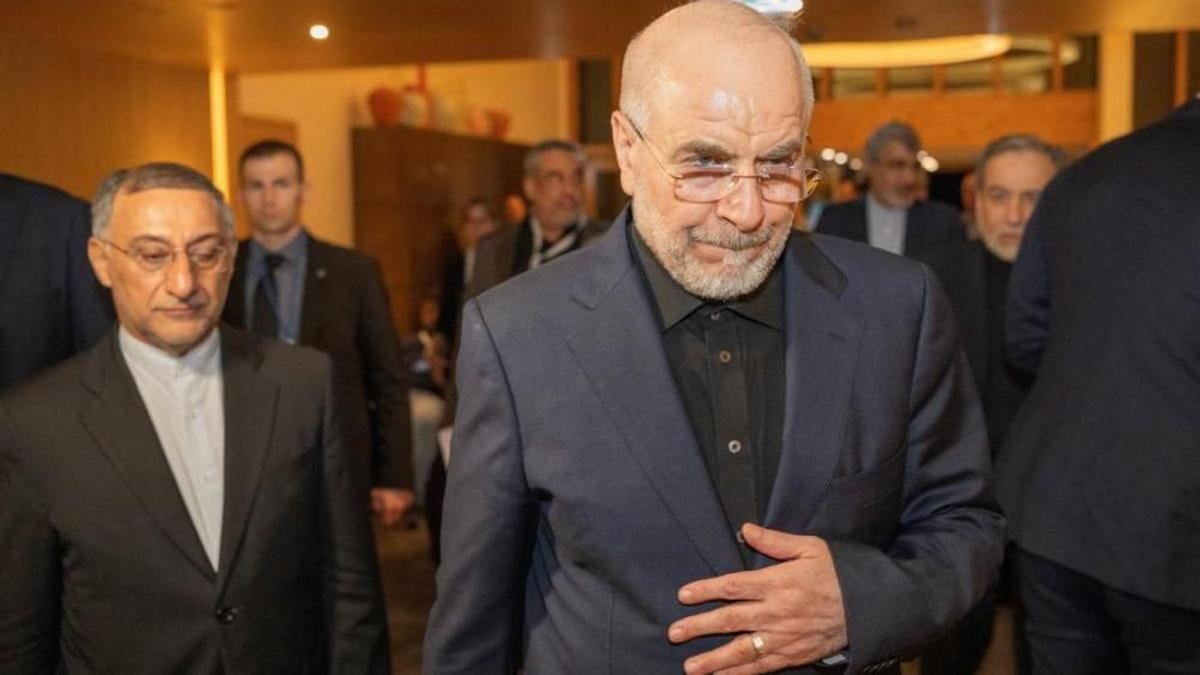
- Trump and Iran's lead negotiator Mohammad Bagher Ghalibaf exchanged threats as a first round of direct US-Iran talks opened in Lucerne, Switzerland, following the initial agreement to end the war signed earlier in the week.
- Trump threatened to "hit Iran very hard again" if Hezbollah did not stop clashing with Israeli troops in southern Lebanon; Ghalibaf dismissed the threat and said Iran's armed forces were prepared for confrontation.
- The initial agreement commits both sides to reach a final deal within 60 days, reopen the Strait of Hormuz (through which 20% of the world's oil and gas travels), end fighting on "all fronts" including Lebanon, and includes a $300bn (£224bn) reconstruction plan for Iran plus US termination of "all types of sanctions."
- Despite the deal, Israeli air strikes have killed at least 67 people in Lebanon and Hezbollah attacks killed 5 Israeli soldiers since the agreement; the US declared a new Israel-Hezbollah ceasefire on Friday, and Iran announced Saturday it had shut the Strait of Hormuz in response.
Why It Matters
The 60-day clock toward a final US-Iran deal is already under strain because the 'all fronts' ceasefire condition is breaking in Lebanon, where Israeli strikes killed at least 67 people post-agreement. Iran is holding the Strait of Hormuz — 20% of global oil and gas — as leverage, while the $300bn reconstruction package and full sanctions termination form its core incentive. With Trump and Ghalibaf trading threats on day one, Lebanon is the immediate tripwire that could collapse the talks.
Sources Cited
Related Coverage
Ask SkimNews
The day’s news in one short email, every morning.
Free. One email a day. Unsubscribe in one click.