Brain's Hidden Messaging Network Rewrites Neuroscience
The 30-Second Skim
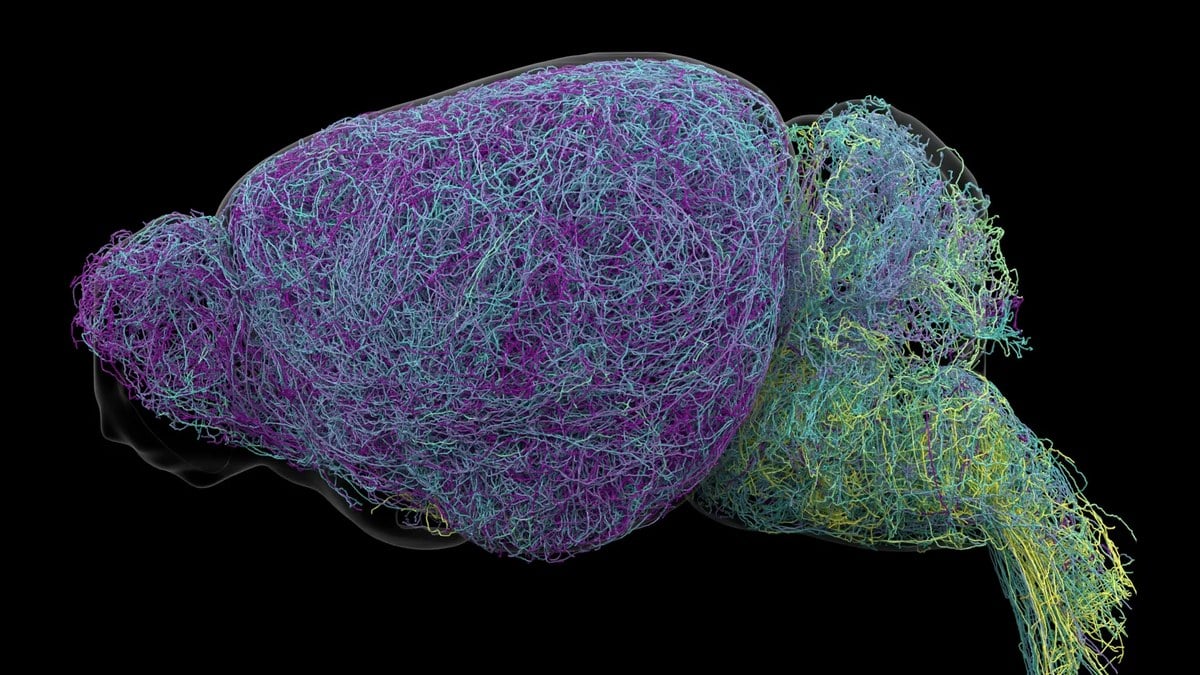
- What happened: A study published in Nature reveals that the locus coeruleus, a small brainstem region, sends precise, destination-specific norepinephrine signals rather than broadcasting uniformly. This redefines its role in regulating attention, learning, and behavior in mice.
- Key facts & numbers: The research, published October 23, 2026, involved imaging nearly 35,000 neurons and analyzing 400,000 cells. One LC neuron had a reconstructed axon length of 70.32 cm, among the longest ever recorded in a mouse.
- What happens next: Next, researchers aim to map similar pathways in human brain tissue and explore how selective targeting of LC circuits could lead to precision treatments for Alzheimer’s, ADHD, and mood disorders.
Why It Matters
This discovery could revolutionize treatments for neurological and psychiatric conditions by enabling therapies that target specific LC pathways, minimizing side effects from broad norepinephrine modulation. Conditions like ADHD, depression, and Alzheimer’s—where LC neurons degenerate early—may benefit from circuit-specific interventions.
The finding also parallels dopamine system organization, suggesting a unified framework for neuromodulation. Pharmaceutical and neurotech industries may pivot toward precision neuromodulators, while the BRAIN Initiative could prioritize circuit-level brain mapping for clinical translation.
How Outlets Are Framing It
- Science Daily / Neuroscience Focus: Emphasizes the mechanistic breakthrough in LC circuitry and its implications for learning and behavior, highlighting imaging and genetic methods.
- Phys.org / Comparative Science Lens: Contrasts the brain discovery with unrelated Mars magma findings, underscoring how 'hidden systems' are being revealed across disciplines.
- Allen Institute / Translational Research Angle: Stresses therapeutic potential, framing the LC as a future target for selective neuropsychiatric drugs.
Background & Timeline
- October 2026: Allen Institute team publishes in Nature, using BRAIN Initiative-supported tools to decode LC neuron pathways in mice.
- Prior Assumption: For decades, the locus coeruleus was believed to broadcast norepinephrine diffusely, acting like a brain-wide alarm system.
Sources Cited
Related Coverage
Ask SkimNews