Buckwalter Wants Copy of His Own Brain Data
The 30-Second Skim
- What happened: J. Galen Buckwalter gave a Caltech-USC brain-computer interface study two years of neural data, then found that getting a copy of his own brain recordings was far more complicated than providing them.
- Key facts & numbers: J. Galen Buckwalter agreed to provide his neural data for a study jointly conducted by Caltech and the University of Southern California, then asked for a copy of his own recordings — a request that proved complicated. Six chips implanted during Buckwalter's seven-hour craniotomy record the firing of his brain when he thinks, speaks or moves, with three metal knobs screwed into his skull connecting the chips by wire to a computer for analysis. Sean Darcy, a Caltech Ph.D. student researcher, pointed out three colored lines vibrating on a monitor and identified the chip in Buckwalter's motor cortex, drawing an approving "That's nice" from the 70-year-old participant.
- What happens next: Hook: data rights. But the excerpt never says what happened when he asked for a copy; the texture is a cheerful, two-year gift of his brain data.
- J. Galen Buckwalter agreed to provide his neural data for a study jointly conducted by Caltech and the University of Southern California, then asked for a copy of his own recordings — a request that proved complicated.
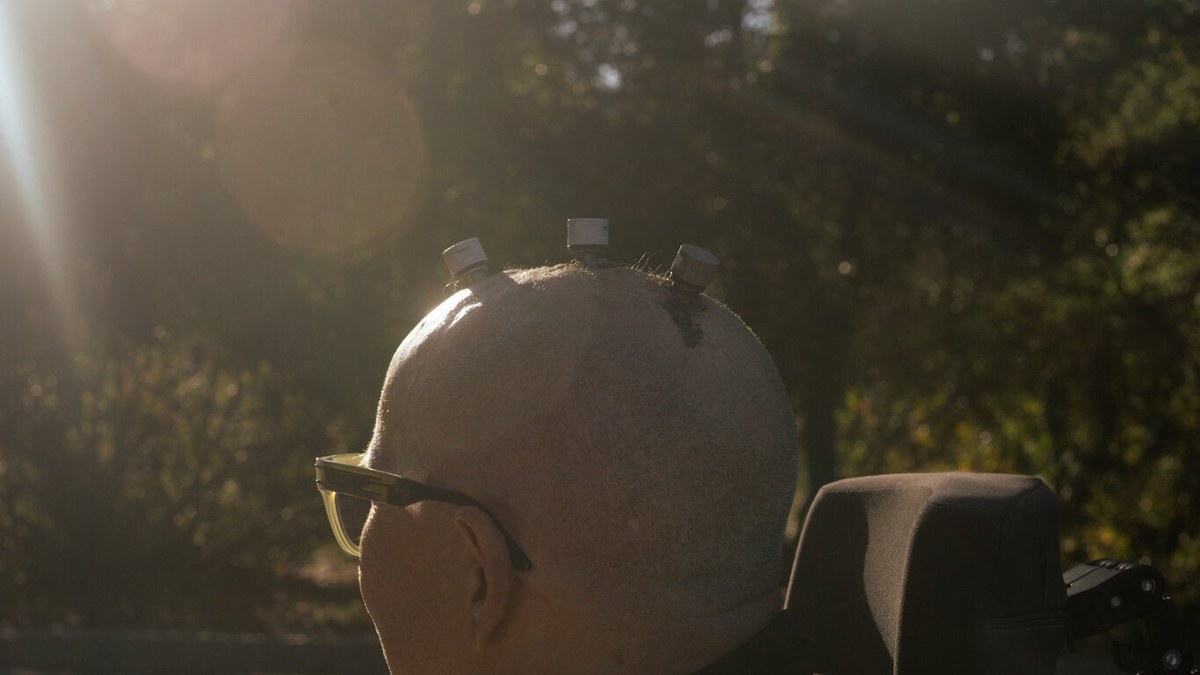
- Six chips implanted during Buckwalter's seven-hour craniotomy record the firing of his brain when he thinks, speaks or moves, with three metal knobs screwed into his skull connecting the chips by wire to a computer for analysis.
- Sean Darcy, a Caltech Ph.D. student researcher, pointed out three colored lines vibrating on a monitor and identified the chip in Buckwalter's motor cortex, drawing an approving "That's nice" from the 70-year-old participant.
- Buckwalter drove 15 minutes from his home to Caltech twice a week for two years to take part in the study, joining because he is almost totally paralyzed from the chest down since a teenage diving accident and wanted to make life better for others like him.
Why It Matters
For Caltech and USC, Buckwalter supplies two years of neural recordings from someone who volunteered specifically to help people like him; for Buckwalter, six implanted chips produced data he asked for and could not simply get back. That gap between contribution and access is the concrete stake.
Sources Cited
Related Coverage
Ask SkimNews