'Hobbit' humans scavenged Komodo leftovers, study finds
The 30-Second Skim7 points
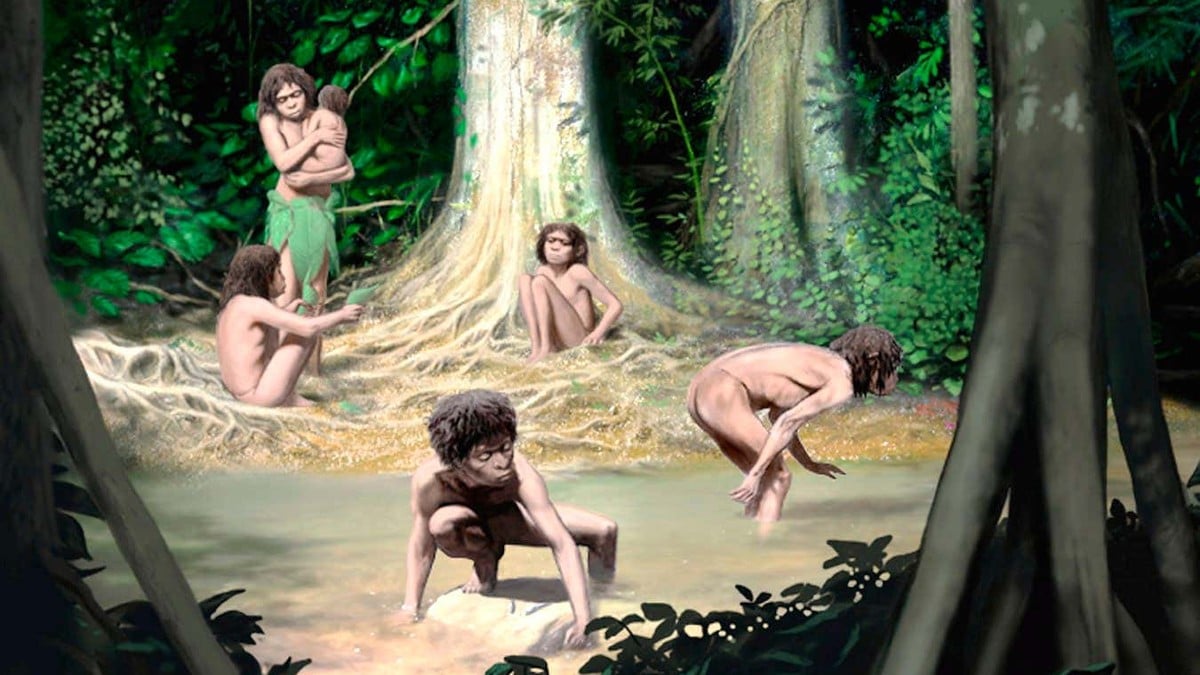
- What happenedA new bone-mark analysis suggests the meter-tall Homo floresiensis did not hunt Flores's dwarf elephants but scavenged carcasses already opened by Komodo dragons, undermining long-held claims that the 'hobbits' had advanced cognitive abilities.
- Key facts & numbersHomo floresiensis likely scavenged Komodo dragon leftovers rather than hunted dwarf elephants, according to a study of over 3,000 Stegodon bone fragments from Liang Bua cave on Flores, Indonesia. Elizabeth Veatch at the Smithsonian Institution ran an experiment at Zoo Atlanta in which a Komodo dragon was fed a dead goat; of 72 bones left behind, 26 carried 192 toothmarks, with dragons favoring meat-rich hindquarters and forequarters. Stone-tool cut marks on the Stegodon bones appeared mainly on less meaty parts—cranial bones and thoracic vertebrae—the inverse of what first-access hunting would predict, the researchers reported.
- What happens nextBuried detail: only 1 of 3,000+ dwarf elephant bones showed fire evidence—and that one was probably contaminated by later humans. The 'advanced behavior' story has been quietly collapsing for years; this study just confirmed it.
- Homo floresiensis likely scavenged Komodo dragon leftovers rather than hunted dwarf elephants, according to a study of over 3,000 Stegodon bone fragments from Liang Bua cave on Flores, Indonesia.
- Elizabeth Veatch at the Smithsonian Institution ran an experiment at Zoo Atlanta in which a Komodo dragon was fed a dead goat; of 72 bones left behind, 26 carried 192 toothmarks, with dragons favoring meat-rich hindquarters and forequarters.
- Stone-tool cut marks on the Stegodon bones appeared mainly on less meaty parts—cranial bones and thoracic vertebrae—the inverse of what first-access hunting would predict, the researchers reported.
- Only one of 3,000+ Stegodon bones linked to H. floresiensis showed fire exposure, and that bone was likely contaminated by later humans; by contrast, roughly a fifth of ~7,000 giant-rat bones from Homo sapiens layers in the same cave were burned.
Why It Matters
By stripping 'hobbits' of both advanced fire use and big-game hunting, the study reframes a 20-year-old debate and aligns the species' behavior with its small brain and body—forcing researchers to choose between two competing evolutionary origins: descent from small-bodied hominins with a wider range, or shrinkage from larger Homo erectus.
Background & Timeline
- ContextReframing the hobbits as scavengers shifts the evidentiary burden: claims about their cognition will now need direct evidence of toolmaking or cooperation, not inferences drawn from prey bone marks.
Sources Cited
Related Coverage
Ask SkimNews
The day’s news in one short email, every morning.
Free. One email a day. Unsubscribe in one click.