Texas A&M Study Triggers Limb Regeneration in Mice
The 30-Second Skim7 points
- What happenedTexas A&M researchers demonstrated that mammals can be pushed toward regeneration rather than scarring by sequentially applying two growth factors — FGF2 and BMP2 — after amputation, regrowing bone, joints, ligaments, and tendons in animal studies.
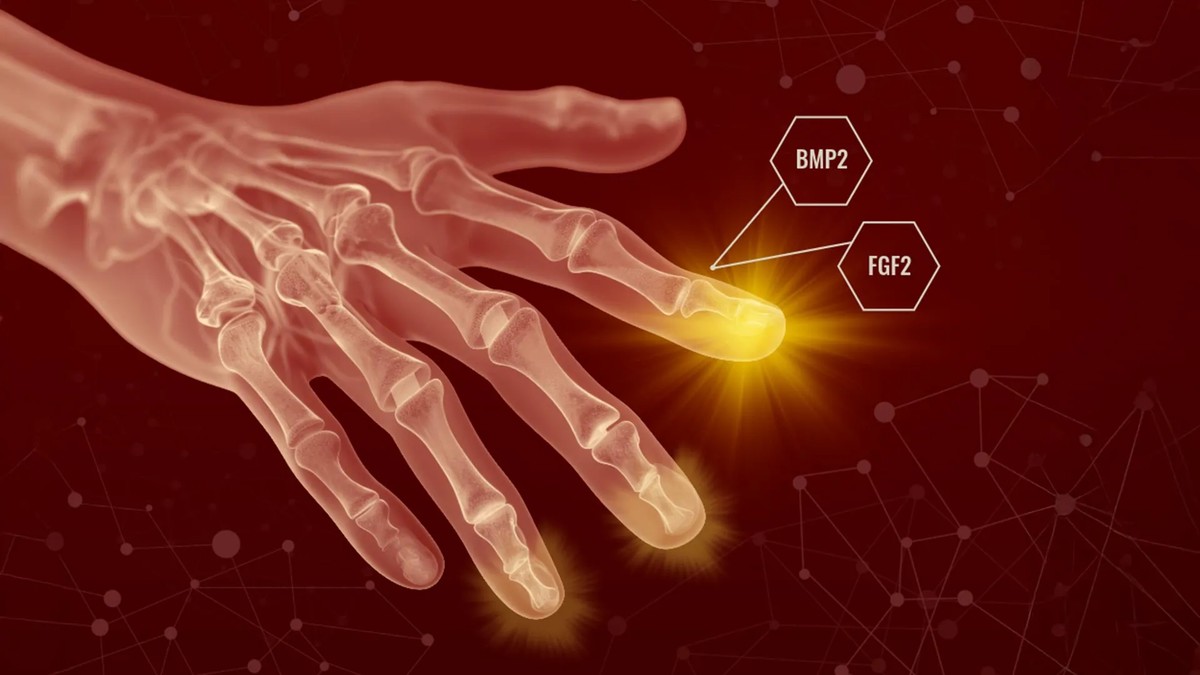
- Key facts & numbersKen Muneoka and colleagues at Texas A&M's College of Veterinary Medicine and Biomedical Sciences published a study in Nature Communications describing a two-step treatment — FGF2 applied first, then BMP2 — that redirected healing from scar formation toward tissue regrowth after amputation in animal studies. The researchers regenerated bone, joints, ligaments, and tendons without adding external stem cells, instead reprogramming fibroblasts already present at the injury site into a blastema-like structure typically seen in salamanders. The regenerated tissues were not perfect replicas of the originals, but the major structures were present and arranged in patterns resembling natural anatomy, according to Muneoka.
- What happens nextThe wild part: no stem cells required. They just told the body's own fibroblasts to stop scarring and start rebuilding — and BMP2 is already FDA-approved.
- Ken Muneoka and colleagues at Texas A&M's College of Veterinary Medicine and Biomedical Sciences published a study in Nature Communications describing a two-step treatment — FGF2 applied first, then BMP2 — that redirected healing from scar formation toward tissue regrowth after amputation in animal studies.
- The researchers regenerated bone, joints, ligaments, and tendons without adding external stem cells, instead reprogramming fibroblasts already present at the injury site into a blastema-like structure typically seen in salamanders.
- The regenerated tissues were not perfect replicas of the originals, but the major structures were present and arranged in patterns resembling natural anatomy, according to Muneoka.
- The study demonstrated positional re-specification — cells normally destined to form one tissue type were instructed to rebuild a different structure after injury, a process central to development.
Why It Matters
Regenerative medicine has long assumed mammals lack the cellular machinery to rebuild complex structures, making external stem cell delivery the dominant strategy. The Texas A&M team's finding that resident fibroblasts can be redirected — combined with BMP2's existing FDA approval — could compress the timeline from lab to clinic, offering amputees and trauma patients a path to regrown bone, tendon, and ligament tissue rather than scar.
Sources Cited
- Science DailyHumans may have hidden regenerative powers
Related Coverage
Ask SkimNews
The day’s news in one short email, every morning.
Free. One email a day. Unsubscribe in one click.