Hundreds of new moons are revealing our solar system's violent history
The 30-Second Skim7 points
- What happenedA 2025 surge in Saturn moon discoveries, including 128 newly confirmed irregular moons, is reshaping our picture of the outer solar system, with researchers arguing some moon families may have formed in collisions just 100 million years ago — potentially explaining Saturn's surprisingly youthful rings.
- Key facts & numbersResearchers announced 128 new moons around Saturn in 2025, pushing the total of known solar system moons above 450, with hundreds or thousands more thought to await discovery beyond the gas giants. Marina Brozovic at NASA's Jet Propulsion Laboratory said the scale of last year's haul caught the community off guard; astronomers had expected maybe a few dozen more moons, not the deluge that arrived. Edward Ashton at Academia Sinica in Taiwan led a 2025 study arguing the Mundilfari group of roughly 100 small Saturn moons may have formed in a collision just 100 million years ago — far more recently than the early-solar-system timeline, and a sign the outer solar system is still being dramatically reshaped.
- What happens next128 new Saturn moons in one year, a 100-million-year-old smash-up, and suddenly Saturn's rings have a suspect. The outer solar system isn't done yet.
- Researchers announced 128 new moons around Saturn in 2025, pushing the total of known solar system moons above 450, with hundreds or thousands more thought to await discovery beyond the gas giants.
- Marina Brozovic at NASA's Jet Propulsion Laboratory said the scale of last year's haul caught the community off guard; astronomers had expected maybe a few dozen more moons, not the deluge that arrived.
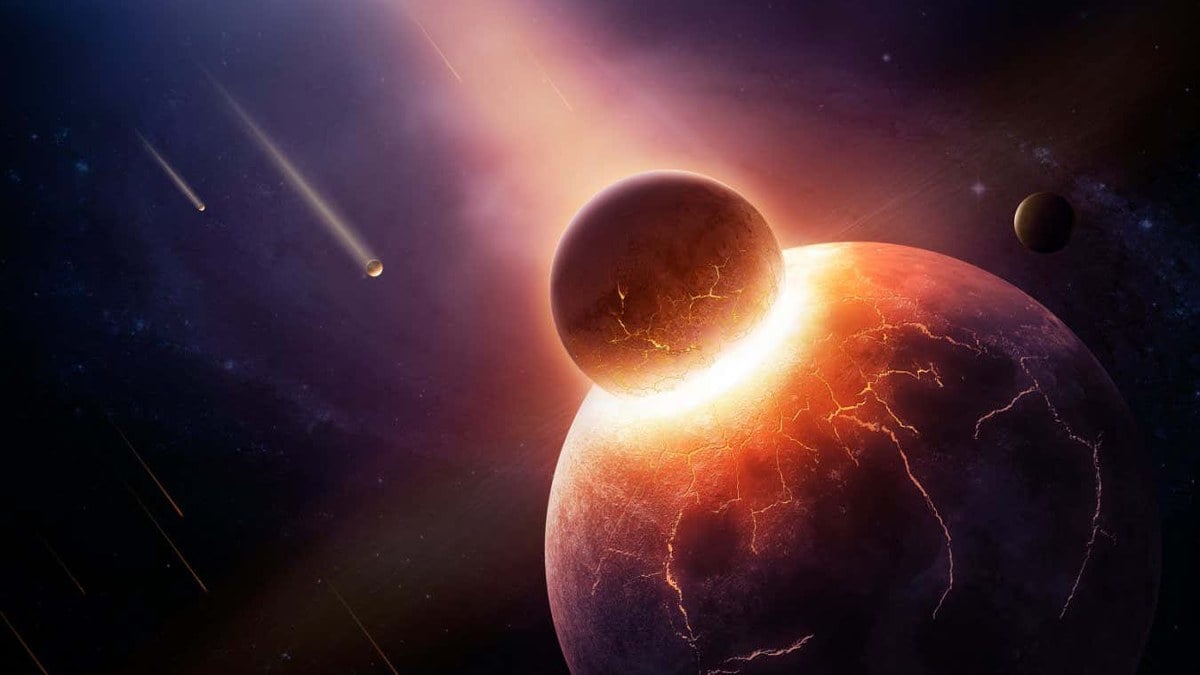
- Edward Ashton at Academia Sinica in Taiwan led a 2025 study arguing the Mundilfari group of roughly 100 small Saturn moons may have formed in a collision just 100 million years ago — far more recently than the early-solar-system timeline, and a sign the outer solar system is still being dramatically reshaped.
- NASA's Cassini spacecraft, during its final months before plunging into Saturn in 2017, revealed the planet's rings are surprisingly low in mass and clean, hinting they may be only a few hundred million years old rather than primordial.
Why It Matters
If Saturn's rings and the Mundilfari moon family both date to roughly 100 million years ago, the suspected link would dissolve a long-standing puzzle about how the rings formed while overturning the assumption that the outer solar system settled into stability billions of years ago — forcing astronomers to treat recent giant-planet collisions as a live variable, not ancient history.
Sources Cited
Related Coverage
Ask SkimNews