Light-Switchable Tattoo Ink Reverses Color Under UV
The 30-Second Skim7 points
- What happenedResearchers at the University of Colorado have unveiled 'PhotoTat' — photochromic tattoo inks implanted like traditional tattoos but switched between transparent and colored states using UV and visible light, with medical and cosmetic applications envisioned.
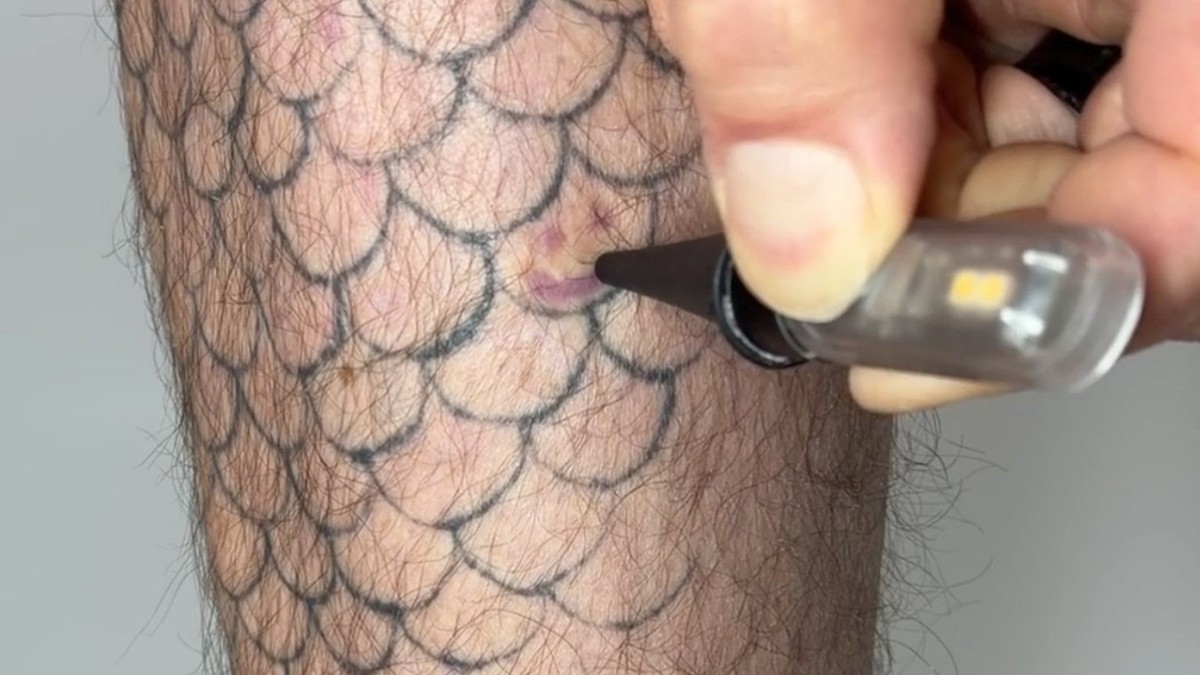
- Key facts & numbersCarson Bruns and colleagues at the University of Colorado developed 'PhotoTat,' using photochromic dyes that switch from transparent to colored under specific wavelengths; UV light writes the color in, bright visible light erases it, and the cycle repeats while the pigment stays permanently implanted. Bruns has personally worn a fish-scale PhotoTat on his own skin for over two years and reports no obvious fading, citing frequent compliments on the tattoo. The technology currently yields 16 distinguishable colors producing at least 300 shades, though white is impossible because it reflects rather than absorbs light, and a true cyan has not yet been achieved.
- What happens nextBruns has been his own guinea pig for two years — a fish-scale test tattoo with no fading yet. Bonus: flip it off before the in-laws arrive.
- Carson Bruns and colleagues at the University of Colorado developed 'PhotoTat,' using photochromic dyes that switch from transparent to colored under specific wavelengths; UV light writes the color in, bright visible light erases it, and the cycle repeats while the pigment stays permanently implanted.
- Bruns has personally worn a fish-scale PhotoTat on his own skin for over two years and reports no obvious fading, citing frequent compliments on the tattoo.
- The technology currently yields 16 distinguishable colors producing at least 300 shades, though white is impossible because it reflects rather than absorbs light, and a true cyan has not yet been achieved.
- The blue ink gradually develops a permanent purplish discoloration over many on/off cycles due to slow photo-degradation, and wearers would need sunscreen to prevent unwanted UV activation in sunlight.
Why It Matters
Radiation-cancer patients often receive permanent guide-ink markings they'd rather not carry for life; if PhotoTat clears safety trials, those guide markers could be erased after treatment. For would-be tattoo customers, the trade-off is real: reversibility comes with a 16-color cap, no white, and blue that permanently purple-shifts over time.
Sources Cited
- New ScientistTattoos could be turned on and off with light
Related Coverage
Ask SkimNews
The day’s news in one short email, every morning.
Free. One email a day. Unsubscribe in one click.