Sugar-Coated Nanoparticles Boost Glioblastoma Survival 50% in Mice
The 30-Second Skim7 points
- What happenedOregon State University researchers used mannose-coated lipid nanoparticles to smuggle PTEN-restoring mRNA across the blood-brain barrier, boosting median survival by 50% in glioblastoma-stricken mice with no measurable organ toxicity.
- Key facts & numbersOregon State University researchers built mannose-coated lipid nanoparticles that hijack GLUT1 glucose transporters to cross the blood-brain barrier, improving surface coverage sixfold by chemically linking mannose to cholesterol. The nanoparticles carried mRNA designed to restore PTEN, a tumor-suppressor frequently missing in glioblastoma cells, with a positively charged cholesterol derivative keeping the genetic payload from degrading en route. In mouse studies, the therapy increased median survival by 50% and shrank tumors across repeated dosing without measurable organ toxicity.
- What happens nextThe clever trick isn't the 50% — it's that glioblastoma overexpresses the exact glucose transporter the nanoparticles hijack, so tumors pull the drug in themselves.
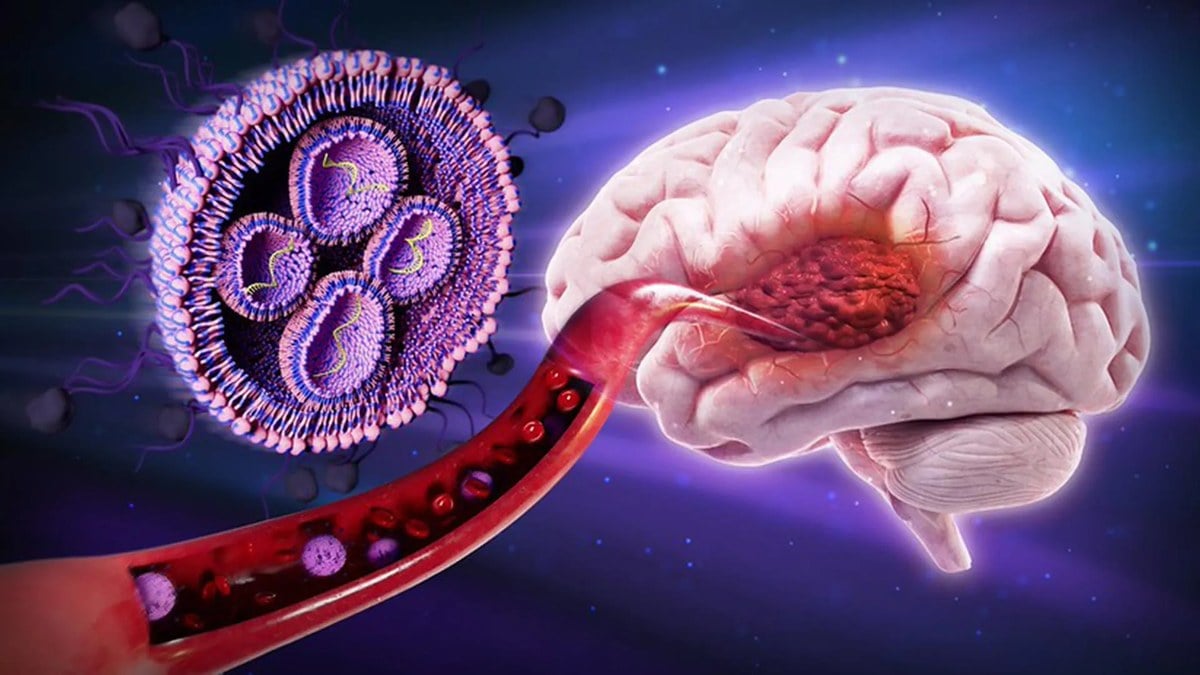
- Oregon State University researchers built mannose-coated lipid nanoparticles that hijack GLUT1 glucose transporters to cross the blood-brain barrier, improving surface coverage sixfold by chemically linking mannose to cholesterol.
- The nanoparticles carried mRNA designed to restore PTEN, a tumor-suppressor frequently missing in glioblastoma cells, with a positively charged cholesterol derivative keeping the genetic payload from degrading en route.
- In mouse studies, the therapy increased median survival by 50% and shrank tumors across repeated dosing without measurable organ toxicity.
- Glioblastoma cells express GLUT1 at three times the level of normal brain tissue, so the sugar-coated particles preferentially accumulate in tumor tissue after crossing into the brain.
Why It Matters
For a cancer that kills more than 95% of patients within five years, a 50% median survival bump in mice — delivered without measurable organ toxicity — is one of the few glioblastoma approaches to simultaneously breach the blood-brain barrier and reactivate a silenced tumor suppressor. The mannose-cholesterol surface chemistry is what makes brain delivery tractable at all.
Background & Timeline
- Editor contextThe mannose sugar functions less as a treatment itself than as a delivery vehicle, suggesting this BBB-crossing platform could be loaded with varied mRNA cargoes for other neurological targets.
Sources Cited
Related Coverage
Ask SkimNews