NASA targets 2028 nuclear Mars demo with Gateway hardware
The 30-Second Skim7 points
- What happenedNASA unveiled SR-1 Freedom, a nuclear-electric propulsion mission to Mars launching before 2028, repurposing hardware from the paused lunar Gateway station.
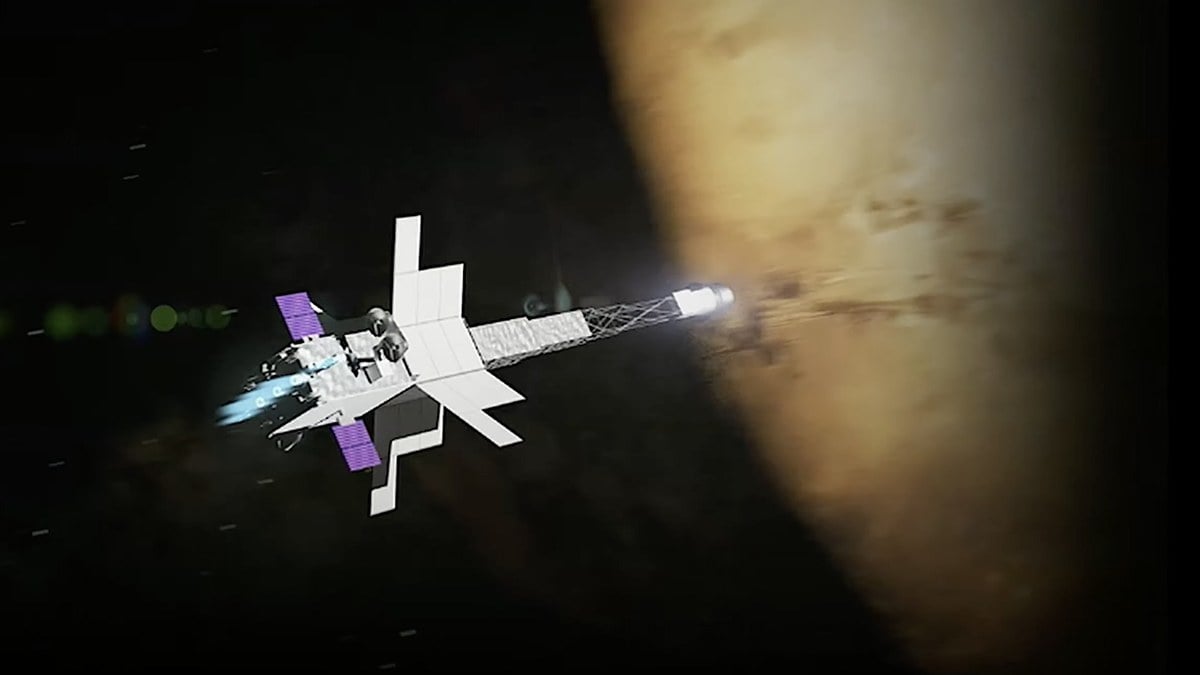
- Key facts & numbersNASA unveiled SR-1 Freedom, a nuclear-electric propulsion demonstration targeting a Mars launch before the end of 2028, with Administrator Jared Isaacman saying the agency will cannibalize the core module of the paused Gateway program rather than pursue a new program. The Power and Propulsion Element under construction at Lanteris Space Systems in Palo Alto will be retrofitted with a uranium-fueled fission reactor alongside its existing solar arrays, carrying what NASA calls the most powerful electric propulsion system ever flown: three 12-kilowatt engines and four 6-kilowatt thrusters. The roughly 20-kilowatt fission reactor will produce about 20 times more electricity than the radioisotope generators currently powering NASA's Mars rovers and the Voyager probes, and would be the only US-built nuclear reactor flown in space in more than 60 years.
- What happens nextNASA's bolting a uranium reactor onto lunar hardware and targeting Mars by 2028. Hard part isn't the tech — it's the 33-month timeline after two prior failures.
- NASA unveiled SR-1 Freedom, a nuclear-electric propulsion demonstration targeting a Mars launch before the end of 2028, with Administrator Jared Isaacman saying the agency will cannibalize the core module of the paused Gateway program rather than pursue a new program.
- The Power and Propulsion Element under construction at Lanteris Space Systems in Palo Alto will be retrofitted with a uranium-fueled fission reactor alongside its existing solar arrays, carrying what NASA calls the most powerful electric propulsion system ever flown: three 12-kilowatt engines and four 6-kilowatt thrusters.
- The roughly 20-kilowatt fission reactor will produce about 20 times more electricity than the radioisotope generators currently powering NASA's Mars rovers and the Voyager probes, and would be the only US-built nuclear reactor flown in space in more than 60 years.
- NASA acknowledged roughly $20 billion in prior failed nuclear propulsion efforts, including the canceled Project Prometheus and the DRACO program (jointly with DARPA, canceled in 2025), with Isaacman saying the agency 'hasn't won the right' to ask for billions more after that track record.
Why It Matters
SR-1 Freedom tests whether NASA can finally operate a nuclear reactor in space after 60+ years without one and roughly $20 billion in prior failed programs. The December 2028 launch window is the only realistic near-term shot — missing it means waiting until early 2031 for the next Earth-Mars alignment — and the mission still requires Department of Energy approval to launch radioactive fuel.
Sources Cited
- Ars Technica ScienceHere is NASA's plan for nuking Gateway and sending it to Mars
- BBC Science Focus MagazineHere’s how NASA plans to finally destroy the International Space Station
Related Coverage
Ask SkimNews