Hubble Space Telescope is falling to Earth – should NASA save it?
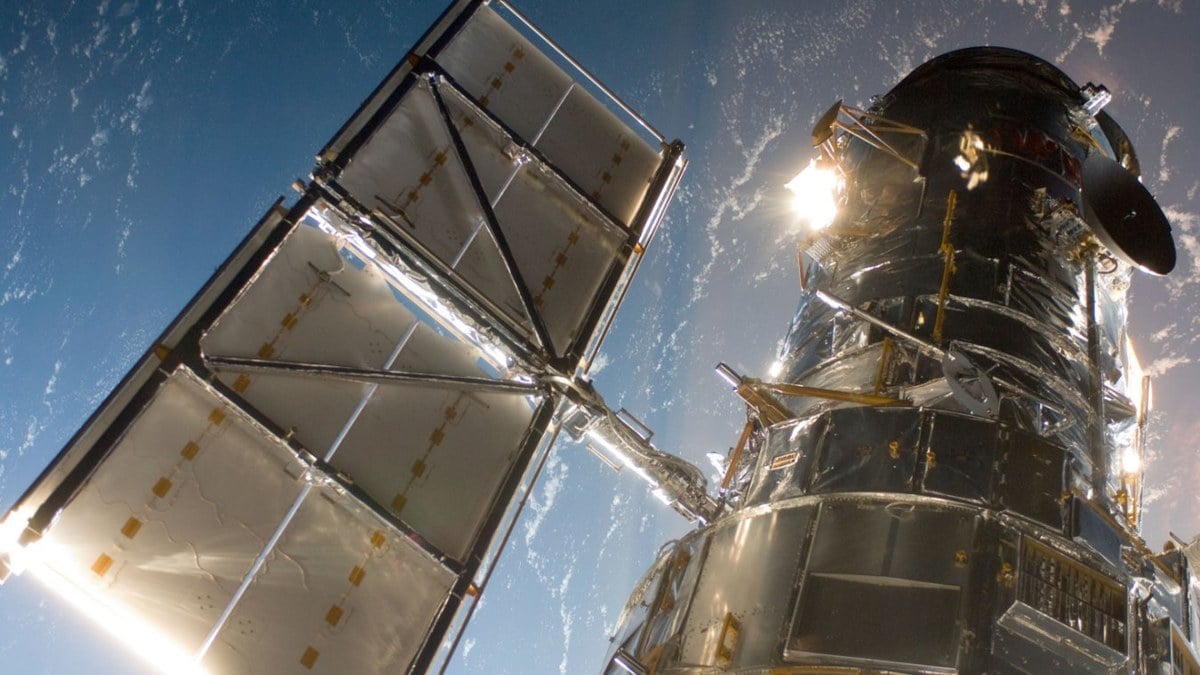
The 30-Second Skim
- What happened: NASA has turned to the commercial sector for a last-minute solution to Hubble’s orbital decay, as scientists press the agency to preserve the telescope’s unmatched science before the re-entry window closes.
- Key facts & numbers: NASA invited companies to submit ideas by 30 November for raising Hubble to at least 600 kilometres or safely de-orbiting it into the ocean; a bidder would have to supply the launch vehicle, spacecraft and, if applicable, crew. Hubble is estimated by NASA to have a 10% probability of re-entry by September 2032 and a 50% probability by December 2033; its orbit was last raised in 2002 by space shuttle Columbia, and the telescope has no propulsion of its own. Thomas Haworth said the scientists advising NASA were preparing a document that would strongly recommend an orbital boost; planning a mission takes years, so he said NASA needs to decide now.
- What happens next: Researchers argue Hubble is worth saving; the buried issue is execution—NASA’s 2022 call drew eight submissions and produced no mission.
- NASA invited companies to submit ideas by 30 November for raising Hubble to at least 600 kilometres or safely de-orbiting it into the ocean; a bidder would have to supply the launch vehicle, spacecraft and, if applicable, crew.
- Hubble is estimated by NASA to have a 10% probability of re-entry by September 2032 and a 50% probability by December 2033; its orbit was last raised in 2002 by space shuttle Columbia, and the telescope has no propulsion of its own.
- Thomas Haworth said the scientists advising NASA were preparing a document that would strongly recommend an orbital boost; planning a mission takes years, so he said NASA needs to decide now.
- Stephen Wilkins said Hubble’s high-resolution ultraviolet imaging is unmatched; NASA aims to launch the Ultraviolet Explorer in 2030 with one-tenth that resolution, while the Habitable Worlds Observatory might match Hubble in the 2040s.
Why It Matters
For astronomers, Hubble’s 2032 re-entry scenario means a decade or more without its unmatched ultraviolet imaging. For NASA, the harder problem is execution rather than ideas: eight submissions in 2022 produced no mission, so the 30 November call must yield a boost or disposal plan while mission timelines run for years.
Sources Cited
Related Coverage
Ask SkimNews