NHS pilot cuts brain tumour diagnosis from 8 weeks to 2 hours
The 30-Second Skim7 points
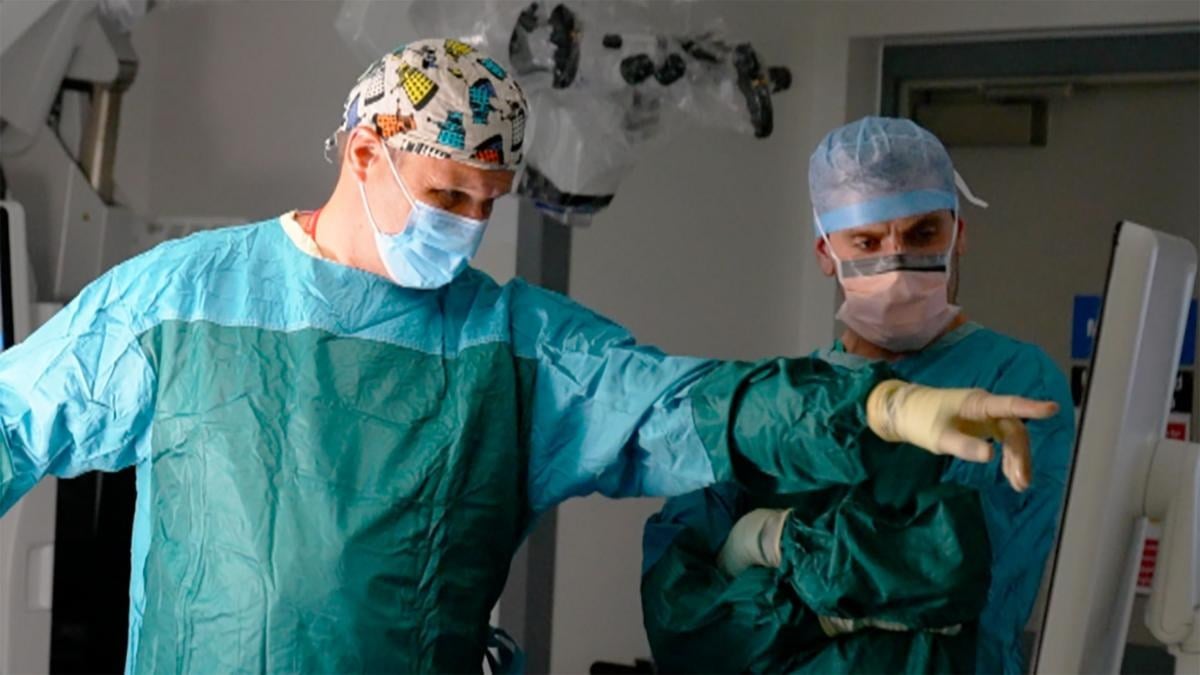
- What happenedAn NHS pilot collapsed brain tumour diagnosis from eight weeks to two hours. Steve Palmer, 55, learned he had a grade 4 glioblastoma mid-surgery at Queens Medical Centre after an Oxford Nanopore sequencer — running just 20 minutes — told the theatre exactly what the surgeons were cutting. Consultant Stuart Smith called it "almost magical." The test rolls out across five specialist centres in Nottingham, Birmingham, London, and Newcastle, then Bristol, Oxford, Leeds, and Manchester. It anchors a week thick with slower-burn biomedical beats: Baylor's CS18 restored osimertinib sensitivity in resistant lung cancer cells across five tumour types in animal models, and STAT hired its first trust-in-science reporter — a 34-year-old on a high-dose SSRI who attended a Children's Health Defense conference — to figure out why patients are tuning out medicine in the first place.
- Key facts & numbersNHS England is piloting Oxford Nanopore genomic testing for brain tumours across five specialist centres, cutting diagnosis from up to 8 weeks to roughly 2 hours. Steve Palmer, 55, was diagnosed with a grade 4 glioblastoma mid-surgery at Queens Medical Centre after just 20 minutes of nanopore sequencing; consultant Stuart Smith said the technology "seems almost magical." Baylor College of Medicine researchers published CS18 in Science Advances — a TopBP1-targeting drug that restored osimertinib sensitivity in resistant lung cancer cells and showed activity across five cancer types in animal models.
- What happens nextStuart Smith said the nanopore result changes how aggressively he operates — radical on curable tumours, cautious on the lethal ones. Mid-surgery genomics isn't a faster test; it's a different specialty.
- NHS England is piloting Oxford Nanopore genomic testing for brain tumours across five specialist centres, cutting diagnosis from up to 8 weeks to roughly 2 hours.
- Steve Palmer, 55, was diagnosed with a grade 4 glioblastoma mid-surgery at Queens Medical Centre after just 20 minutes of nanopore sequencing; consultant Stuart Smith said the technology "seems almost magical."
- Baylor College of Medicine researchers published CS18 in Science Advances — a TopBP1-targeting drug that restored osimertinib sensitivity in resistant lung cancer cells and showed activity across five cancer types in animal models.
- STAT appointed its first reporter dedicated to trust in science — a 34-year-old on a high-dose SSRI who attended a Children's Health Defense conference in Washington and disclosed trying keto, compounded peptides, and NAC.
Why It Matters
A brain tumour genomic result in 20 minutes lets a neurosurgeon decide mid-operation how aggressively to cut — radical on curable tumours, cautious on lethal ones — turning oncology from waiting-room anxiety into a real-time surgical input.
Related Coverage
Ask SkimNews