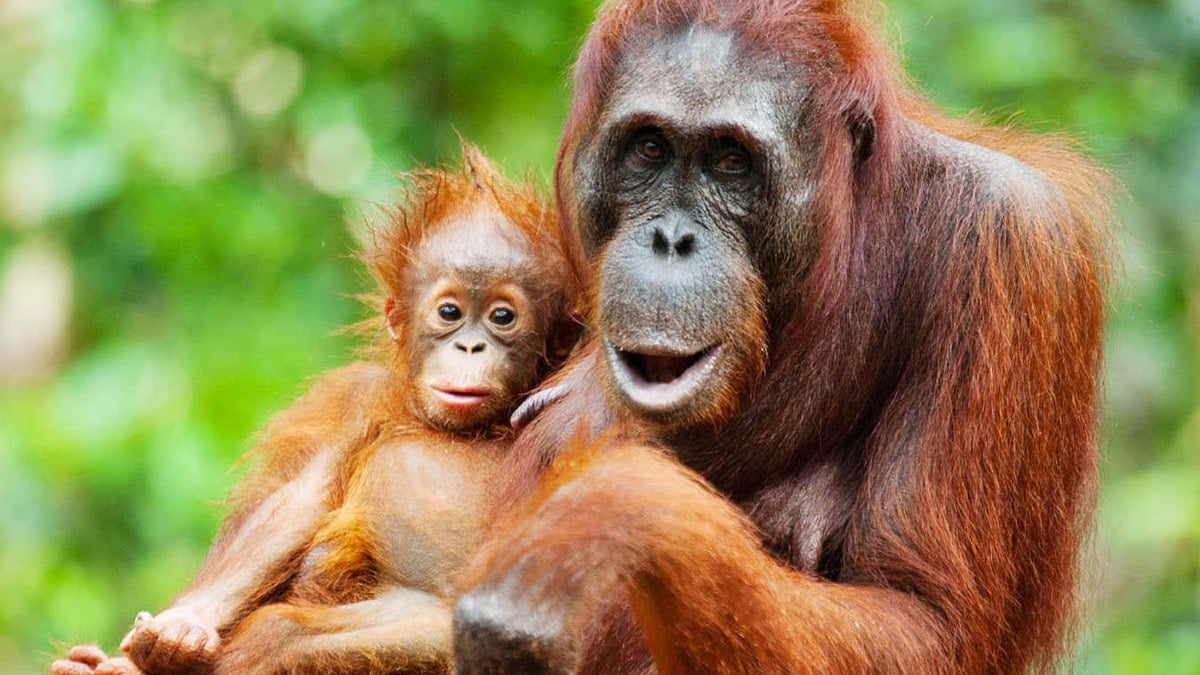
Orangutan mothers seem to plan playdates for their offspring
The 30-Second Skim7 points
- What happenedA 15-year study of wild Bornean orangutans found that mothers with similarly-aged offspring deliberately converge across territorial boundaries so their young can play together—traveling further and feeding less to make it happen.
- Key facts & numbersOdd Jacobson and colleagues at the Max Planck Institute of Animal Behavior analyzed 15 years of observations—roughly 30,000 hours—of 31 wild Bornean orangutan mother-offspring pairs in Konstanz, Germany Mothers with similarly-aged offspring spent disproportionately more time in the same area, with youngsters regularly playing together; play was more likely when the mothers were closely related Female orangutans traveled farther in the days immediately before and after meet-ups, heading into a neighbor's territory and then back home, even when fruit availability did not explain the gatherings
- What happens nextLameira's pushback is the buried gem: orangutan moms aren't texting each other—they're just tracking fruit trees and remembering neighbors' ranges.
- Odd Jacobson and colleagues at the Max Planck Institute of Animal Behavior analyzed 15 years of observations—roughly 30,000 hours—of 31 wild Bornean orangutan mother-offspring pairs in Konstanz, Germany
- Mothers with similarly-aged offspring spent disproportionately more time in the same area, with youngsters regularly playing together; play was more likely when the mothers were closely related
- Female orangutans traveled farther in the days immediately before and after meet-ups, heading into a neighbor's territory and then back home, even when fruit availability did not explain the gatherings
- The foraging cost was real: that extra travel meant mothers spent less time feeding, which the authors interpret as planned coordination rather than coincidence at a shared food source
Why It Matters
It undercuts the default assumption that solitary orangutans don't need social play. Fifteen years of field data suggest mothers invest real caloric energy into peer-to-peer juvenile play—implying the developmental payoff is large enough to justify a foraging trade-off, even in a species where males and females otherwise live largely apart.
Sources Cited
Related Coverage
Ask SkimNews