Schrödinger's 1944 'What Is Life?' still shapes biophysics
The 30-Second Skim7 points
- What happenedMore than 80 years after its 1944 publication, Erwin Schrödinger's 'What Is Life?' continues to shape biophysics research with its physicist's framing of life, including the concept of 'negative entropy' — despite documented critiques from Nobel laureate Max Perutz.
- Key facts & numbersErwin Schrödinger's 1944 book "What Is Life?" — based on Dublin lectures from 1943 — posed how living organisms can be explained by physics and chemistry, hypothesizing they need "negative entropy" to draw orderliness from their environment and possibly entirely new physical laws. Written before DNA's structure was understood, the book inspired several physicists to turn to biology upon publication and routinely appears on "best of" popular-science lists — though chemists and biologists received it less warmly. Schrödinger speculated about the quantum stability of a "hereditary substance" in cells, connecting radiation-induced mutations to "quantum jumps" from his domain of expertise.
- What happens nextSchrödinger wrote 'What Is Life?' before anyone knew what DNA looked like — and 80 years later biophysicists are still quoting him. The man's intuition was absurdly prescient.
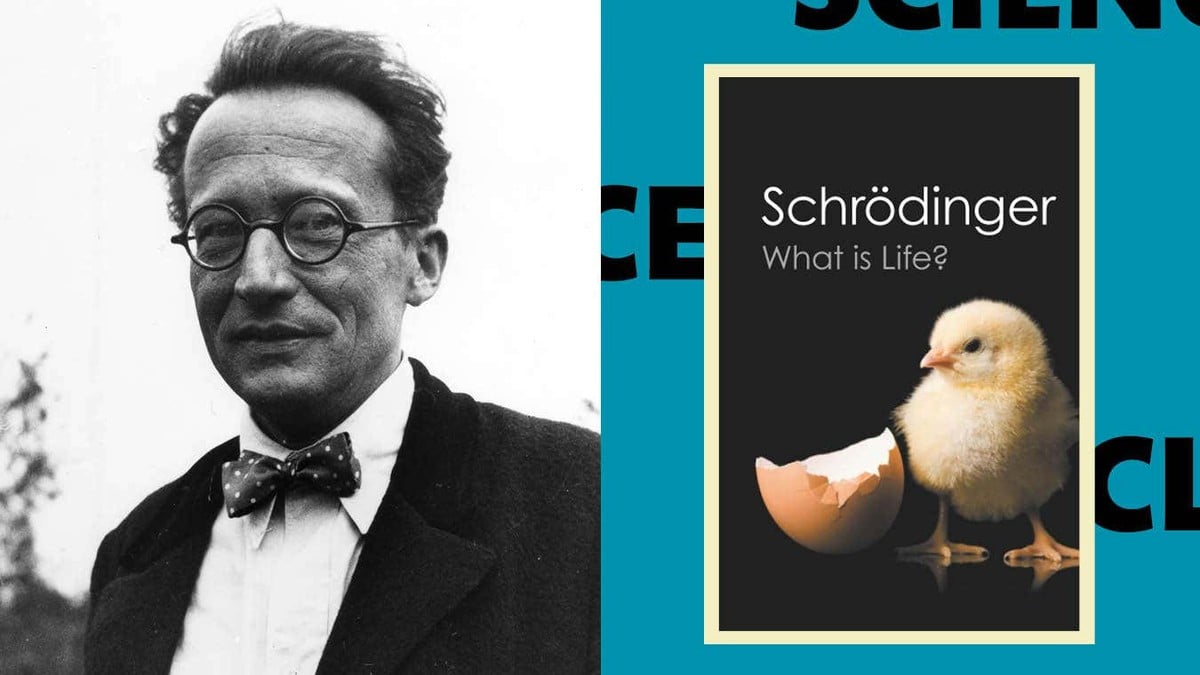
- Erwin Schrödinger's 1944 book "What Is Life?" — based on Dublin lectures from 1943 — posed how living organisms can be explained by physics and chemistry, hypothesizing they need "negative entropy" to draw orderliness from their environment and possibly entirely new physical laws.
- Written before DNA's structure was understood, the book inspired several physicists to turn to biology upon publication and routinely appears on "best of" popular-science lists — though chemists and biologists received it less warmly.
- Schrödinger speculated about the quantum stability of a "hereditary substance" in cells, connecting radiation-induced mutations to "quantum jumps" from his domain of expertise.
- Nobel laureate Max Perutz criticized the book, arguing Schrödinger could have read existing research on enzymes in cell division to resolve his bafflement about how hereditary substance reproduces without being destroyed by thermal fluctuations.
Why It Matters
For biophysicists at the physics-biology interface, Schrödinger's 1944 bet that new physical laws are needed to explain life remains an active research question, with researchers at institutions like Caltech and UC Santa Barbara still invoking his manifesto in 2026. The book's persistence despite documented gaps shows how a physicist's framing can guide biology even when specific biochemical claims are outdated.
Sources Cited
Related Coverage
Ask SkimNews
The day’s news in one short email, every morning.
Free. One email a day. Unsubscribe in one click.