Bruce Jakosky Finds 150‑m Mars Ocean Gap
The 30-Second Skim7 points
- What happenedPlanetary scientists led by Bruce Jakosky have identified a major water‑budget gap on Mars, showing that known sources and sinks cannot account for the planet’s ancient ocean versus its present water inventory.
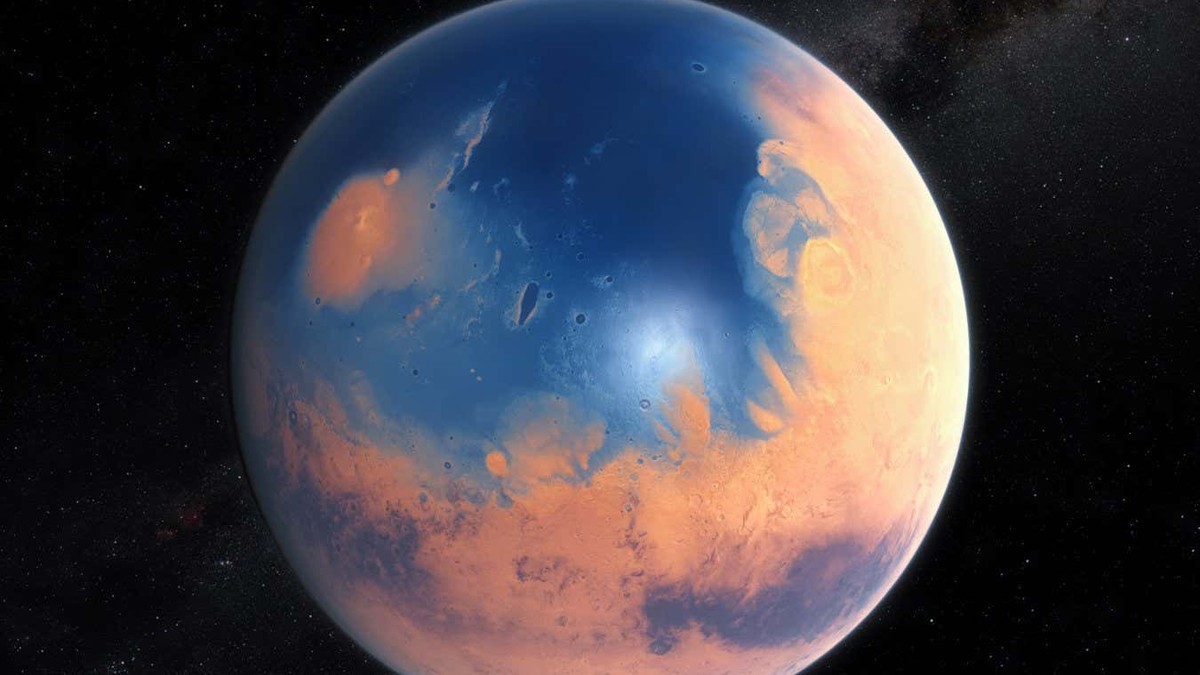
- Key facts & numbersBruce Jakosky presented at the Lunar and Planetary Science Conference on 20 March that that accounting for all known water sources and sinks on Mars leaves a short between the estimated Noachian ocean (150‑250 m deep) and the current water inventory (≈30 m deep). Mars is widely accepted to have hosted liquid water during the Noachian Period (≈4.5–3.7 Ga), enough to cover the planet in a global ocean 150‑250 m deep. Water‑removal processes such as atmospheric escape, sequestration in ice, and mineral binding together account for only a few tens of metres of water loss, insufficient to bridge the gap.
- What happens nextAll outlets agree Mars once had oceans, but the study flags a huge water‑budget gap most coverage glosses over, hinting at hidden ice or mis‑estimated loss.
- Bruce Jakosky presented at the Lunar and Planetary Science Conference on 20 March that that accounting for all known water sources and sinks on Mars leaves a short between the estimated Noachian ocean (150‑250 m deep) and the current water inventory (≈30 m deep).
- Mars is widely accepted to have hosted liquid water during the Noachian Period (≈4.5–3.7 Ga), enough to cover the planet in a global ocean 150‑250 m deep.
- Water‑removal processes such as atmospheric escape, sequestration in ice, and mineral binding together account for only a few tens of metres of water loss, insufficient to bridge the gap.
- Eric Hiatt argued that Mars’ hydrologic cycle may differ fundamentally from Earth’s, with groundwater possibly not interacting with the surface and atmosphere as previously thought.
Why It Matters
The water‑budget gap forces scientists to revise Mars’ habitability models, directly influencing where future rovers and potential human missions will search for water and life, and reshaping NASA and SpaceX exploration strategies by highlighting the need for in‑situ water detection.
Sources Cited
- New ScientistWhy the lack of water on Mars is so mysterious
Related Coverage
Ask SkimNews
The day’s news in one short email, every morning.
Free. One email a day. Unsubscribe in one click.