Sea Worm Jaws Yield Hard-yet-Lightweight 'Bio-Metal'
The 30-Second Skim
- What happened: Researchers studying the jaws of a common sea worm discovered they contain an exceptionally hard yet lightweight "bio-metal" material that fuses protein-like elasticity with metal-grade hardness, opening a potential blueprint for new engineering composites.
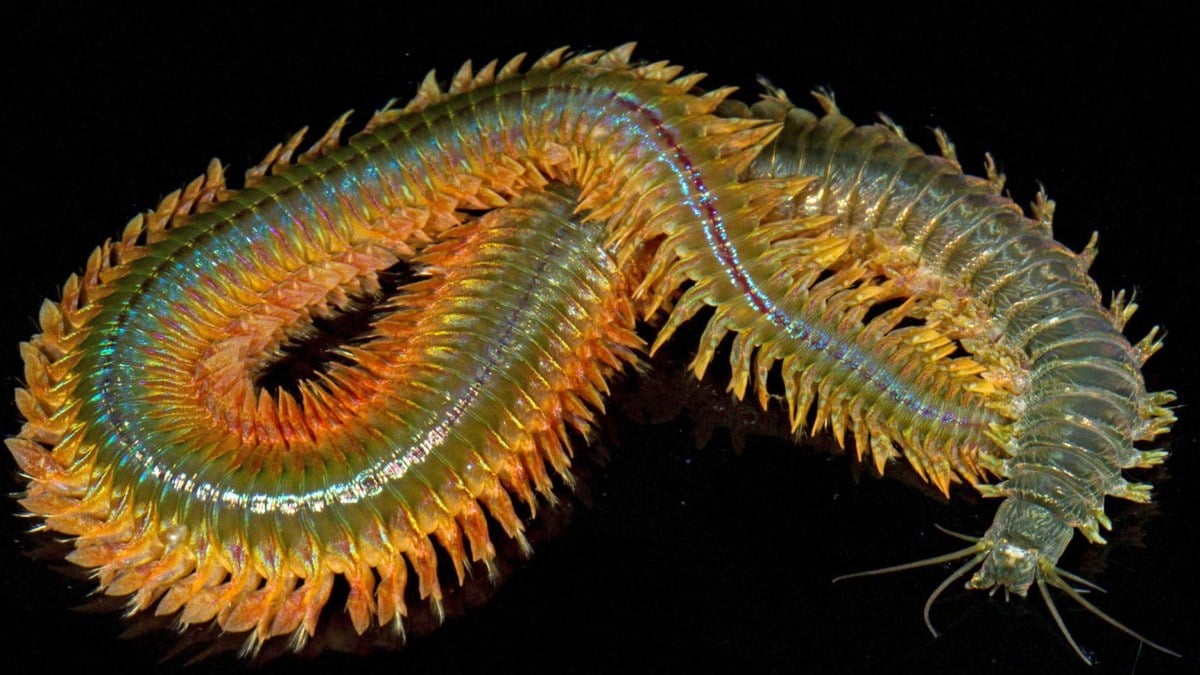
- Key facts & numbers: TU Wien researchers led by Christian Hellmich spent nearly a decade studying the jaws of Perinereis cultrifera, a ragworm whose jaw structure combines proteins with zinc and other metal ions into a material they call a "bio-metal." The team performed more than 3,300 indentation experiments on millimetre-sized jaws, finding that hardness changes under pressure follow patterns typical of copper and silver, but with an elasticity metals cannot achieve. A mathematical model developed by the team shows how the material's unusual behavior arises when metal ions arrange into linear formations resembling defects found in crystals.
- What happens next: Someone literally polished 3,300 worm jaws by hand to prove a millimetre-sized worm mouth is basically metal. Nature remains undefeated.
- TU Wien researchers led by Christian Hellmich spent nearly a decade studying the jaws of Perinereis cultrifera, a ragworm whose jaw structure combines proteins with zinc and other metal ions into a material they call a "bio-metal."
- The team performed more than 3,300 indentation experiments on millimetre-sized jaws, finding that hardness changes under pressure follow patterns typical of copper and silver, but with an elasticity metals cannot achieve.
- A mathematical model developed by the team shows how the material's unusual behavior arises when metal ions arrange into linear formations resembling defects found in crystals.
- Matthew Lehnert at Kent State University, who was not part of the study, said industries from automobiles to aeronautics are searching for hard, lightweight materials and "the answers are provided in nature."
Why It Matters
Automotive and aeronautics engineers are actively seeking hard, lightweight structural materials, and this study hands them a biological blueprint — protein-metal composites found in a humble ragworm — that may inform future composite designs. The team's collaboration with geneticists at the University of Vienna signals a longer-term push toward programming such materials to grow biologically rather than be manufactured, a paradigm shift if it ever reaches scale.
Sources Cited
Related Coverage
Ask SkimNews