NYU Abu Dhabi builds injectable, battery-free nerve device
The 30-Second Skim7 points
- What happenedScientists at NYU Abu Dhabi and Cleveland Clinic Abu Dhabi have developed a seed-sized, injectable device that wirelessly stimulates specific nerves without surgery, batteries, or wires, potentially offering a less invasive treatment for chronic pain and movement disorders.
- Key facts & numbersNYU Abu Dhabi and Cleveland Clinic Abu Dhabi developed a seed-sized, injectable device that delivers programmable electrical stimulation to specific nerves without surgery, batteries, or wires, delivered through a standard needle. The leadless device draws power wirelessly from outside the body for real-time adjustment, and its placement near the target nerve can be verified post-procedure using ultrasound or CT imaging. Findings published in Science Advances showed the device successfully activated nerves in vivo during preclinical testing under conditions designed to resemble real-world use.
- What happens nextHeadline sells 'control your nerves' but the real news is the form factor: no surgery, no battery, no wires, no scalpels — just a needle and an external power source.
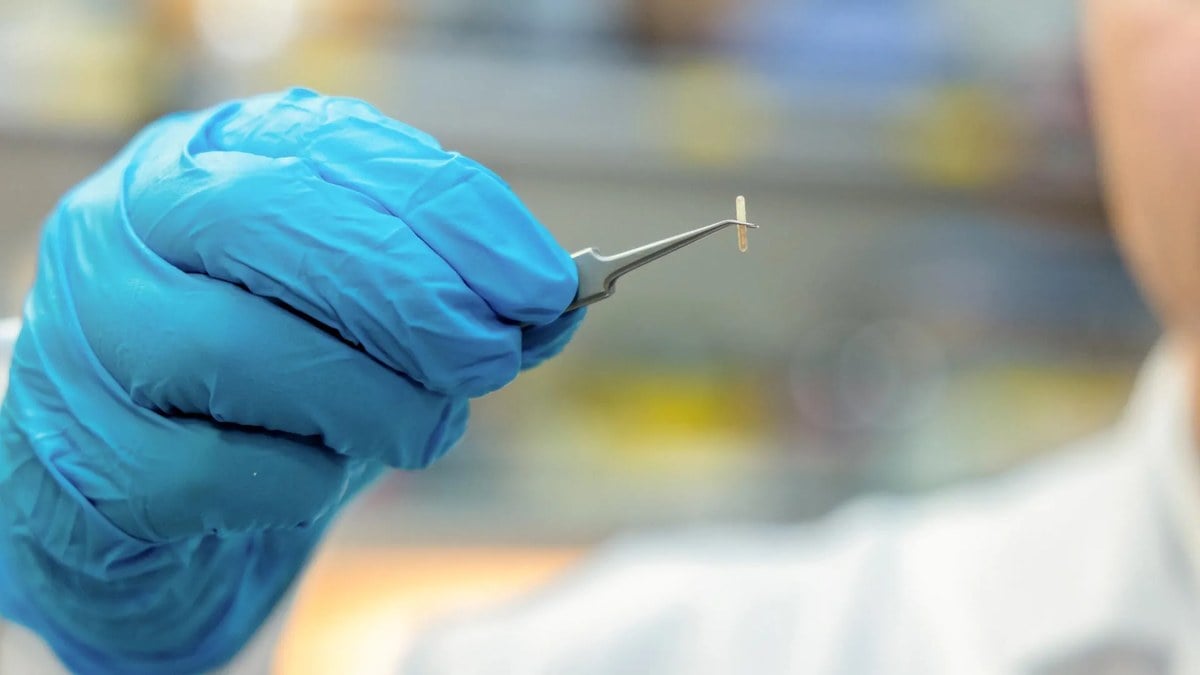
- NYU Abu Dhabi and Cleveland Clinic Abu Dhabi developed a seed-sized, injectable device that delivers programmable electrical stimulation to specific nerves without surgery, batteries, or wires, delivered through a standard needle.
- The leadless device draws power wirelessly from outside the body for real-time adjustment, and its placement near the target nerve can be verified post-procedure using ultrasound or CT imaging.
- Findings published in Science Advances showed the device successfully activated nerves in vivo during preclinical testing under conditions designed to resemble real-world use.
- Prof. Khalil Ramadi, the study's senior author at NYU Abu Dhabi and NYU Tandon, called the injectable design a shift that makes neuromodulation therapies "simpler, safer, and more accessible" while preserving precise control over nerve activity.
Why It Matters
Existing neuromodulation devices require surgical implantation, which constrains patient access.
Sources Cited
- EurekAlert! Science News ReleasesNYU Abu Dhabi and Cleveland Clinic Abu Dhabi researchers develop injectable device to control nerves without surgery
Related Coverage
Ask SkimNews