Silica nanoparticles cured aggressive prostate cancer in mice
The 30-Second Skim7 points
- What happenedWeill Cornell researchers engineered ultrasmall silica nanoparticles that selectively killed aggressive prostate cancer cells and reactivated the immune system in mice, producing complete remissions when paired with checkpoint immunotherapy.
- Key facts & numbersCornell Prime dots (C' dots) — ultrasmall fluorescent core-shell silica nanoparticles developed at Weill Cornell Medicine — selectively destroyed aggressive prostate cancer cells in mice while leaving healthy tissue largely unharmed, in a preclinical study published June 15 in Cancer Research. The nanoparticles triggered ferroptosis, an oxidation-driven form of cell death, apparently by ferrying iron ions from the bloodstream into tumor cells, fueling runaway membrane damage. The treatment flipped the tumor microenvironment from an immune-resistant 'cold' state to an immune-active 'hot' one, switching nearby T cells, macrophages, and other immune cells into cancer-fighting mode.
- What happens nextWiesner's quote lands: 'How is it possible that rather than a single pathway we see all these effects happening simultaneously and only in tumors?' Nanoparticles as multi-tool cancer killers.
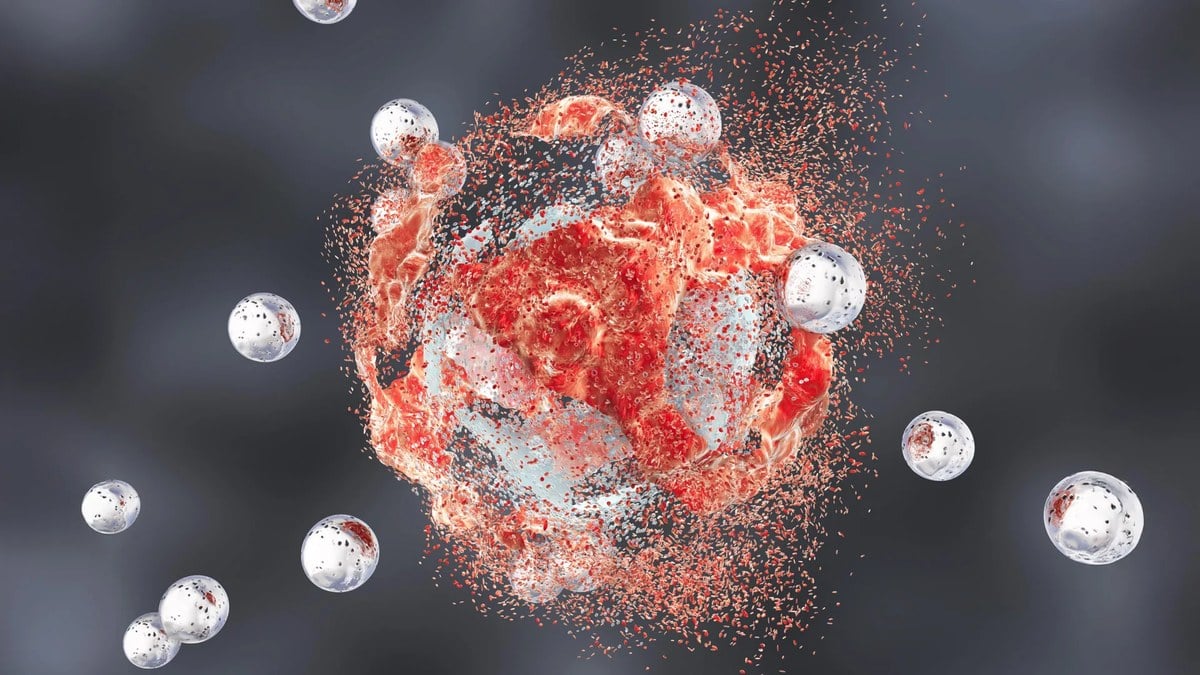
- Cornell Prime dots (C' dots) — ultrasmall fluorescent core-shell silica nanoparticles developed at Weill Cornell Medicine — selectively destroyed aggressive prostate cancer cells in mice while leaving healthy tissue largely unharmed, in a preclinical study published June 15 in Cancer Research.
- The nanoparticles triggered ferroptosis, an oxidation-driven form of cell death, apparently by ferrying iron ions from the bloodstream into tumor cells, fueling runaway membrane damage.
- The treatment flipped the tumor microenvironment from an immune-resistant 'cold' state to an immune-active 'hot' one, switching nearby T cells, macrophages, and other immune cells into cancer-fighting mode.
- Combining C' dots with immune checkpoint blockade therapy produced complete or near-complete remissions and indefinite survival in 4 out of 10 mice with aggressive prostate cancer, versus modest gains from either treatment alone.
Why It Matters
Prostate cancer has historically resisted immunotherapy because its tumors tend to be immunologically 'cold,' limiting checkpoint inhibitor effectiveness. If these nanoparticles can simultaneously kill tumor cells and convert the microenvironment to 'hot' in humans, they could open checkpoint inhibitors to a cancer type where durable responses have remained rare — a concrete mechanism shift, not just an incremental gain.
Sources Cited
Related Coverage
Ask SkimNews
The day’s news in one short email, every morning.
Free. One email a day. Unsubscribe in one click.