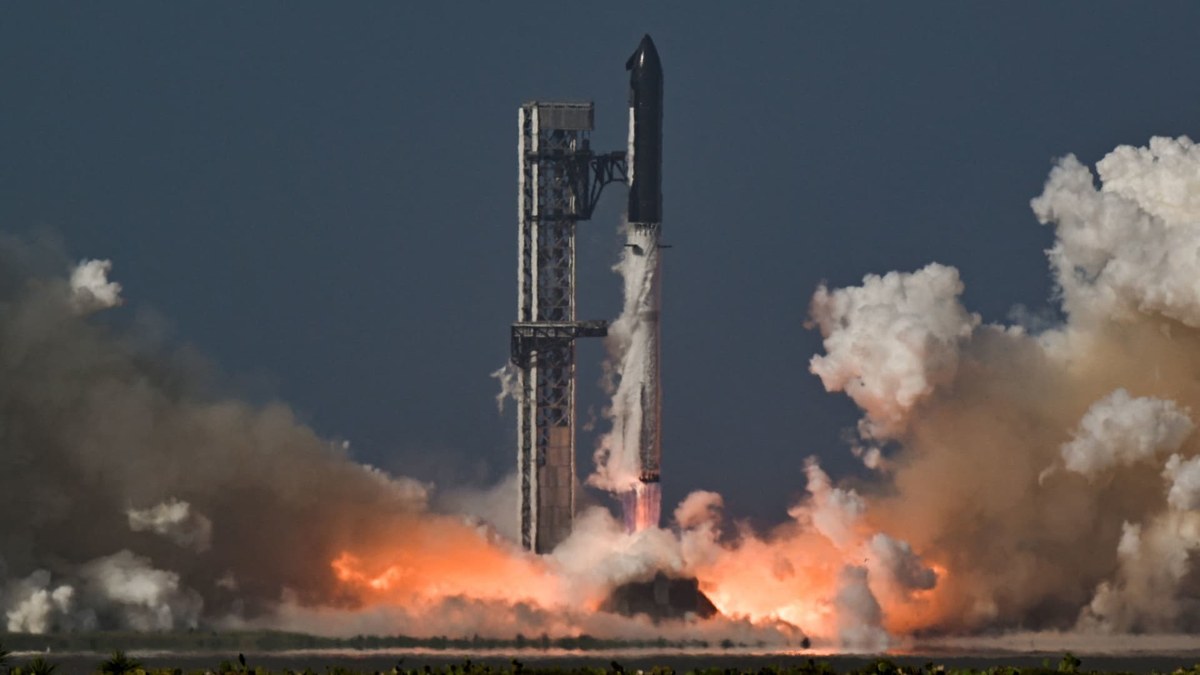
SpaceX launches massive Starship rocket in first test flight since IPO
The 30-Second Skim
- What happened: SpaceX completed its 13th Starship test flight from Texas — its first since the company's record IPO last month — deploying 20 Starlink V3 satellites, though an industry expert warned rapid full reusability remains far off due to engine relight problems.
- Key facts & numbers: SpaceX launched Starship on its 13th test flight from Starbase, Texas — the first since the company's record IPO last month — with the Super Heavy booster making a controlled splashdown in the Gulf and the upper stage achieving a "soft splashdown" in the Indian Ocean. Starship deployed 20 Starlink V3 satellites about 18 minutes into the flight, the first in-flight test of the larger, more powerful satellites built at SpaceX's Redmond, Washington facility with solar arrays generating twice the power of prior generations. Starship V3 completed only its second test flight, with SpaceX designing the rocket to be fully reusable for expanding Starlink, returning U.S. astronauts to the moon in a planned NASA test next year, and eventually powering manned Mars missions.
- What happens next: CNBC framed it as 'Musk's bad week,' Google News went 'softest splashdown ever.' The source shows both are true — stock's down 43%, AND Raptor engines failed to relight mid-flight. Read past the splashdown PR.
- SpaceX launched Starship on its 13th test flight from Starbase, Texas — the first since the company's record IPO last month — with the Super Heavy booster making a controlled splashdown in the Gulf and the upper stage achieving a "soft splashdown" in the Indian Ocean.
- Starship deployed 20 Starlink V3 satellites about 18 minutes into the flight, the first in-flight test of the larger, more powerful satellites built at SpaceX's Redmond, Washington facility with solar arrays generating twice the power of prior generations.
- Starship V3 completed only its second test flight, with SpaceX designing the rocket to be fully reusable for expanding Starlink, returning U.S. astronauts to the moon in a planned NASA test next year, and eventually powering manned Mars missions.
- Tim Farrar of TMF Associates said SpaceX "remains a long way from achieving rapid reusability of the entire ship," citing problems relighting Raptor engines and warning that a similar failure during a landing attempt could cause severe damage to the launchpad.
Why It Matters
For SpaceX, Flight 13's deployment of 20 Starlink V3 satellites validates a key revenue path, but TMF Associates' Tim Farrar warned the Raptor relight failures show the company "remains a long way from achieving rapid reusability," and a landing failure would severely damage the launchpad. With stock already down 43% from its June 16 peak, each test carries material investor weight ahead of the planned 2026 NASA moon mission.
Sources Cited
Related Coverage
- Starship Flight 13 Succeeds Despite Booster Engine FailuresGoogle News Business
- SpaceX's 13th Starship Test Flight Ends in Soft SplashdownBBC Environment
- SpaceX launches its biggest rocket yet in test flight from TexasThe Guardian Science
- SpaceX to Catch Starship With Launch Tower on Next FlightGoogle News Business
Ask SkimNews