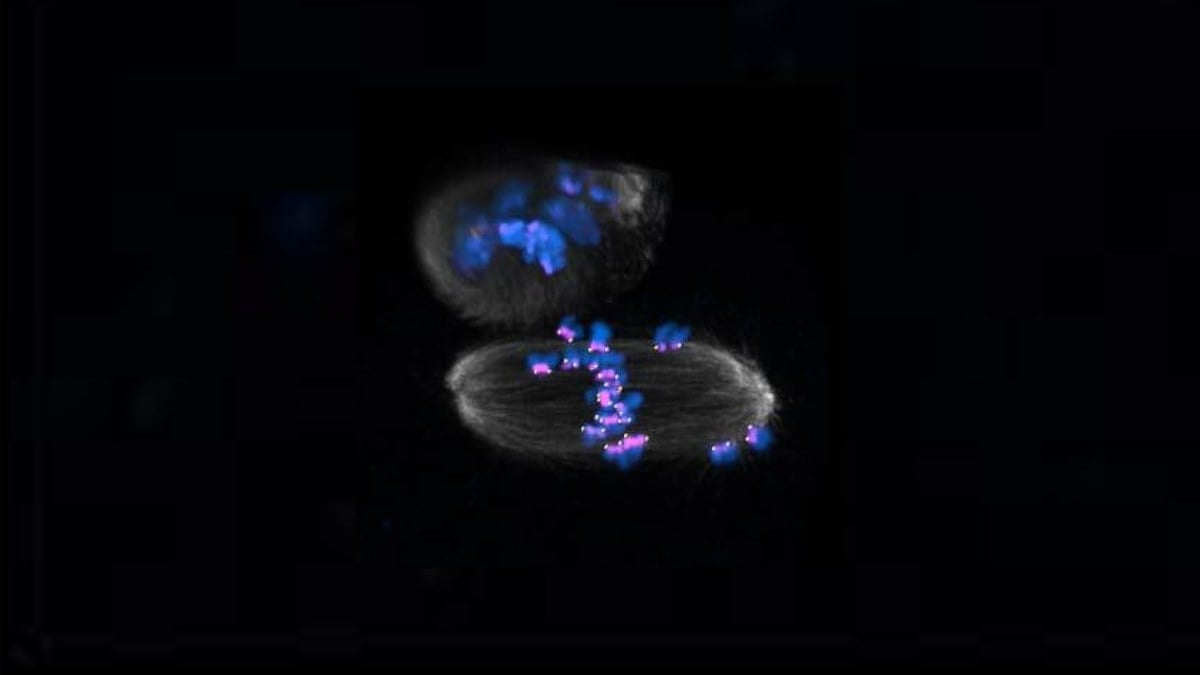
TALhesins stabilize chromosomes in aged mouse eggs
The 30-Second Skim
- What happened: Max Planck researchers engineered TALhesins to tether chromosomes in aging mouse eggs, raising properly connected chromatids from 47% to 74% and matching young-mouse levels. The mouse proof of concept still requires human-oocyte error-reduction and embryo-safety testing.
- Key facts & numbers: Aneuploidy leads age-related infertility, failed IVF and miscarriage; 50% to 80% of embryos from women in their 40s have chromosomal abnormalities, and about half of all human conceptions are lost before birth.
- What happens next: Researchers must test whether TALhesins reduce errors in human oocytes and establish embryo-development safety. The window is narrow because most IVF eggs have already completed the first meiotic division.
Why It Matters
Aneuploidy is a major IVF constraint: pregnancy odds per cycle fall from about one in three at ages 35-40 to one in ten over 40, and roughly 15% of known pregnancies end in miscarriage. A chromosome-stabilizing treatment could address a defined bottleneck rather than another add-on with shaky evidence.
The hurdles are concrete. Ovo Labs and U-Ploid must intervene before meiosis-related errors become irreversible, while human testing, embryo-safety studies and regulatory requirements remain ahead. Neither approach has yet demonstrated improved pregnancy or live-birth rates.
How Outlets Are Framing It
- STAT (sole listed source): Its headline and lead frame TALhesins as a fertility advance, emphasizing the 47%-to-74% result in older mouse eggs. With no additional outlet body, independent cross-source consensus cannot be established.
- Evidence-gap lens: The article sets the mouse result against Schuh's limited human findings and Hoffman's requirements: fewer errors in human oocytes, embryo-safety studies and regulatory review.
- Commercialization lens: The coverage also follows Ovo Labs and U-Ploid, showing competing TALhesins and Lyvanta programs, the immature-egg timing problem and the absence of pregnancy or live-birth evidence.
Background & Timeline
- 2015: Schuh's lab first showed how chromosome-holding structures deteriorate in aging human eggs, establishing the biological problem the engineering effort seeks to address.
- 2026 ASRM meeting: U-Ploid reported immature-egg results for Lyvanta, placing a competing chromosome-preservation approach alongside Max Planck's new result.
Sources Cited
Related Coverage
Ask SkimNews