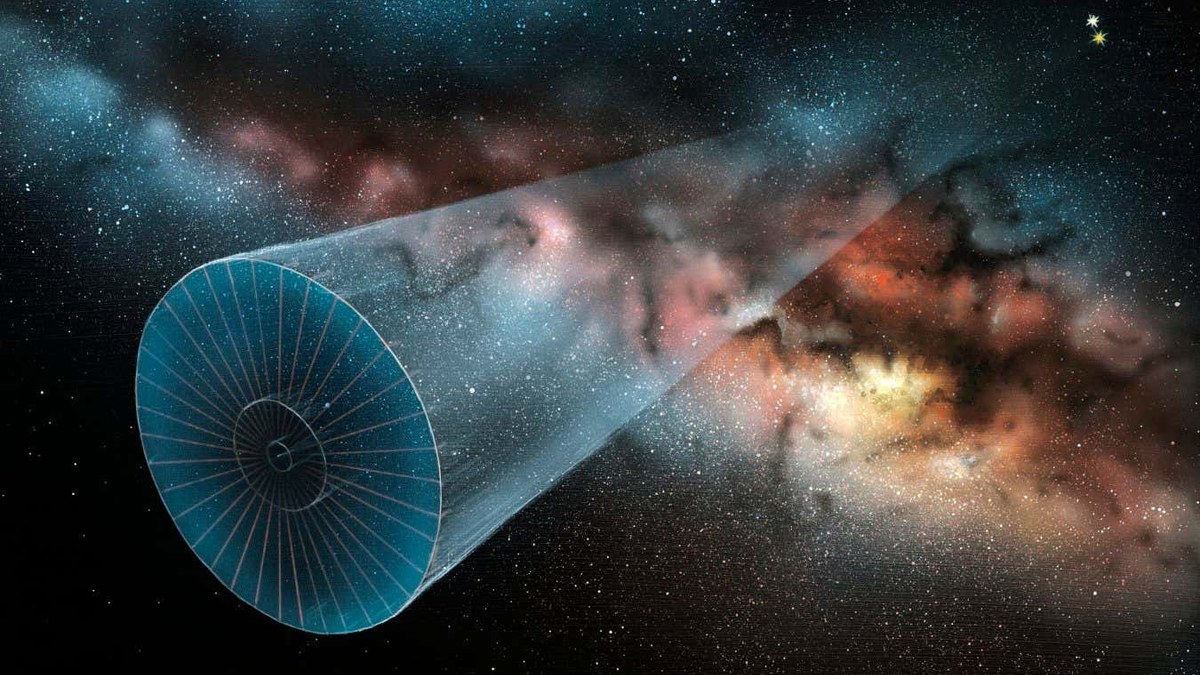
Tiny 'metajets' could use light to steer sails for interstellar travel
The 30-Second Skim
- What happened: A team at Texas A&M University has built a 0.01‑mm metasurface device, dubbed a metajet, that can be propelled and steered by light via refraction. In water‑based tests the metajet levitated and moved at up to 0.07 mm/s, showing that such tiny structures could actively steer light‑sail spacecraft for interstellar missions and even enable heat‑free drug delivery.
- Key facts & numbers: Texas A&M University researchers led by Kaushik Kudtarkar built a 0.01‑mm metasurface “metajet” that uses light refraction to generate thrust in multiple directions. Metajet levitated and moved horizontally in water when illuminated by a laser, reaching a speed of roughly 0.07 mm/s. Metasurface pillars on the device steer incoming light, allowing the strength and direction of momentum transfer to be tuned by the pattern and size of the pillars.
- What happens next: Tiny 0.01 mm 'metajet' can be nudged by a laser—finally a way to steer those crazy light‑sail rockets.
- Texas A&M University researchers led by Kaushik Kudtarkar built a 0.01‑mm metasurface “metajet” that uses light refraction to generate thrust in multiple directions.
- Metajet levitated and moved horizontally in water when illuminated by a laser, reaching a speed of roughly 0.07 mm/s.
- Metasurface pillars on the device steer incoming light, allowing the strength and direction of momentum transfer to be tuned by the pattern and size of the pillars.
- Researchers say redesigning the metasurface could enable steering of light sails for interstellar travel and also allow heat‑free, targeted drug delivery.
Why It Matters
Space agencies and private firms developing light‑sail probes gain a steering tool that works at 0.07 mm/s, turning passive sails into controllable spacecraft and making interstellar missions more realistic.
Sources Cited
Related Coverage
Ask SkimNews