Senate Blocks Iran War Powers Resolution, 47-53 — SkimNews
SkimNews Take
The narrow defeat with bipartisan defections signals war powers resolutions are becoming political messaging rather than binding checks, leaving escalation constraints dependent on shifting public sentiment rather than institutional authority.
Get the Geopolitics newsletter
Daily geopolitics — wars, elections, sanctions, the diplomatic moves that move markets. Free.
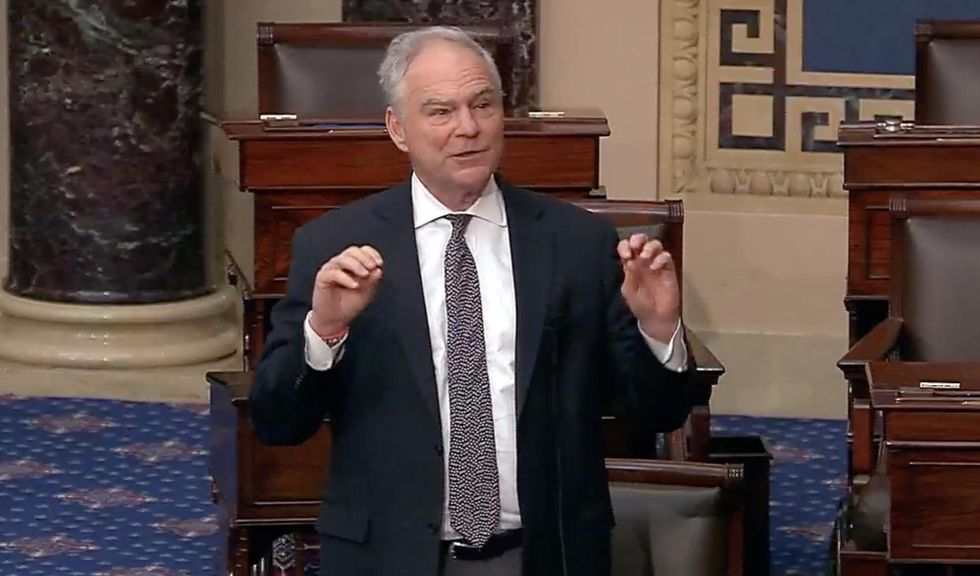
- The Senate voted 47-53 to block a war powers resolution from Sen. Tim Kaine (D-Va.), co-sponsored by 26 other senators, that would have halted unauthorized U.S. military hostilities against Iran; the vote was briefly held open for Sen. John Cornyn (R-Texas) to fly in from Texas and vote no.
- The vote fell largely along party lines, with most Democrats in favor and most Republicans opposed; Sen. John Fetterman (D-Pa.) was the lone Democrat to vote no, and Sen. Rand Paul (R-Ky.) the only Republican to vote yes.
- Four Republicans who backed a January war powers resolution on Venezuela — Sens. Josh Hawley (R-Mo.), Todd Young (R-Ind.), Lisa Murkowski (R-Alaska), and Susan Collins (R-Maine) — broke that pattern by voting against today's Iran resolution.
- Resolution supporters on the Senate floor cited the conflict's human toll, including more than 100 schoolgirls killed and bombed hospitals, with Sen. Kaine stating the administration 'could produce no evidence' of an imminent Iranian threat even in a classified briefing.
- The House is set to vote Thursday on a separate war powers resolution from Reps. Ro Khanna (D-Calif.) and Thomas Massie (R-Ky.) to bar further attacks on Iran, which the source says is likely to fail.
- A competing House resolution from Rep. Josh Gottheimer (D-N.J.) would require Trump to end hostilities with Iran within 30 days unless Congress authorizes the war, while permitting a continued U.S. troop presence for defensive purposes.
- The military action stems from 'Operation Epic Fury,' a joint U.S.-Israel strike over the weekend that killed Iranian Supreme Leader Ayatollah Khamenei without consulting the full Congress; Iran retaliated against Israel and multiple U.S. bases across the Middle East.
Why it matters: Congress has now declined to assert its war-powers check on a conflict launched without authorization, and the four Republicans who previously broke ranks on Venezuela declined to do so for Iran. With the House Khanna-Massie resolution expected to fail and the alternative Gottheimer measure imposing only a 30-day conditional timeline, the administration retains unilateral authority to continue military operations against Iran with no congressional gate in place.
Ask SkimNews