A mother’s age can shape her offspring without changing their DNA — SkimNews
SkimNews Take
Reversibility within a single generation reframes maternal age as a tunable dial rather than a fixed countdown, suggesting epigenetic state — not the mother's chronological age itself — may be the actionable variable for offspring outcomes.
Get the Health newsletter
Daily health & science — research, biotech, public health, the studies worth knowing. Free.
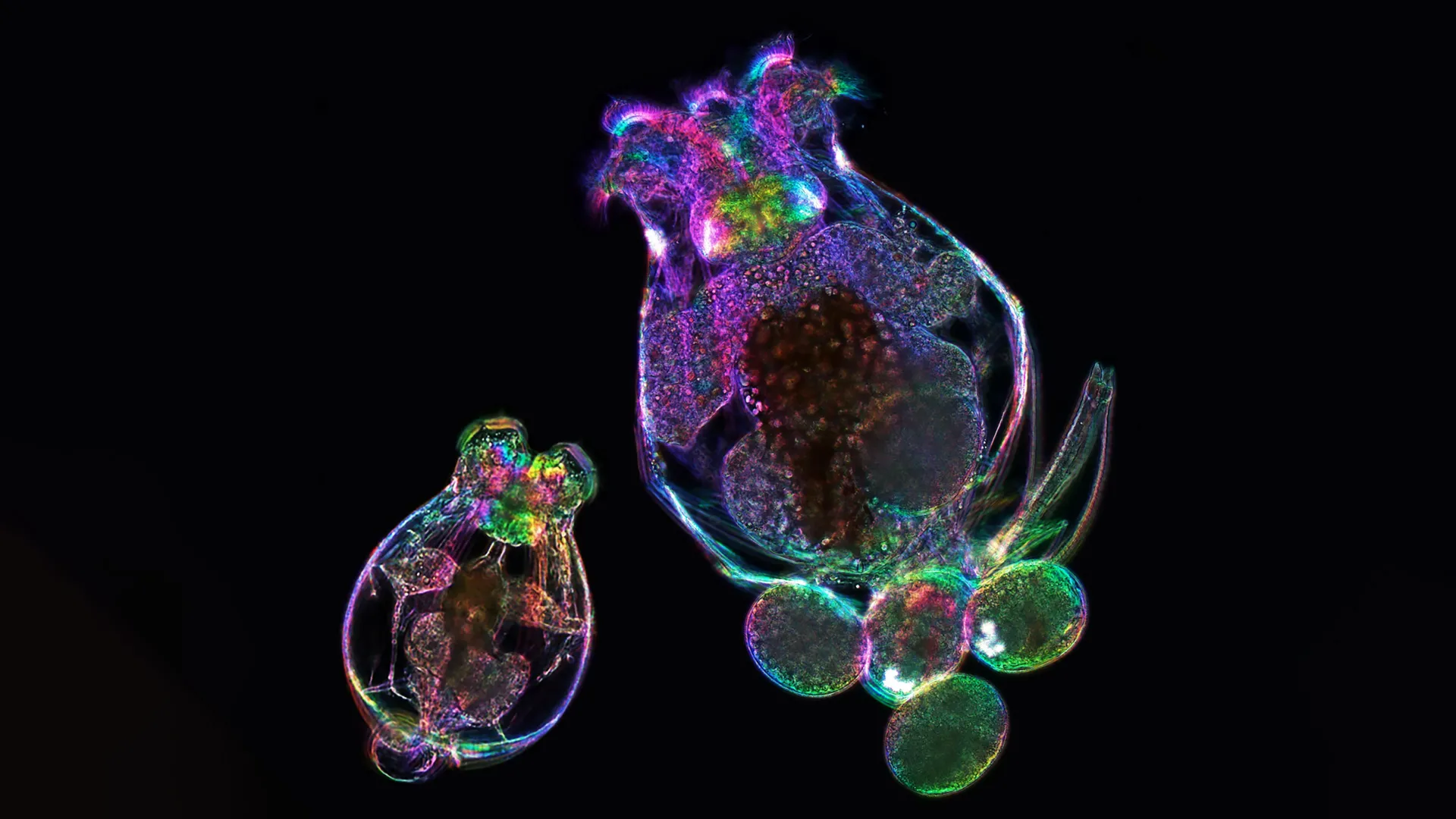
- Kristin Gribble and colleagues at the Marine Biological Laboratory found that maternal age effects in offspring can reverse within a single generation in rotifers, arguing against the prevailing theory that such effects stem from accumulated DNA damage.
- Postdoctoral scientist Alyssa Liguori (now at SUNY-New Paltz) examined two genotypes from the same rotifer species and found the imprint pointed toward histone modifications — epigenetic 'on/off' switches for genes — rather than mutations in the DNA sequence itself.
- Gribble's team is now testing whether histone modifications specifically drive the effect and whether maternally inherited mitochondrial DNA also helps transmit age information to offspring.
- In one rotifer strain, offspring from older mothers lived longer than those from younger mothers, suggesting protective genetic variants may exist that blunt or even reverse the typically negative effects of advanced maternal age.
- Gribble attributes the evolutionary persistence of maternal age effects to weaker selective pressure late in life, noting that rotifers complete most reproduction while young, reducing evolutionary pressure on older mothers' offspring fitness.
- The findings open the possibility that biological information from grandmothers and great-grandmothers — not just DNA inherited at conception — can shape an individual's health, with potential future relevance to precision medicine.
- The work was published in The American Naturalist (2026), DOI: 10.1086/742104.
Why it matters: If maternal age effects are epigenetic rather than mutational, they may be modifiable — meaning harmful effects passed from older mothers could theoretically be prevented or reversed. The discovery reframes a phenomenon documented across species as a reversible biological signal rather than inevitable genetic damage, reshaping how researchers approach transgenerational health risks.
Ask SkimNews


