Databricks, Stripe Share AI Coding Cost Playbook — SkimNews
Get the Tech newsletter
Daily tech — startups, AI labs, chips, the launches that shape the next decade. Free.
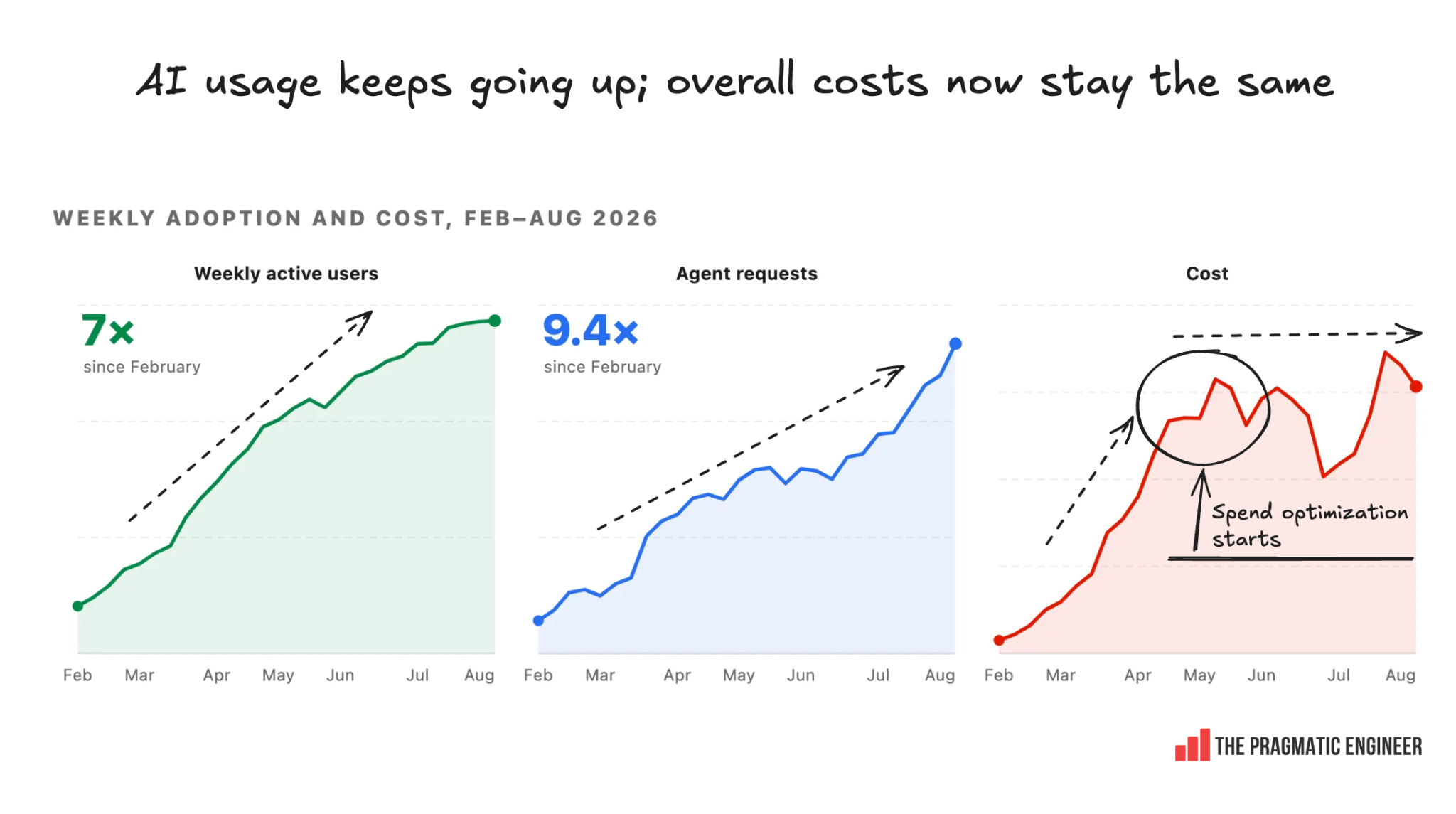
- Databricks reports that agentic coding has improved every velocity metric it tracks, with some teams achieving order-of-magnitude output gains, but warns the accompanying cost curve is unsustainable and could eventually overtake revenue.
- Stripe, Coinbase, Uber, Ramp, and Databricks have converged on a 'dual mandate' — providing broad AI tool access to employees while keeping aggregate spend inside a roughly fixed per-user envelope.
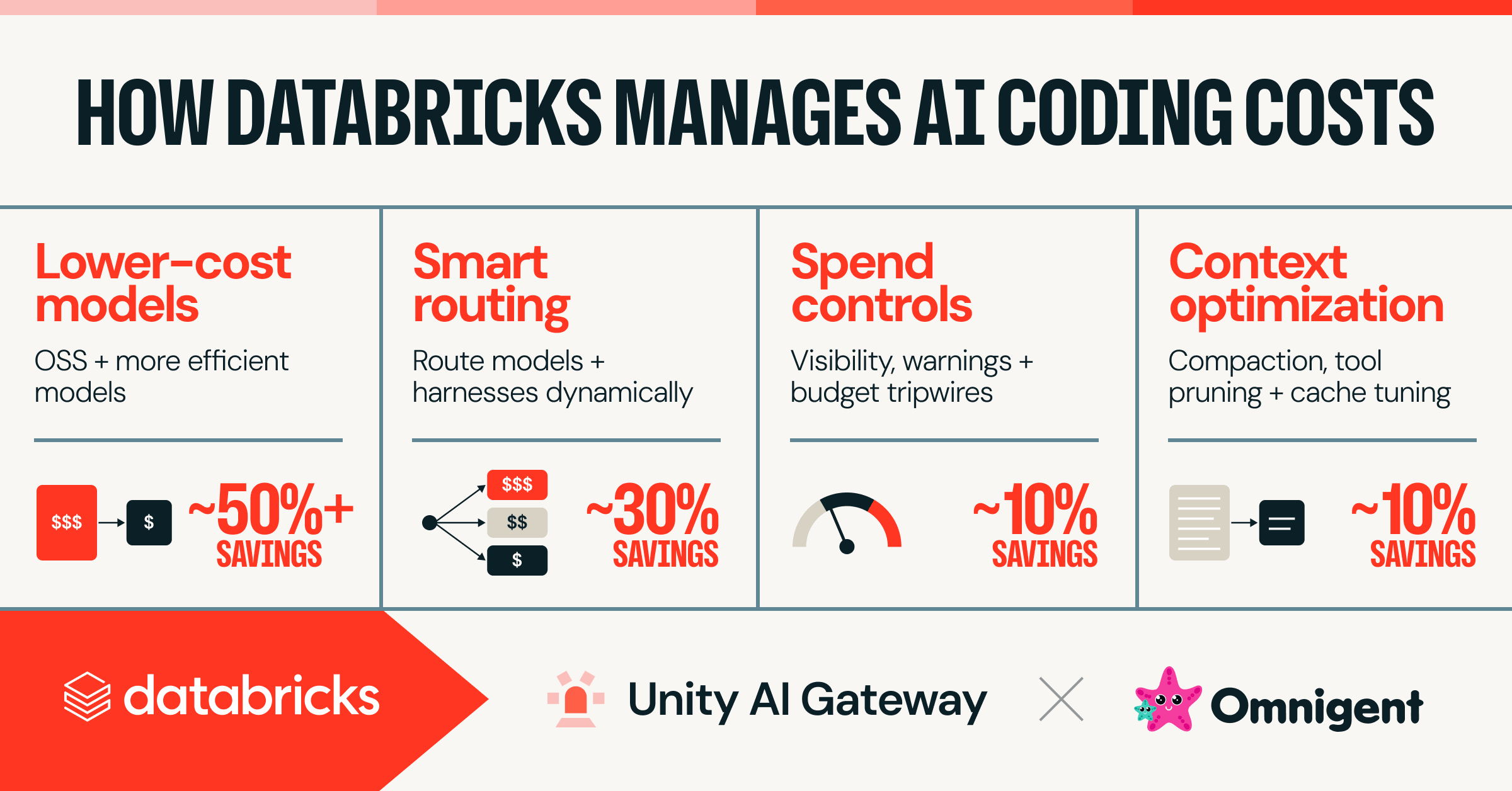
- The efficiency frontier (best price for a given level of intelligence) is advancing far faster than the intelligence frontier, with new models released almost weekly; rapidly adopting these newer models delivers the largest cost wins of any technique surveyed.
- Stripe evaluated Anthropic's Opus 4.7 and found it did not meaningfully improve quality over Opus 4.6 while increasing cost, and declined to roll it out internally — Databricks reports a similar cost regression when comparing Opus 5.0 to 4.8.
- Databricks tuned its harness and prompt caching settings, achieving an almost 50% reduction in generated tokens and associated costs with no observed quality degradation for developers.
- Hard token budgets are treated as a last resort across every company surveyed, because cutting off high-spending users — who are often the most productive — is self-defeating; companies instead use real-time spend visibility and progressive friction as costs rise.
- Databricks has open-sourced Omnigent (a meta-harness that dispatches to multiple underlying harnesses like Claude Code, Codex, and Cursor) and built Unity AI Gateway as central infrastructure for model routing, cost observability, and context management.
Why it matters: The convergence of Databricks, Stripe, Coinbase, Uber, and Ramp on the same playbook signals that AI coding cost management is maturing from ad-hoc experimentation into a recognized discipline — with concrete, measured wins like Databricks's 50% token reduction and Stripe's refusal to upgrade to Opus 4.7. Enterprises that don't build (or buy) equivalent AI gateway infrastructure risk seeing the savings from AI coding tools erased by the very bills those tools generate.
Ask SkimNews