The Aral Sea isn’t just an ecological nightmare – it’s a carbon bomb — SkimNews
Get the Energy newsletter
Daily energy & climate — solar, EVs, oil, the policy fights and tech bets shaping the transition. Free.
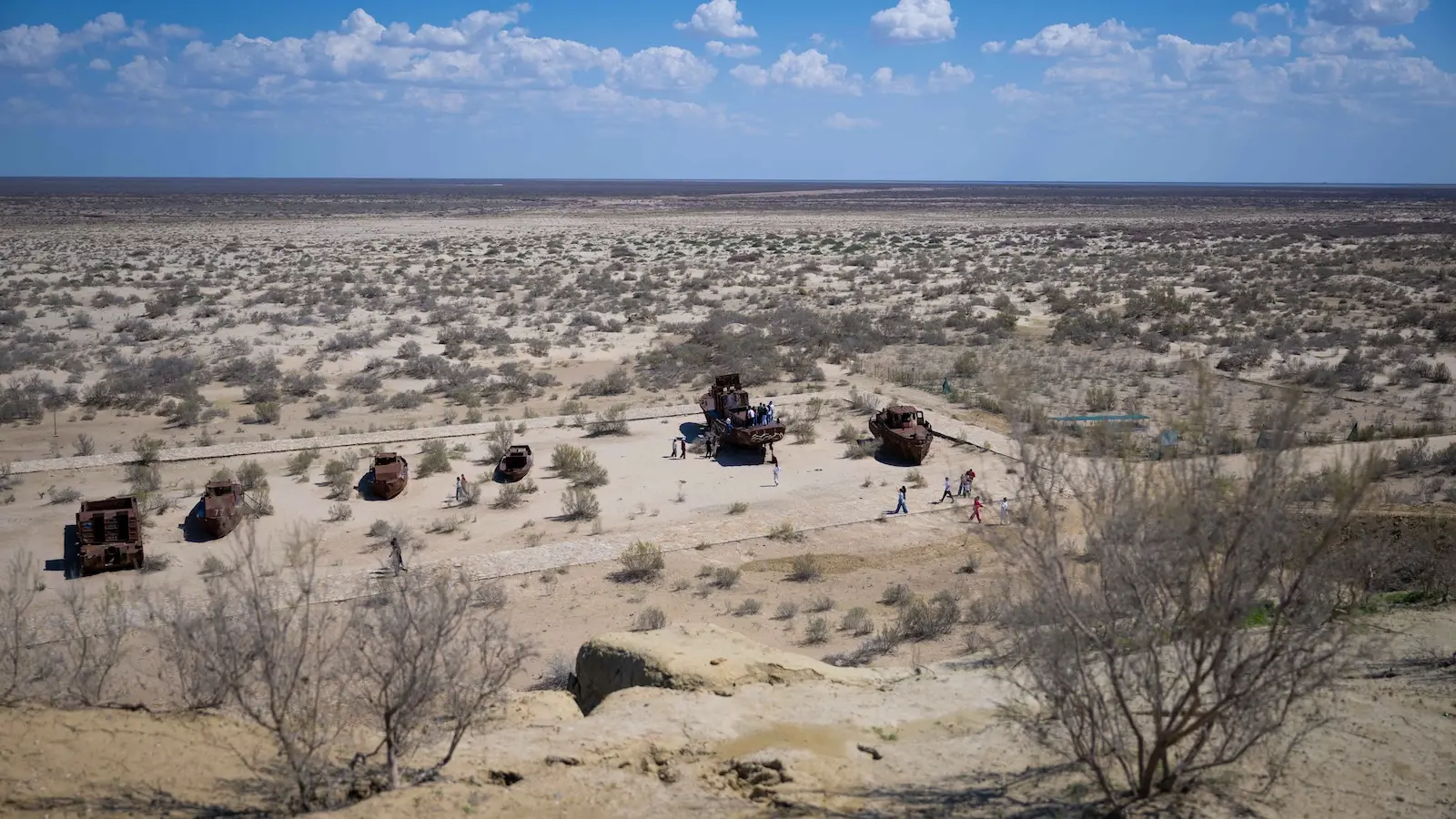
- The Aral Sea emitted 748 million metric tons of CO2 between 1960 and 2022 as it dried up — roughly three times Spain's annual emissions — according to a study published Thursday in Science
- Lead author Rafael Marcé of the Centre for Advanced Studies in Blanes, Spain, said his 2022 expedition team had 'no idea about the potential magnitude' of emissions from the lake bed, and that roughly half the CO2 escapes in the first 15 years after a section is exposed
- The study found nearly a fifth of emissions came from wind blowing sediment away — an understudied mechanism — and that about 605 million metric tons of CO2 remain stored, representing a potential $18 billion in carbon credits if protected
- Marcé's team acknowledged a key limitation: light-duty equipment limited sediment cores to 50 centimeters, meaning deeper carbon stores could make the total 'a gross underestimate'
- Other shrinking water bodies flagged in the paper as facing the same 'dry flux' problem include Lake Chad, Bolivia's Lake Poopó, the Caspian Sea, the Salton Sea, and Utah's Great Salt Lake, which a separate study found is releasing over 4 million tons of CO2 annually
- Soren Brothers, a limnologist at the University of Toronto and climate curator at the Royal Ontario Museum, called unaccounted lake-bed emissions a 'huge blind spot' and warned that drying lakes could 'take over driving climate change'
- Radboud University aquatic ecologist Sarian Kosten called the science 'fascinating and sound' but the trend 'disheartening,' noting the Aral Sea's collapse dates to Soviet-era irrigation diversions for cotton in the 1960s
Why it matters: The study identifies a massive, previously uncounted source of carbon emissions — drying inland lakes — that climate models have largely missed. With the Caspian Sea projected to shrink by more than the entire Aral Sea area by 2100, and the Great Salt Lake alone emitting 4 million tons annually, global carbon budgets may need upward revision. Marcé's team argues protecting the remaining 605 million metric tons of stored CO2 could become a viable climate-mitigation asset class worth roughly $18 billion in carbon credits.
Ask SkimNews