Why the bond market won't bounce back to pre-war levels
Why it matters: The bond market won't bounce back to pre-war levels, with the FTSE World Government Bond Index sliding over 3% in March.
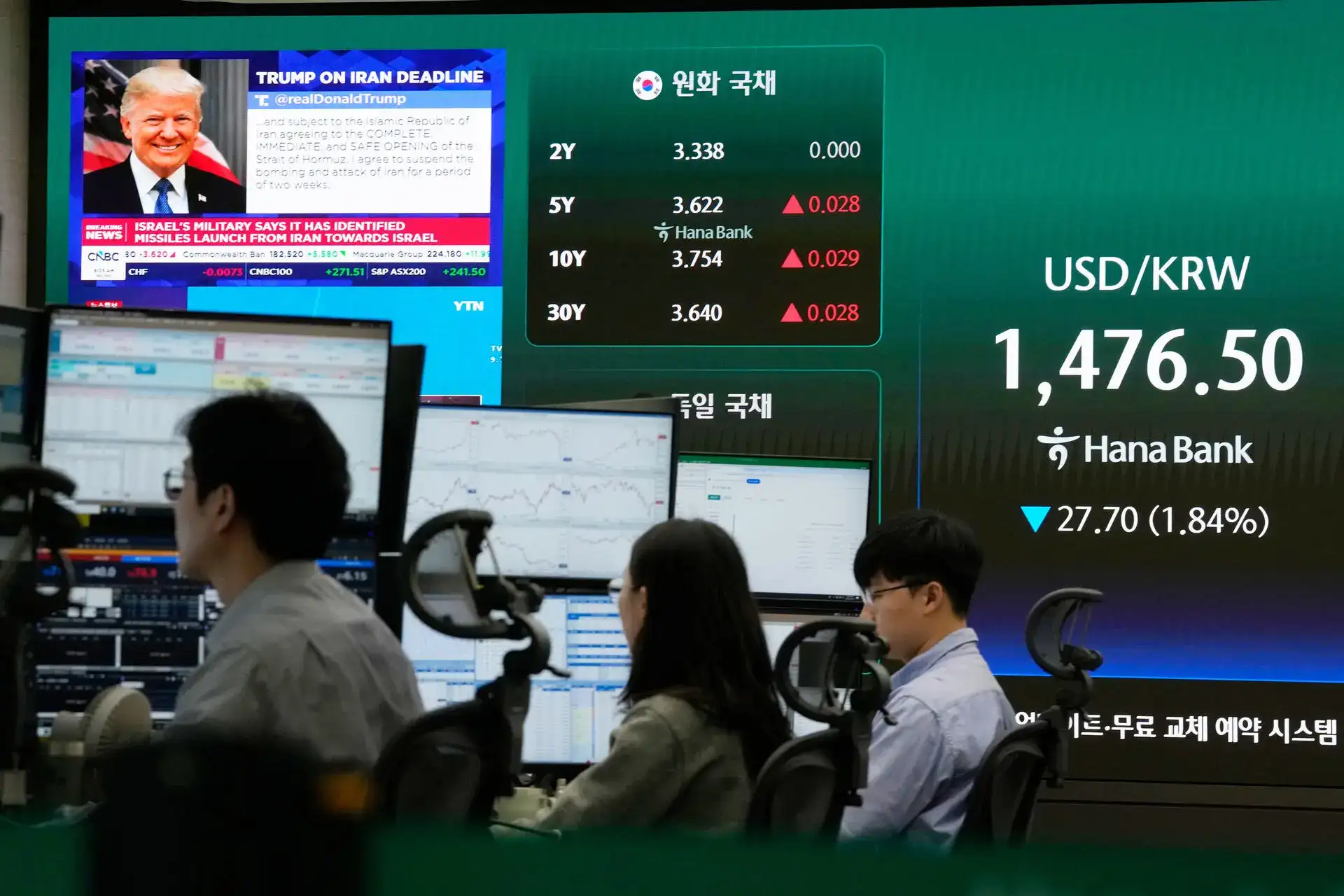
- President Donald Trump announced a two-week ceasefire with Iran, conditional on the reopening of the Strait of Hormuz and safe passage for ships.
- Oil prices tumbled, while stocks and bonds rallied following the ceasefire announcement, with Brent crude futures falling below $100 a barrel.
- Investors believe pre-war expectations for interest rate cuts in the U.S., Britain, and Norway are gone, with some arguing the ceasefire might even push rates higher by reducing the likelihood of severe oil shortages slowing global growth.
- Andrew Lilley, chief rates strategist at Barrenjoey, notes that the temporary oil price shock has brought investors closer to the truth about persistently high inflation over the last three years.
- The FTSE World Government Bond Index slid over 3% in March, marking its sharpest monthly drop in 1 1/2 years, reflecting a reckoning for bond investors.
- Central Banking Publications survey indicates that over two-thirds of central banks view geopolitics as the top risk, with policymakers in India and New Zealand laying groundwork for future rate hikes.
- Benchmark 10-year Treasury yields rallied to 4.85% and two-year yields to 3.72%, only returning to mid-March levels, suggesting limited room for further cuts.
- Fed funds futures now imply barely a 50% chance of a single U.S. rate cut in 2026, a significant shift from earlier predictions of two cuts.
Despite a U.S.-Iran ceasefire sending oil prices tumbling and stocks rallying, bond investors shouldn't expect a return to pre-war interest rate cut expectations, as the energy shock has exposed persistent inflation issues. Analysts like Andrew Lilley of Barrenjoey suggest the temporary oil price surge has shifted central bank psychology, making rate hikes more likely than cuts, even with peace prevailing.