Here are three key takeaways from the disappointing July jobs report — SkimNews

Get the Finance newsletter
Daily finance — markets, central banks, M&A, the prints that move money. Free.
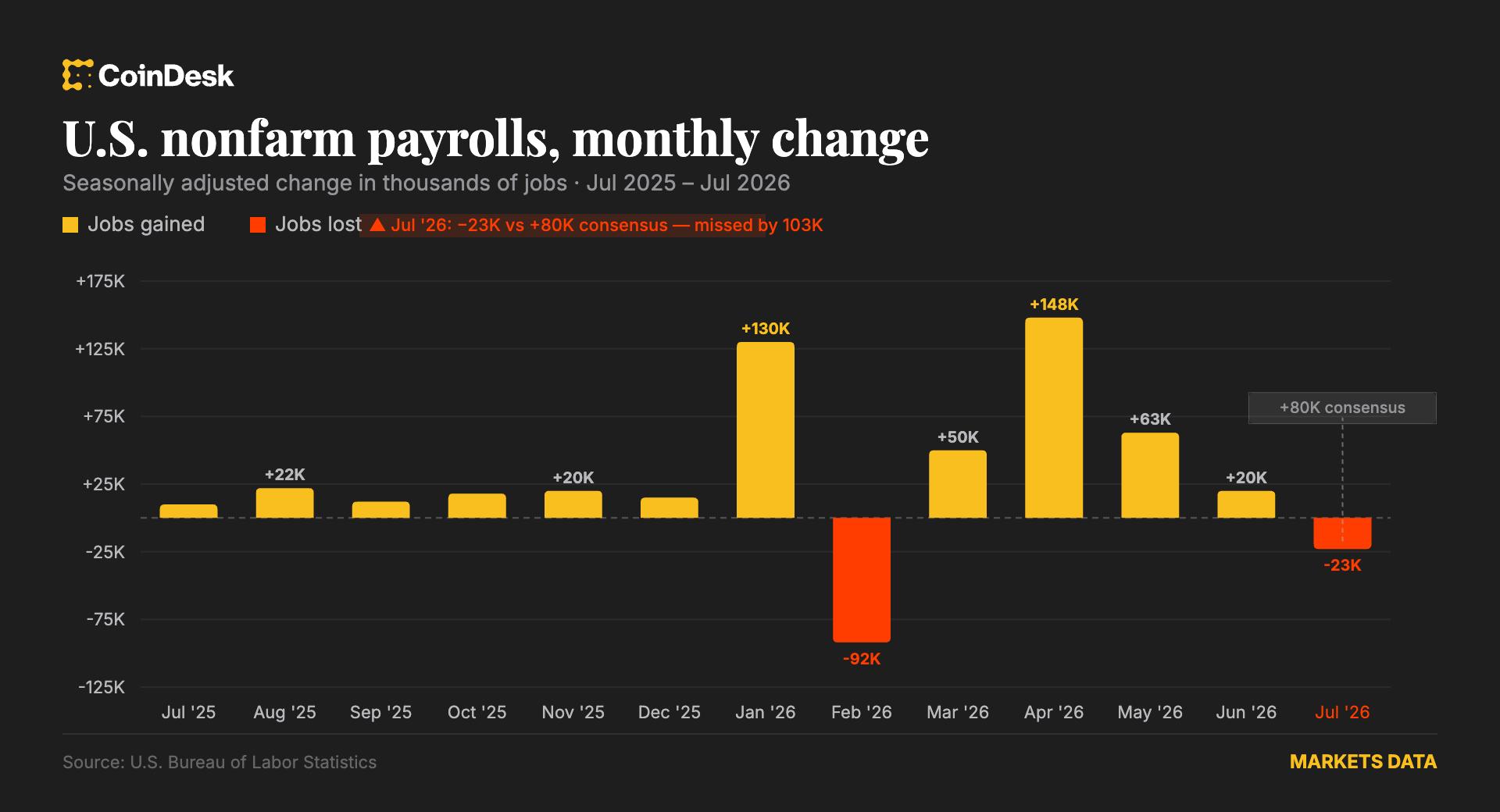
- U.S. nonfarm payrolls unexpectedly declined by 23,000 in July, but private payrolls actually rose by 30,000; the headline drop was driven by a loss of 53,000 government workers that economists attribute largely to seasonal factors
- Unemployment rate fell to 4.1%, but the source notes this was driven by another decline in workers employed or actively looking for a job rather than genuine job gains
- Labor force participation rate edged down to 61.4%, off 0.7 percentage points this year alone as nearly 1.4 million people exited the workforce—the lowest level in 50 years outside the Covid era
- Markets reacted by taking a September Fed rate hike off the table, though Bank of America economist Aditya Bhave is sticking with his call for 75 basis points in Fed hikes this year starting in September
- Federal Reserve policymakers are likely to set the July report aside and quickly focus on next Wednesday's consumer price index inflation reading, with weak payrolls growth taking the urgency out of a September increase
- Kevin Gordon, head of macro research at the Schwab Center for Financial Research, called the report 'a hall of mirrors, tricking investors with different signals about whether labor's recovery is stalling'
- Peter Graf, chief investment officer at Amova Asset Management Americas, warned that 'investors should be wary of the future growth potential of an economy where fewer people are working'
Why it matters: The contradiction between a 23,000 payroll decline and a 4.1% unemployment rate—underpinned by a participation rate at a 50-year low outside Covid—gives the Fed competing signals ahead of its September decision, and shifts the market's focus squarely to next Wednesday's CPI print as the decisive data point.
Ask SkimNews