Copy of 13 stats that prove the USMNT will win the World C... — SkimNews

Get the Sports newsletter
Daily sports — scores, transfers, the storylines from the leagues you actually follow. Free.
- Gerald Skinner and Guy Freeman published a paper in the Journal of Applied Statistics finding that 12% of World Cup triplets from 1938–2006 were "intransitive" (where Team A beats B, B beats C, C beats A) — only marginally better than the 25% expected under pure randomness — and titled it "Are soccer matches badly designed experiments?"
- The No. 1 FIFA-ranked team has never won the World Cup since FIFA rankings were introduced in 1992; the past five pre-tournament No. 1s — Brazil (2022), Germany (2018), Spain (2014), and Brazil in both 2010 and 2006 — all failed to reach the semifinals, and two were eliminated in the group stage.
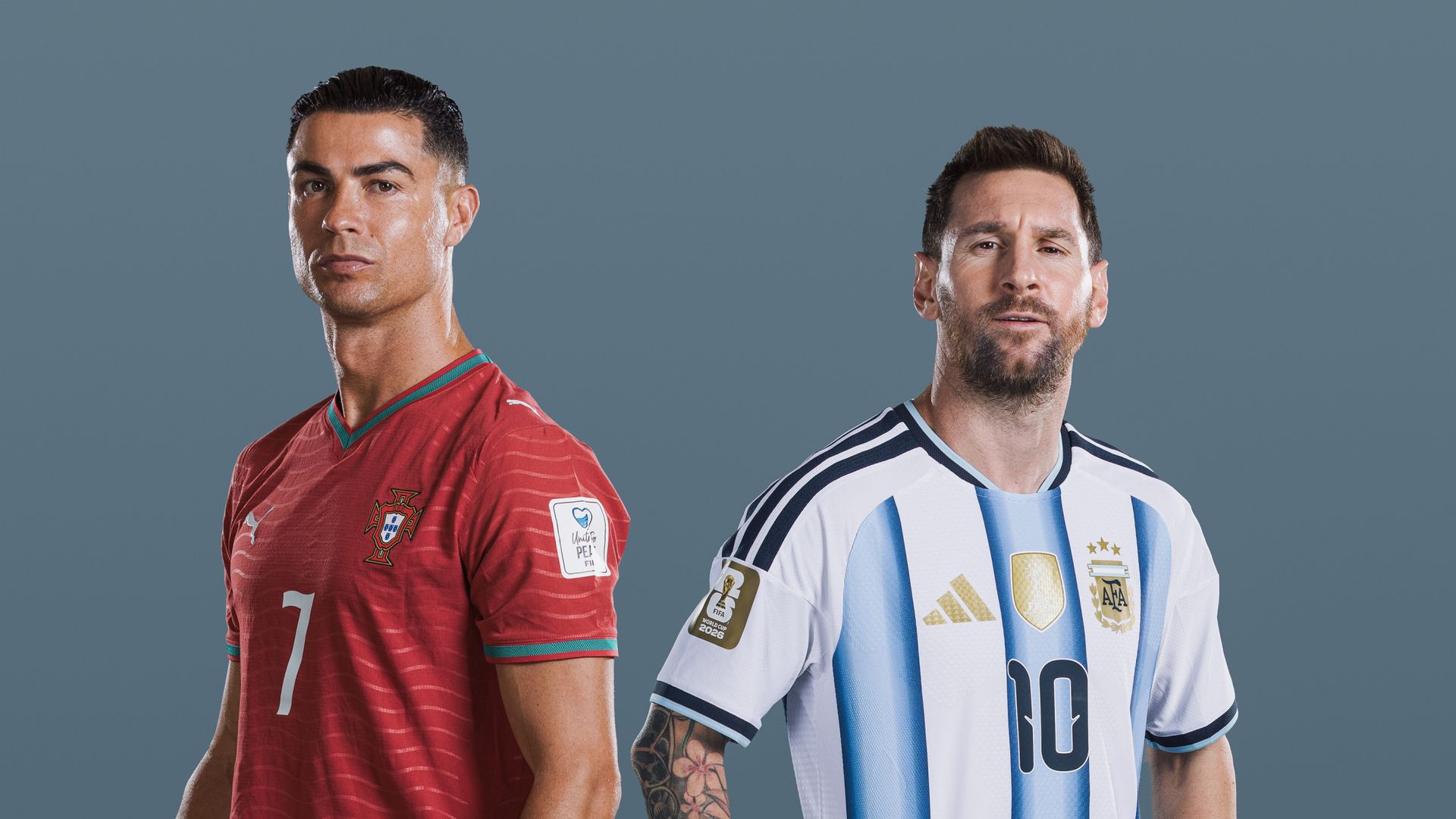
- The reigning Ballon d'Or winner has never won the World Cup in the same year; Ronaldinho's Brazil (2006), Messi's Argentina (2010), Cristiano Ronaldo's Portugal (2014 and 2018) all exited early, and Karim Benzema didn't even make France's 2022 squad.
- No debutant has won the World Cup outside the first two tournaments, eliminating 2026 first-timers Cape Verde, Curacao, Jordan, and Uzbekistan — the USMNT is playing in its 11th World Cup.
- No playoff team has ever won the World Cup, eliminating Qatar, Saudi Arabia, Bosnia-Herzegovina, Sweden, Türkiye, Czechia, Congo DR, and Iraq; the USMNT automatically qualified as a host nation.
- No manager has ever won both the Premier League and the World Cup — Carlo Ancelotti is the only 2026 coach with a Premier League title (Chelsea, 2009–10), eliminating Brazil; USMNT's Mauricio Pochettino, 54, coached PSG to a Ligue 1 title but went trophyless in the Premier League.
- No manager aged 60 or older has won the World Cup (the oldest was 59-year-old Vincente del Bosque with Spain in 2010), eliminating Scotland, South Africa, Austria, Colombia, Netherlands, Spain, Iran, Uruguay, and several others from contention in the column's logic.
Why it matters: The piece is a statistical thought experiment rather than a serious prediction, but it funnels 13 historical filters toward a single survivor — the host USMNT — by exploiting a counterintuitive base rate: favorites (top-ranked teams, Ballon d'Or holders, experienced managers) historically underperform. The most striking supporting data point is the Skinner/Freeman finding that World Cup results over 68 years were only marginally better than random, which undercuts the very idea of pre-tournament favorites and gives the column its rhetorical foundation for backing a long shot.
Ask SkimNews