Grip Strength, Chair-Stand Speed Linked to Longevity in Women — SkimNews
Get the Health newsletter
Daily health & science — research, biotech, public health, the studies worth knowing. Free.
- University at Buffalo researchers tracked 5,000+ women aged 63-99 for eight years and found grip strength and chair-stand performance strongly predicted survival, with every additional 7 kg of grip strength linked to a 12% lower death risk and every 6-second sit-to-stand improvement tied to 4% lower mortality
- Results remained significant after adjusting for accelerometer-measured physical activity, gait speed, and C-reactive protein levels — a blood marker of inflammation tied to muscle decline
- Michael LaMonte, the study's lead author, said benefits extended to women who fell short of the 150-minute-per-week aerobic activity guideline, suggesting muscle-strengthening deserves more emphasis in public health recommendations
- Body size did not explain the link — even when strength measures were scaled to body weight and lean body mass, the mortality advantage persisted
- Published in JAMA Network Open, the study is the largest to isolate muscular strength's role in longevity among women over 60, with co-authors from the National Cancer Institute, Stanford, Brown, UC San Diego, Texas A&M, and Fred Hutch Cancer Center
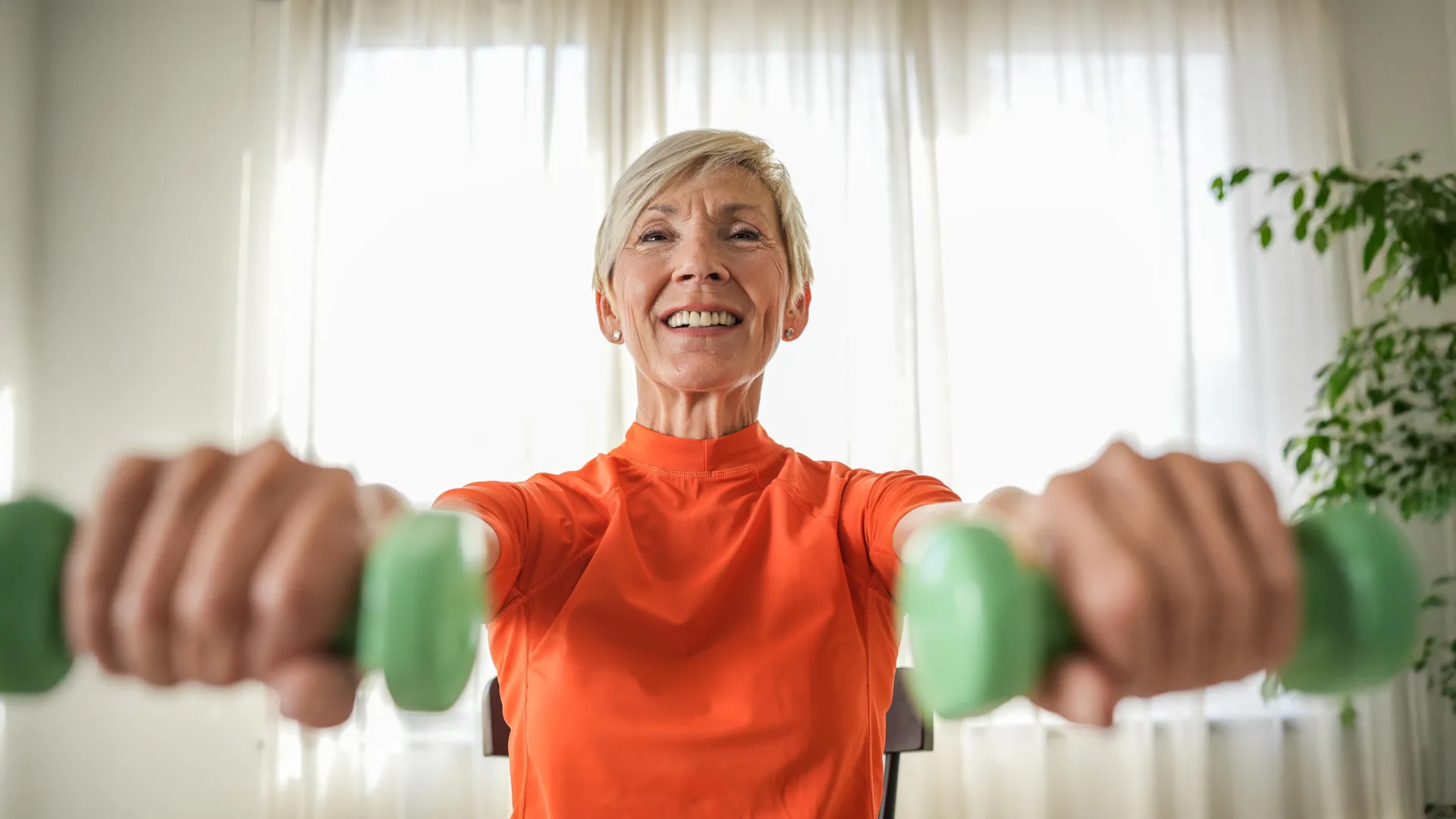
- LaMonte noted everyday items like soup cans and books can work as resistance tools, and advised older adults to consult a healthcare provider before starting a strength program
Why it matters: For the fastest-growing U.S. age group — women 80 and older — the findings argue that strength training matters independently of aerobic exercise, a framing that current guidelines underweight. Clinicians already have two cheap, five-minute tests that could flag high-risk patients, and resistance training can be done at home with no equipment.
Ask SkimNews