The Unlikely Place at the Center of China’s AI Boom — SkimNews

Get the Tech newsletter
Daily tech — startups, AI labs, chips, the launches that shape the next decade. Free.
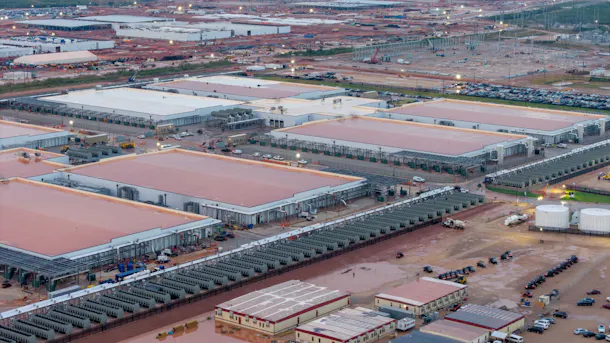
- Ulanqab has nearly 100 data centers opened or under construction since 2016, with Chinese companies pledging 12.5 gigawatts of capacity — over 70% announced in just the last year, per a Goldman Sachs research note.
- The committed capacity rivals OpenAI's $500 billion Stargate Project, which targets only 10 gigawatts of total capacity when complete.
- DeepSeek, ByteDance, Alibaba, and Xiaohongshu are building their own AI data centers in the city — a marked shift from renting compute from cloud providers.
- Water scarcity is already constraining growth: Ulanqab gets roughly 14 inches of rain annually (comparable to Denver), and the local water utility was forced to shut off waterworks for 7 hours nightly last month to manage peak demand.
- The boom builds on China's 2021 "Eastern Data, Western Compute" national project and dedicated fiber optic cables (built 2017 and 2019) that reduced latency to under 5 milliseconds, making remote training viable.
- Envision announced this month it will build a 2-gigawatt AI data center in Ulanqab directly connected to its own clean power supply, betting renewables can absorb new demand.
- Roughly 37% of Ulanqab's electricity still comes from coal per researcher Andrew Stokols, with Carnegie China's Damien Ma calling Inner Mongolia "the West Virginia of China."
Why it matters: Chinese AI companies like DeepSeek and ByteDance are now building proprietary infrastructure rather than renting from cloud providers, narrowing the physical-infrastructure gap with US peers. But Ulanqab's 37% coal reliance and 14-inch annual rainfall — already triggering nightly water shutoffs — mean each new gigawatt of capacity carries real water and energy tradeoffs.
Ask SkimNews