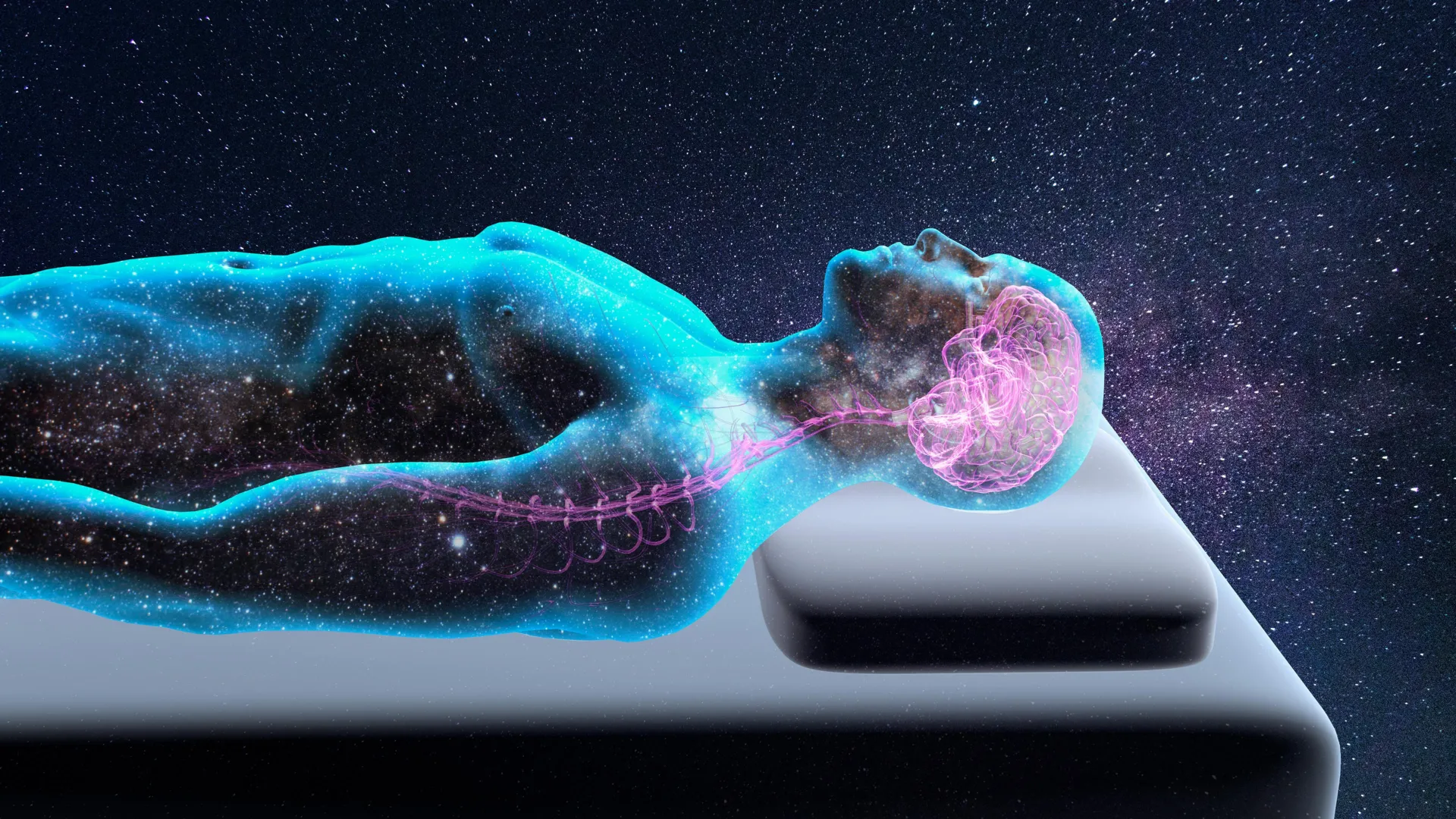
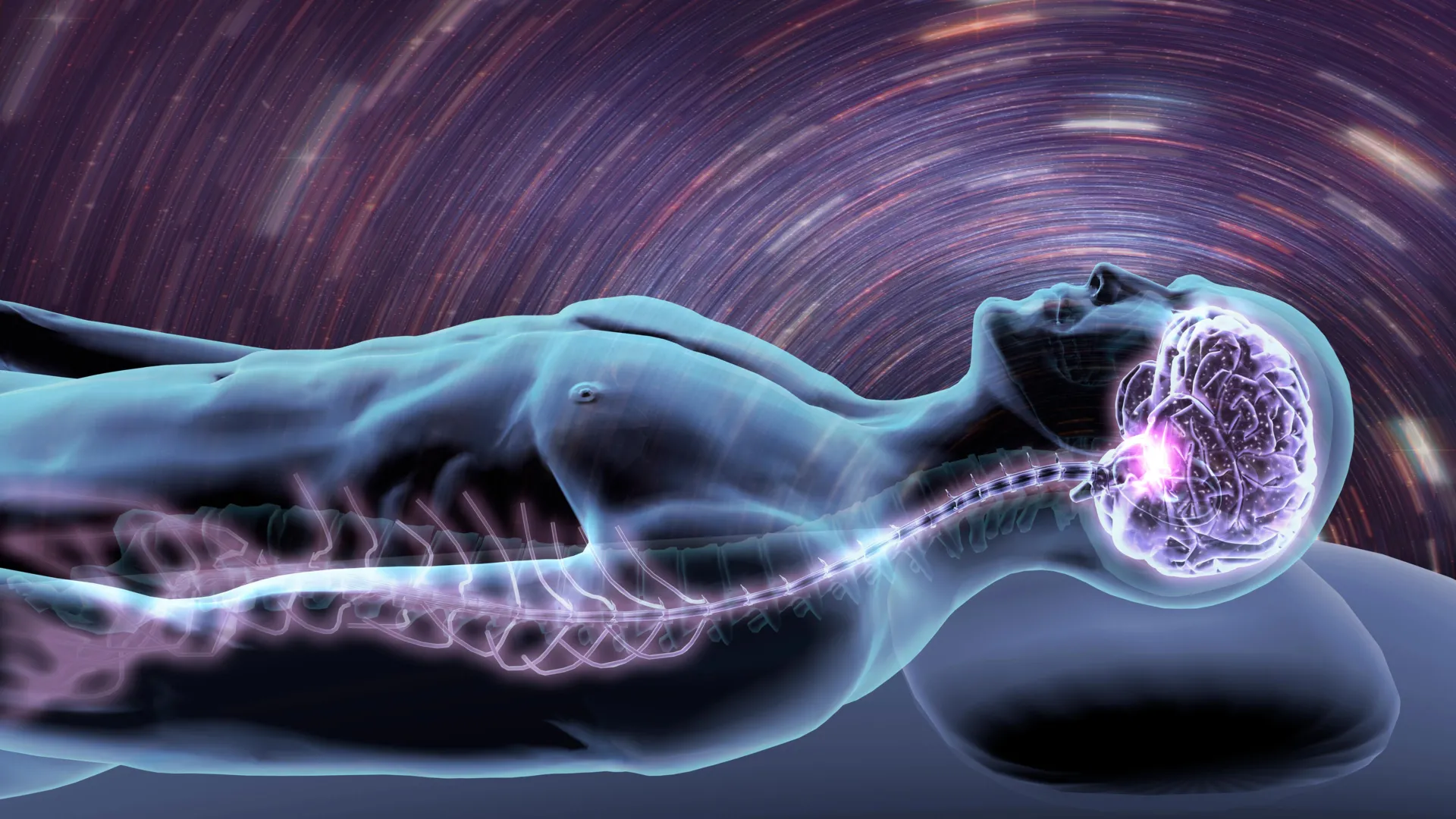
Study of 3,700 Dream Reports Shows Brain Rewrites Reality — SkimNews
Get the Health newsletter
Daily health & science — research, biotech, public health, the studies worth knowing. Free.
- IMT School for Advanced Studies Lucca researchers analyzed more than 3,700 dream and waking-life reports from 287 adults aged 18 to 70 over a two-week period, finding dream content was shaped by personality traits, mind-wandering tendency, sleep quality, and external events.
- Valentina Elce, lead author, said the findings show dreams are 'a dynamic process shaped by who we are and what we live through' rather than random noise or simple replays of the prior day.
- Familiar settings such as workplaces, hospitals, and classrooms appeared in dreams merged with unrelated places, shifting viewpoints, or unfamiliar surroundings — evidence that the sleeping mind reorganizes rather than reproduces daily experience.
- Participants prone to mind-wandering reported dreams that shifted rapidly between scenes and felt fragmented, while those who placed greater personal meaning on dreaming described richer, more immersive and perceptually vivid experiences.
- Dream reports collected during the COVID-19 lockdown by Sapienza University of Rome researchers contained stronger emotions and more references to restrictions, barriers, and confinement; these themes became less pronounced in reports gathered in later months and years.
- The team used natural language processing to measure the semantic structure of written dream reports, achieving accuracy comparable to independent human evaluators — a method the authors say could enable large-scale dream research previously impossible due to the difficulty of describing dreams consistently.
- The study, published in Communications Psychology, was funded by the BIAL Foundation and the TweakDreams ERC Starting Grant, with collaborators from University of Camerino and Sapienza University of Rome.
Why it matters: By demonstrating that NLP can extract structure from written dream reports at near-human accuracy, the study offers researchers a scalable tool for probing how the sleeping mind processes memory, emotion, and major life disruptions — and gives mental-health and consciousness researchers a way to study dream content across far larger populations than was previously feasible.
Ask SkimNews