S&P 500, Nasdaq Hit Records on US-Iran Talk Hopes — SkimNews
SkimNews Take
Markets are pricing in Middle East optimism while the IMF simultaneously flags recession risk from the same conflict—an asymmetric setup where peace headlines drive records, but any reversal would hit an already-stretched tape with no buffer.
Get the Finance newsletter
Daily finance — markets, central banks, M&A, the prints that move money. Free.
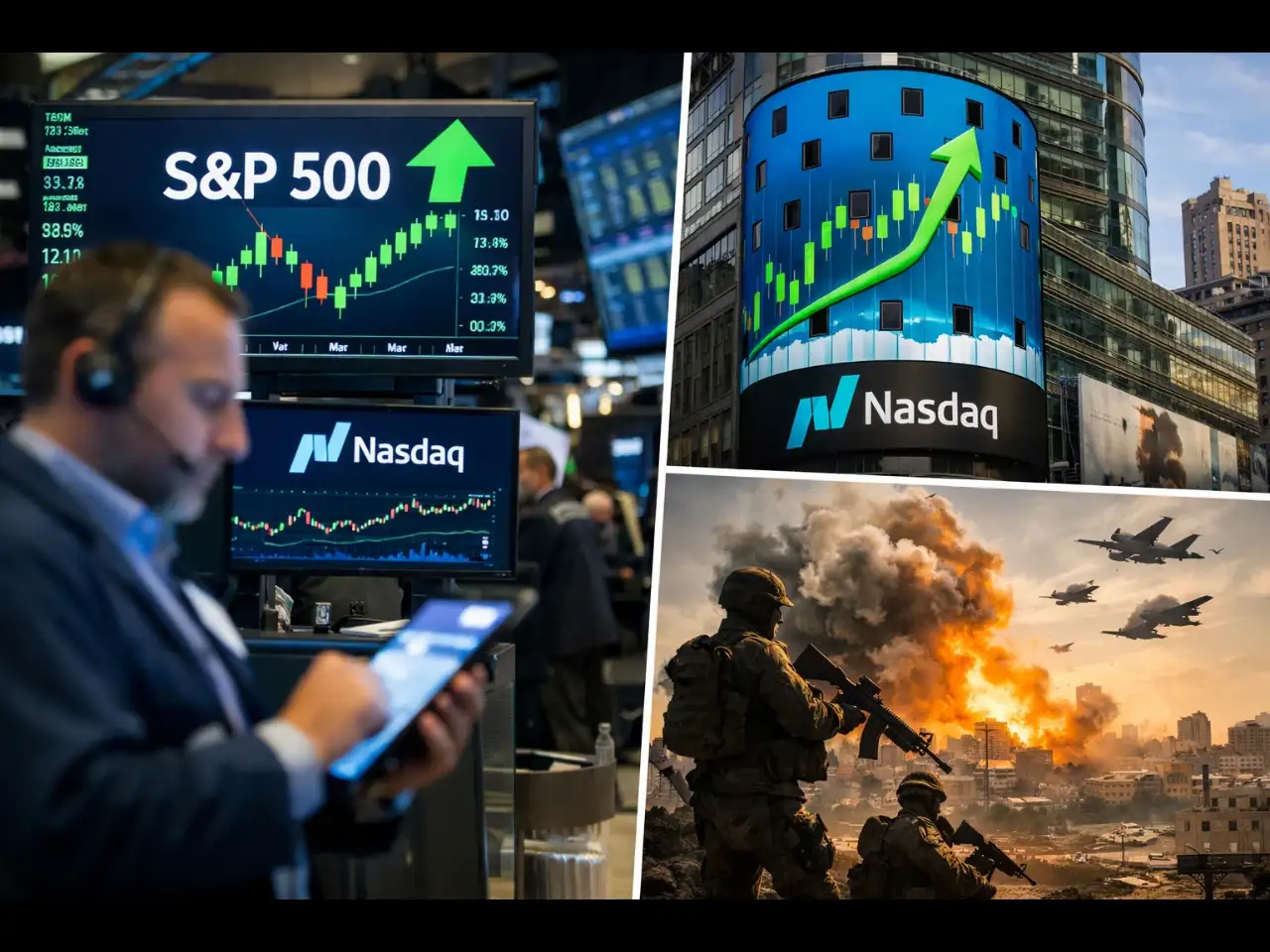
- S&P 500 rose 55.55 points (+0.80%) to 7,022.93 for its first intraday record since the conflict erupted and a record closing high, while the Nasdaq gained 376.93 points (+1.60%) to 24,016.02; the Dow Jones fell 72.27 points (−0.15%) to 48,463.72.
- White House press secretary Karoline Leavitt said discussions about a second round of US-Iran talks were "ongoing and productive," but denied reports that the U.S. requested a ceasefire in the war.
- The U.S. Treasury Department simultaneously targeted Iran's oil transportation infrastructure with sanctions on more than two dozen individuals, companies, and vessels — keeping economic pressure on while diplomacy proceeds.
- The CBOE volatility index hit its lowest level since February 26, reflecting easing investor anxiety, and the S&P 500 software and services index rallied for a third straight day.
- Bank of America and Morgan Stanley shares rose after the lenders reported first-quarter profit growth, helping lift the S&P 500 financial index.
- Art Hogan of B. Riley Wealth warned that "more concrete evidence" is needed to sustain the rally, and the IMF cut its global growth outlook on Tuesday citing war-driven energy price spikes, warning an extended conflict could push the world to the brink of recession.
- Federal Reserve Bank of Cleveland President Beth Hammack said she sees no imminent need to change the interest-rate target, but acknowledged cuts or even hikes could lie ahead.
Why it matters: Investors who rotated into risk assets locked in record closes, but the rally is priced on diplomatic hopes that have not yet produced a ceasefire or any concrete deal — the Treasury's parallel sanctions rollout shows the U.S. is still tightening the screws on Iranian oil even as talks advance, and oil prices remain well above pre-war levels, meaning the energy shock that has fueled inflation concerns has not actually resolved.
Ask SkimNews