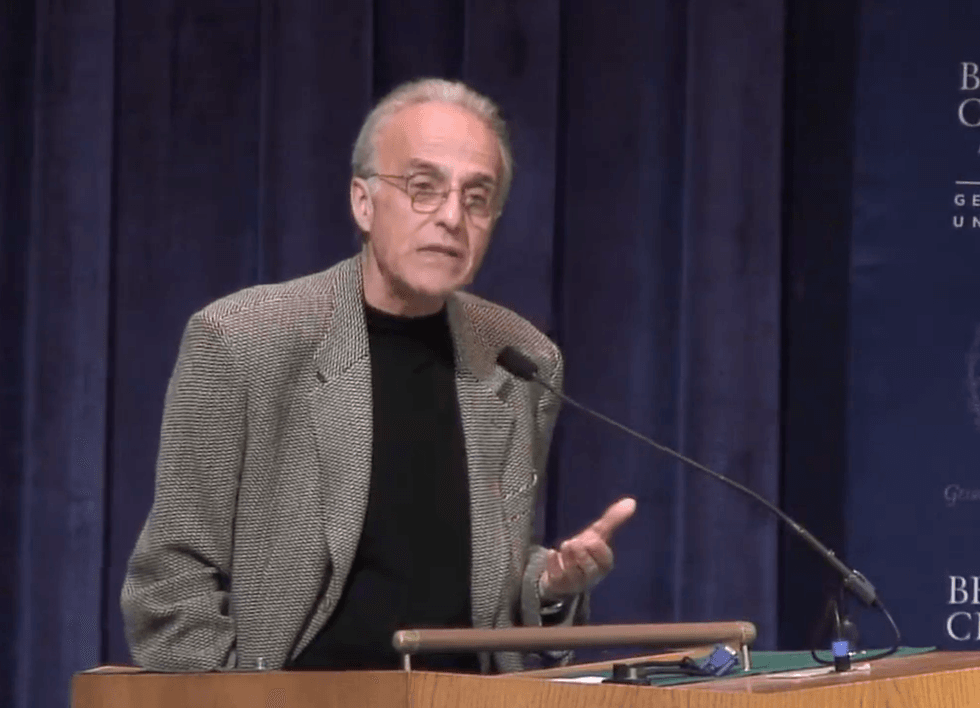
Georgetown Islamophobia scholar John Esposito dies at 86
Get the Geopolitics newsletter
Daily geopolitics — wars, elections, sanctions, the diplomatic moves that move markets. Free.
- John Esposito, the Georgetown professor and scholar of Islam and Islamophobia, died July 15, 2026 at age 86, as the author frames a renewed US-Iran conflict as America's 'Third Gulf War.'
- His 1992 book 'The Islamic Threat: Myth or Reality?' argued Western portrayals of the Islamic world were distorted by Islamophobia, serving as an intellectual counter to Bernard Lewis's 'Roots of Muslim Rage' essay and Samuel Huntington's 1993/1996 'Clash of Civilizations' thesis.
- Esposito founded Georgetown's Prince Alwaleed Bin Talal Center for Muslim-Christian Understanding in 1993 and later created The Bridge Initiative to systematically document Islamophobic incidents in the US.
- In a 1996 office conversation, Esposito warned the author — then his research assistant — that Osama bin Laden's emerging alliance with the Taliban in Afghanistan was being ignored by Washington's institutions, years before 9/11.
- The Bridge Initiative most recently documented a May 2026 attack on the Islamic Center of San Diego mosque, where two teenagers killed three people; the attackers cited a Cal State San Marcos nursing student who attacked a mosque and synagogue in 2019.
- In a 2011 interview, Esposito criticized the Obama administration for its lack of significant senior Muslim appointments — a critique the author argues has proven prescient as Islamophobia continued to flourish under subsequent presidents including Donald Trump.
Why it matters: Esposito's death coincides with what the author calls America's 'Third Gulf War' with Iran and comes weeks after a San Diego mosque attack killed three people — precisely the type of incident The Bridge Initiative was built to track. His career is a case study in how Washington systematically failed to heed early warnings (bin Laden in 1996) and how Islamophobia translated into concrete foreign-policy missteps from the 1991 Gulf War to the 2026 conflict, leaving his documentation project as the most systematic public record of US anti-Muslim hate.