Gas hits $4.09/gallon; EV searches jump 17% in a week — SkimNews
Get the Energy newsletter
Daily energy & climate — solar, EVs, oil, the policy fights and tech bets shaping the transition. Free.
- U.S. gas prices climbed to $4.09 per gallon this week, up 33% from a year earlier, as Brent crude settled near $92/barrel after spiking toward $120 following late-February US-Israel strikes on Iran that disrupted Strait of Hormuz flows and damaged or destroyed 30%–40% of Gulf refining capacity.
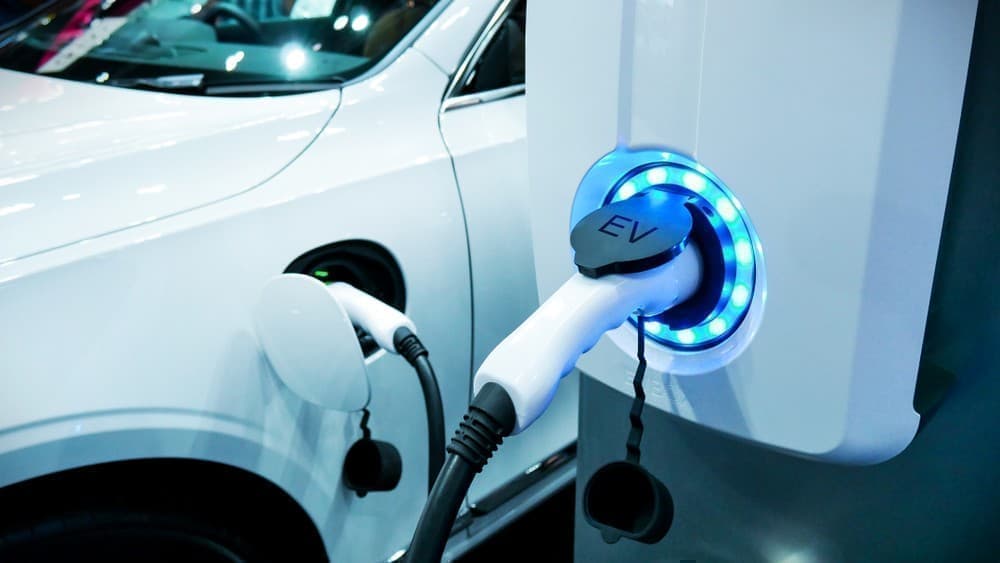
- Edmunds reported that electrified-vehicle consideration jumped to 23.8% of car shopper research activity in mid-March — the highest weekly level of 2026 — while online EV searches surged 17% in a single week as gas prices spiked.
- The cost comparison shows a Toyota Camry driver covering 1,125 miles/month spends $144 on gas versus $52 charging a Hyundai Ioniq 6, a $92/month ($1,104/year) gap that widens to $156/month in California where gas averages $5.89/gallon.
- Truck owners see the steepest savings: an F-150 driver at 22 MPG pays $223/month in fuel at today's prices, versus $65/month to charge an F-150 Lightning — a $158/month, nearly $1,900/year difference.
- Entry-level EV deals are now below gas-car total cost of ownership: a Chevy Equinox EV lease works out to $470/month all-in (saving $309/month), a Hyundai Ioniq 5 lease to $464/month (saving $315/month), and a used Nissan Leaf financed over 60 months to $376/month (saving $403/month, nearly $4,835/year).
- The global EV fleet already displaced 1.7 million barrels per day of oil demand in 2025 — equivalent to roughly 70% of Iran's total exports — and the IEA expects global oil demand to peak by 2029 if adoption continues at its current pace.
Why it matters: At today's $4.09 gas, the average driver switching to a comparably priced EV saves $300–$400 per month, a gap large enough to reshape mainstream car-buying math. With 23.8% of shoppers now actively considering an EV — the highest weekly share of 2026 — the demand-side response to oil shocks is finally catching up to the supply-side volatility that has squeezed drivers in 2008, 2022, and now 2026.
Ask SkimNews