North Korea Builds War Playbook from Iran, Ukraine — SkimNews

Get the Geopolitics newsletter
Daily geopolitics — wars, elections, sanctions, the diplomatic moves that move markets. Free.
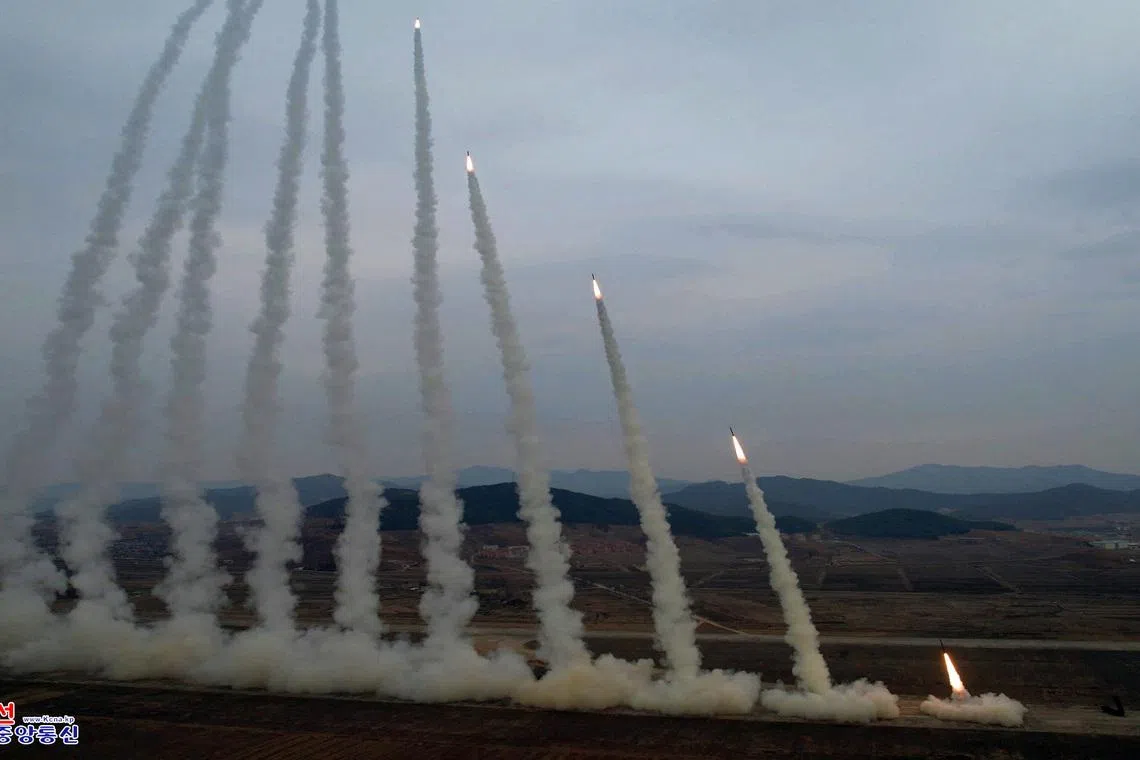
- North Korea tested a Hwasong-11A short-range ballistic missile with a cluster-munition warhead dispersing submunitions over 10 football fields, alongside graphite "blackout bombs" designed to disable electrical grids.
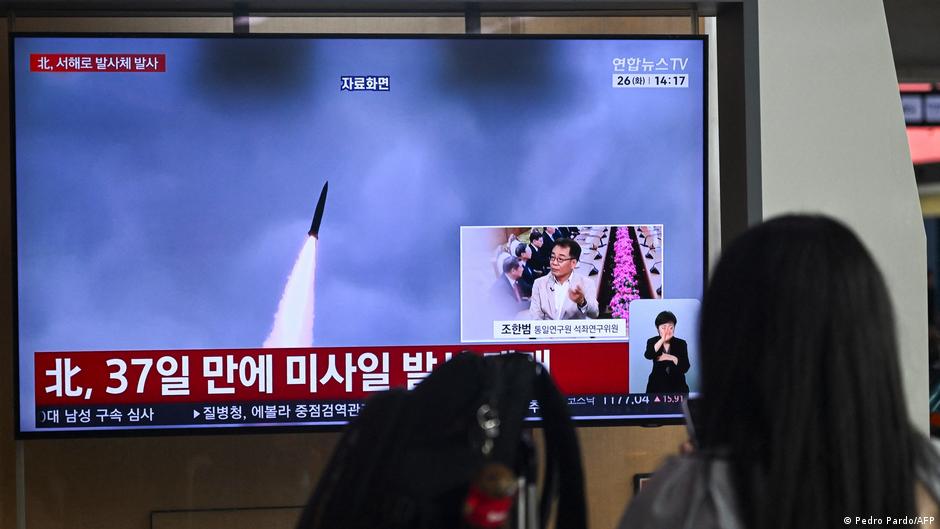
- South Korea convened a national security meeting after test missiles flew 241–698 kilometers off North Korea's east coast, while additional tests included a mobile short-range air defense system and a low-cost missile engine for mass production.
- Kim Jong Un's five-year military buildup plan is driving the tests, which analysts say reflect a deterrence strategy designed to prolong any war and deny adversaries a quick, decisive victory — independent of nuclear weapons.
- JINSA analysts Jonah Brody and Rena Gabber report North Korea has supplied missile technology to Iran since the 1980s, with North Korean-derived systems like the Khorramshahr-4 — carrying up to two-ton warheads with cluster munitions — used in Iranian strikes against US, Israeli, and regional targets.
- Iran's missile survivability — roughly half its ballistic missile launchers and thousands of one-way attack drones still intact after weeks of airstrikes, with struck bunkers restored to operation within hours — mirrors North Korea's 20 undeclared missile bases built around mobile launchers, hardened underground sites, and terrain dispersal.
- The killing of Iranian Supreme Leader Ali Khamenei in the war's opening strikes suggests to North Korea that regime decapitation remains possible even for nuclear-armed states, driving investment in layered deterrence: protected leadership, redundant command networks, mobile missiles, and hardened infrastructure.
- A more survivable North Korean missile force strengthens dual-theater coercion logic, allowing China and Russia to exploit Korean Peninsula tensions to stretch US military capacity during simultaneous crises over Taiwan or the South China Sea.
Why it matters: The tests mark a concrete milestone in Kim Jong Un's five-year buildup, validating decades of North Korean-Iranian missile collaboration through live combat use. For US and South Korean planners, the playbook adds a survivable conventional layer atop Pyongyang's nuclear deterrent, making any Korean conflict costlier and longer — and complicating Washington's ability to manage simultaneous crises with China over Taiwan.
Ask SkimNews