Sodium-Ion EVs Hit Mass Market as CATL, Changan Lead — SkimNews

Get the Energy newsletter
Daily energy & climate — solar, EVs, oil, the policy fights and tech bets shaping the transition. Free.
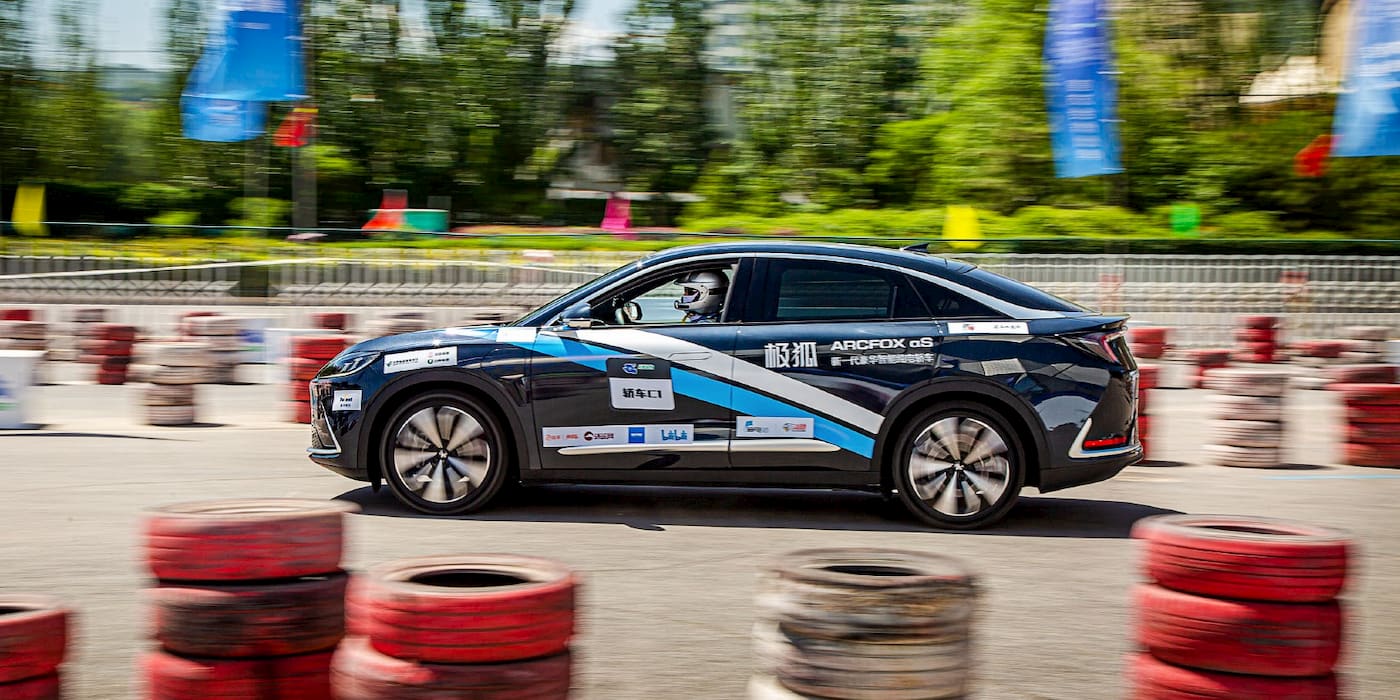
- Changan's Nevo AO6 is set to become the first mass-produced EV with a sodium-ion battery, hitting the market later this year using CATL's new-generation cells — demonstrated on an icy Chinese test track where a tyre-burst sedan coasted safely through -32°C air.
- CATL claims its sodium-ion battery reaches 175 watt-hours per kilogram, competitive with lithium-iron-phosphate cells in low-cost models from Tesla and others, and retains 90% capacity at -40°C; a sawed-in-half cell continued powering a lightbulb without igniting.
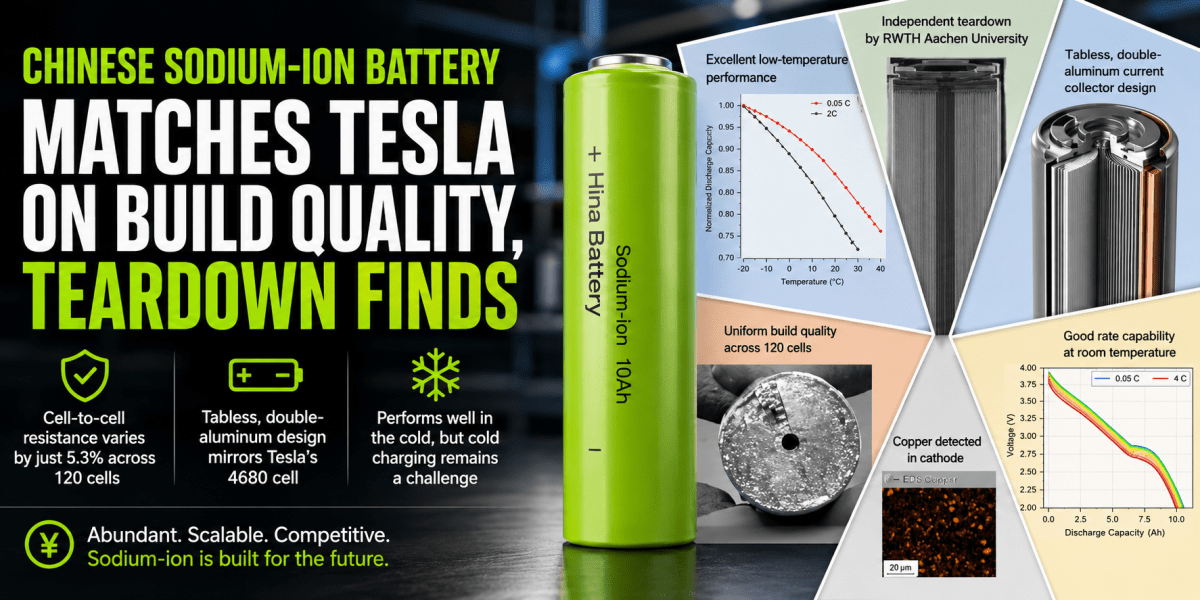
- An Aachen University study by Moritz Schütte found that manufacturer Hina's sodium-ion battery rivals Tesla's lithium-ion on most parameters, though it remains roughly a third heavier.
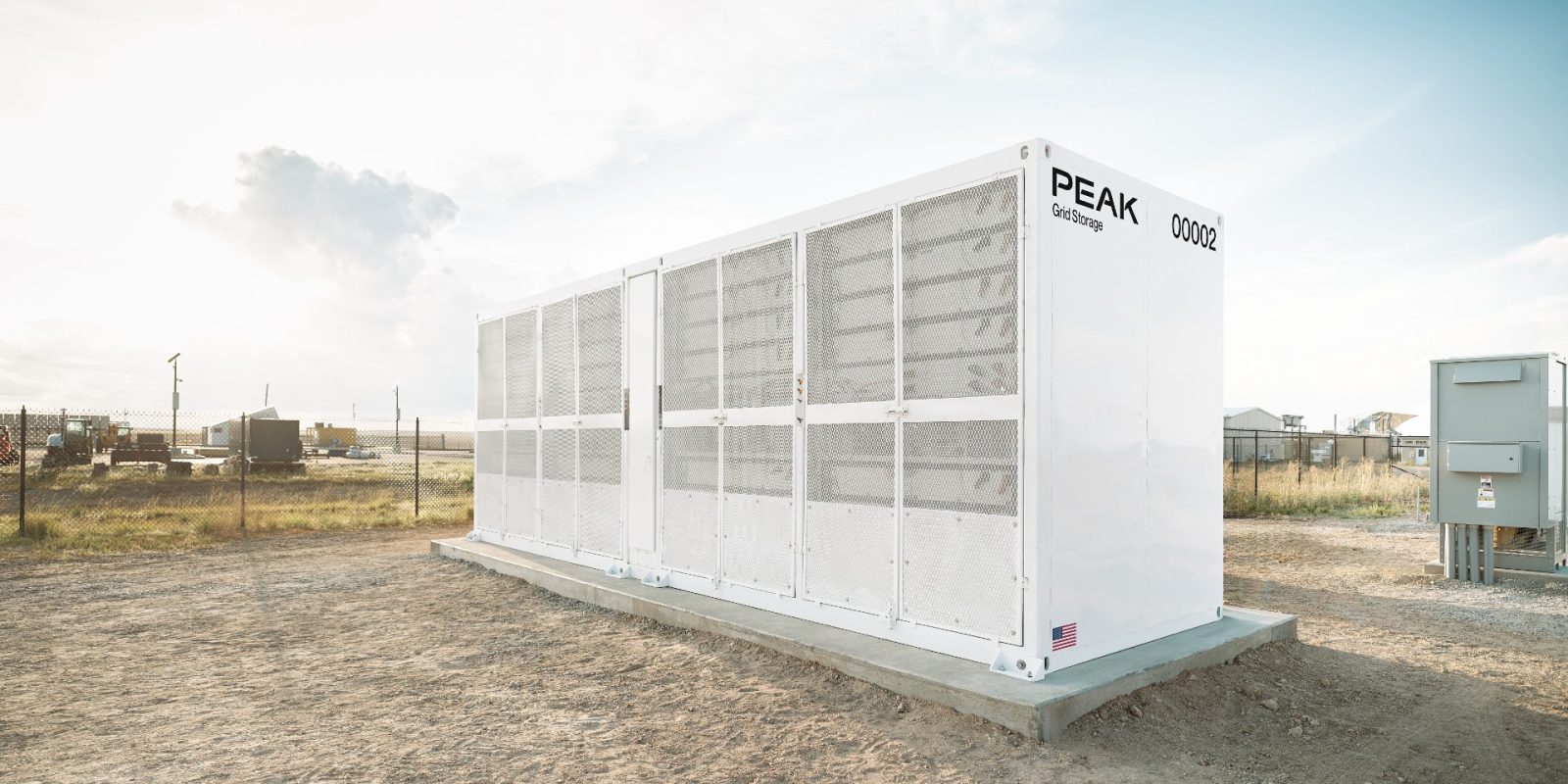
- General Motors partnered with startup Peak Energy to build sodium-ion grid storage, with Peak Energy also selling units to data centres; Eleven Energy is installing sodium-ion home batteries in the UK, and grid storage plants are already operating in China, Germany, and the US.
- Sodium ions generate less heat in electrochemical reactions than lithium, reducing fire risk and cutting cooling costs — the key safety edge CATL highlighted at its frozen-launch demo.
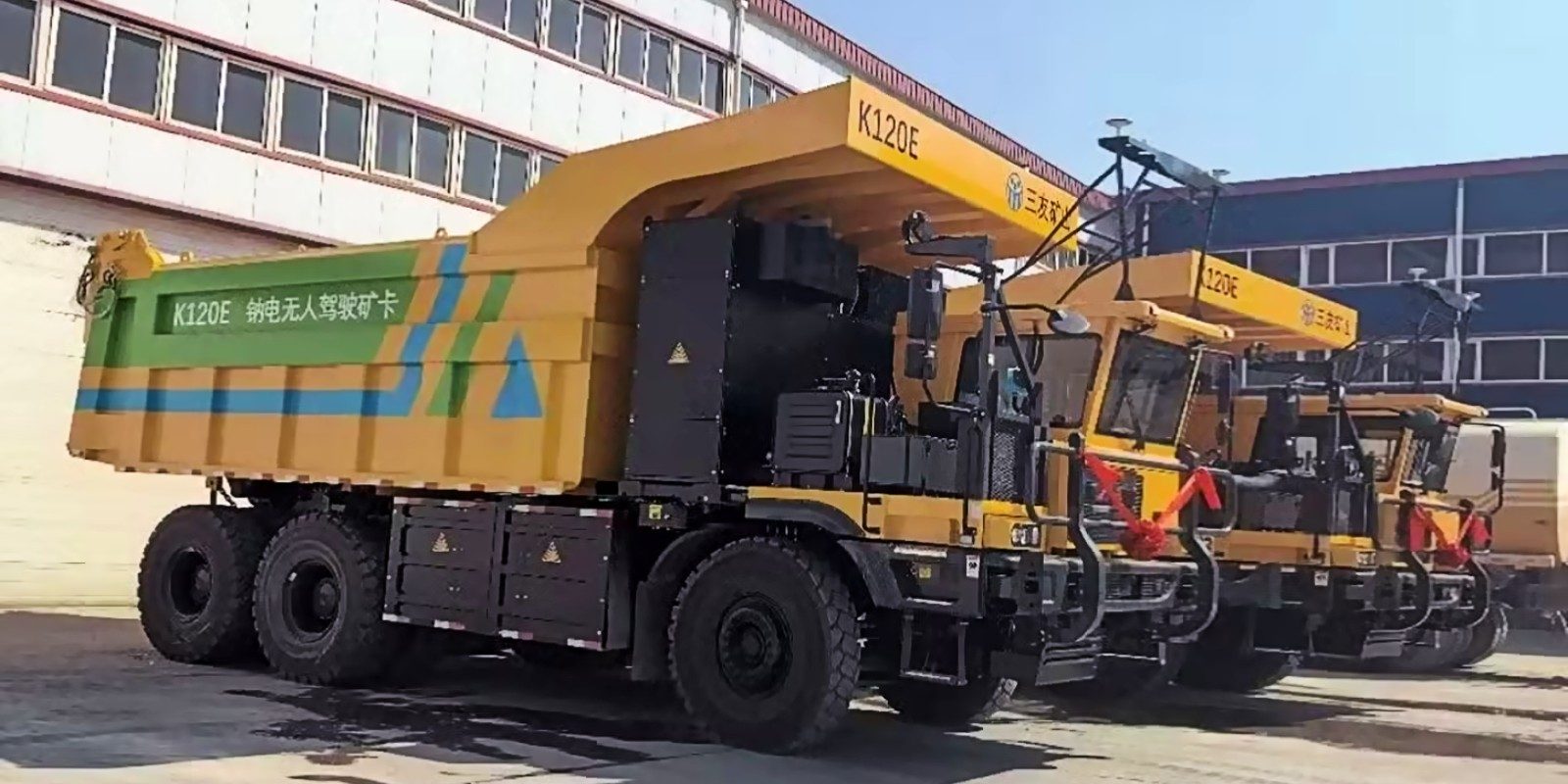
- Sodium is roughly three times heavier than lithium, which long confined the chemistry to grid storage and mini EVs, but rising energy density now opens the door to general-market EVs, cold-climate models, and cargo lorries.
- Lithium processing is energy-intensive, carbon-heavy, and dominated by China, with supplies vulnerable to geopolitical disruption over Taiwan — giving sodium a strategic supply-chain angle beyond its price advantage.
Why it matters: For budget-EV makers and grid operators, sodium-ion's lower cost, cold tolerance, and reduced fire risk undercut lithium's main selling points in entry-level segments. With China controlling most lithium processing and Taiwan a live geopolitical flashpoint, Western automakers and utilities gain a more diversified supply path as Changan and CATL scale first.
Ask SkimNews