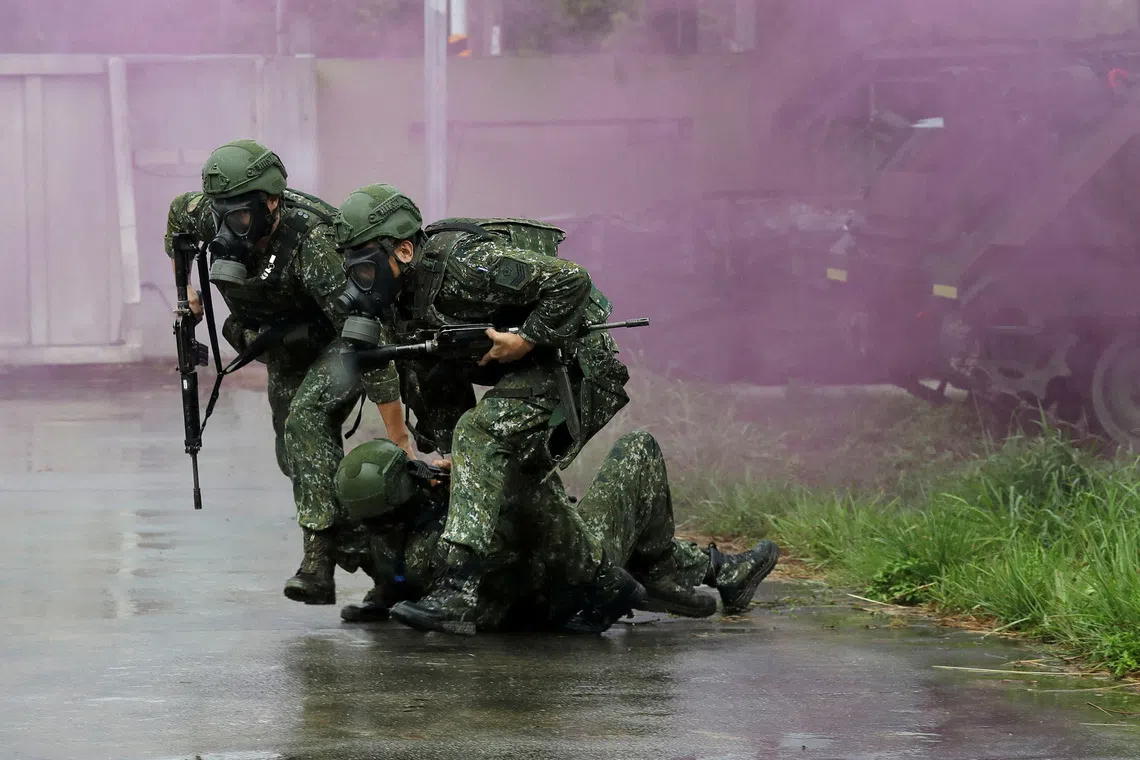
China Would Need Three Military Firsts to Invade Taiwan
Get the Geopolitics newsletter
Daily geopolitics — wars, elections, sanctions, the diplomatic moves that move markets. Free.
- The People's Liberation Army would need to execute three operations never accomplished under modern threat conditions — an amphibious landing against coastal anti-ship missiles, a large-scale airborne drop against modern air defenses, and a large opposed air assault at extended range — what the analysis calls the "Three Nevers."
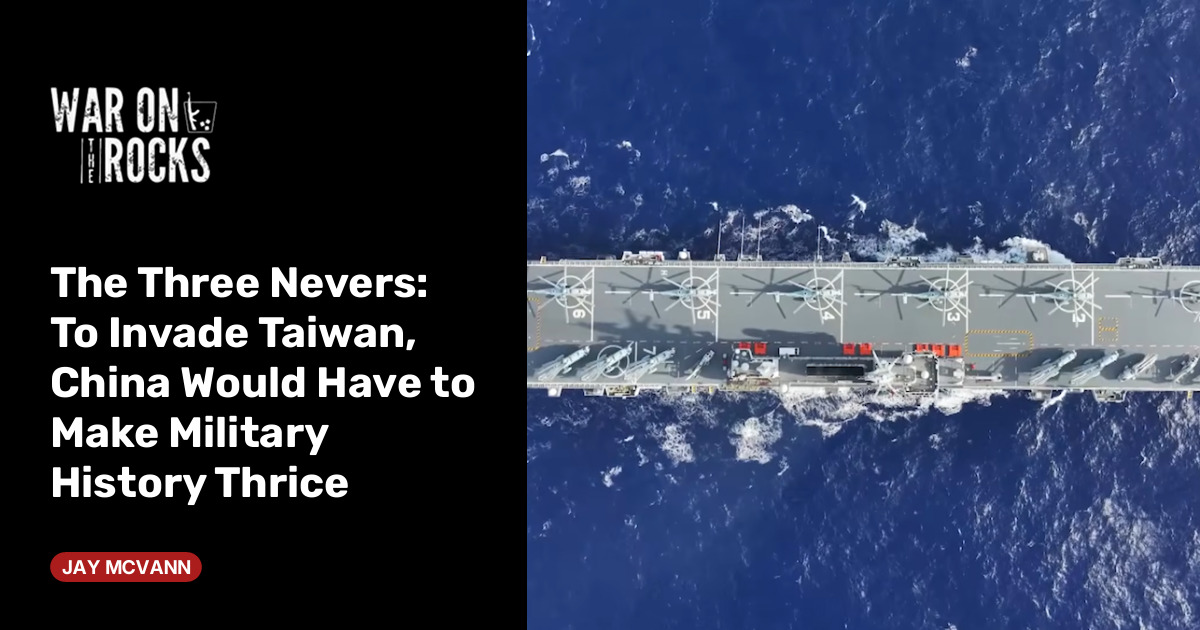
- The PLA Navy can transport roughly 21,000 troops and the equipment of one heavy amphibious brigade per wave, expandable to about three brigades using modified civilian roll-on/roll-off vessels, with neither ports nor temporary causeways available to the first wave.
- Taiwan's army fields seven combined-arms brigades and maintains 20 reserve infantry brigades, meaning an initial three-brigade Chinese landing force would fall well below the three-to-one ratio typically associated with offensive operations.
- Taiwan's coastal defense cruise missiles range 75 to 93 miles, with extended variants reportedly reaching up to 250 miles — far exceeding the roughly 15-mile coastal artillery range Allied forces faced at Normandy — keeping Chinese forces under fire throughout the strait crossing.
- Civilian roll-on/roll-off vessels pressed into military service each carry the personnel and equipment of nearly two battalions, and a single hull loss would remove one entire wave's worth of combat power; a 2021 peacetime fire aboard the Chinese vessel Zhong Hua Fu Qiang underscored the design's vulnerability.
- Taiwan's integrated air defense includes U.S.-supplied Stinger man-portable missiles that are extremely difficult to detect or suppress, posing severe losses for the low-flying, slow transport aircraft that would need to approach Taiwan's limited drop zones.
Why it matters: The PLA's roughly 21,000-troop-per-wave lift and reliance on civilian roll-on/roll-off vessels force a tightly sequenced three-dimensional campaign, while Taiwan's 75–250-mile coastal missile envelope and Stinger-equipped air defenses target every stage of the assault — meaning Taiwan's threshold for disrupting the operation sits far below its threshold for victory.
Ask SkimNews