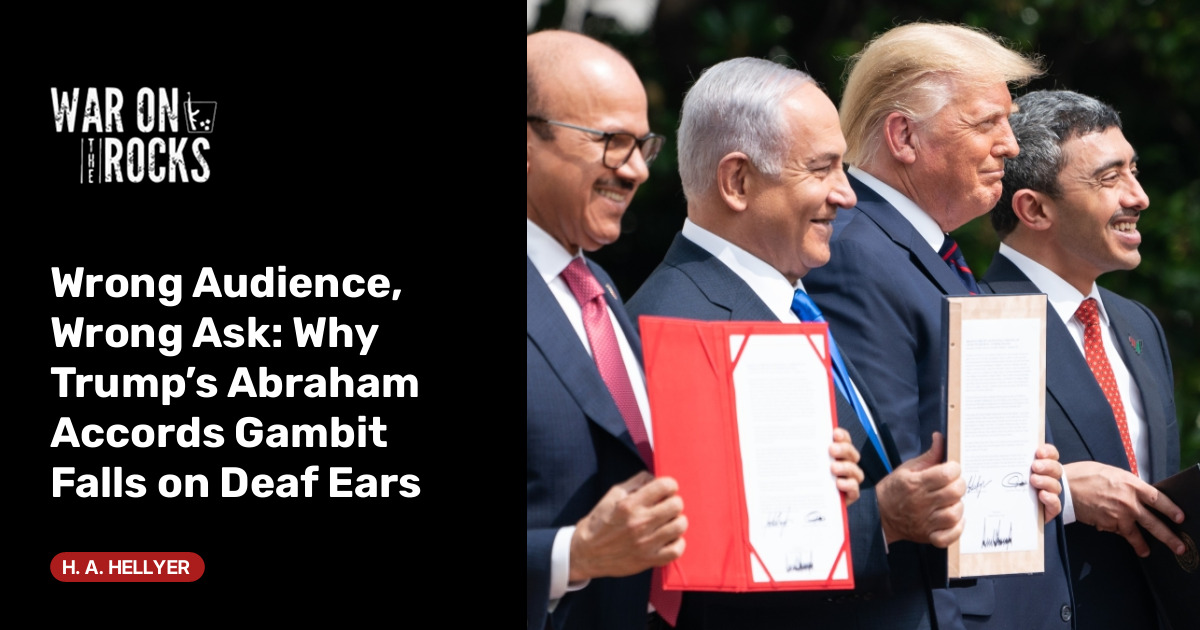
Trump pushes Iran into the Abraham Accords, yet Bahrain stays in the pact grudgingly while Saudi leaders flat‑out reject any step that skips statehood — SkimNews

Get the Geopolitics newsletter
Daily geopolitics — wars, elections, sanctions, the diplomatic moves that move markets. Free.
- Trump made a series of phone calls on May 25 urging Middle East leaders to join the Abraham Accords and later posted on social media that all countries should simultaneously sign the accords.
- Trump suggested that Iran could also become a signatory of the Abraham Accords, despite a half‑century of hostility between Iran and Israel.
- A former US diplomat called the proposal a “poison pill,” saying it created new conditions for peace that neither Iran nor the Arab states would accept.
- Bahrain and the United Arab Emirates recalled their ambassadors to Israel after the Gaza war but kept trade and security cooperation under the Abraham Accords.
- Crown Prince Mohammad bin Salman told US officials in 2024 he feared being killed if he normalized relations with Israel, and Saudi officials say normalization will not happen without irrevocable steps toward Palestinian statehood.
- Qatar condemned Israeli strikes on Doha in 2025 targeting Hamas figures and remains furious, while a White House photo showed Trump overseeing Israeli Prime Minister Netanyahu apologizing to Qatar’s prime minister.
Why it matters: The proposal deepens diplomatic friction, leaving regional partners like Saudi Arabia and Qatar alienated while Bahrain and the UAE cling to the accords despite recalling ambassadors. It underscores that Trump’s push offers little practical progress and may harden opposition to any broader normalization.
Ask SkimNews