China builds 80+ launch pads, octagonal hubs at Hami — SkimNews

Get the Geopolitics newsletter
Daily geopolitics — wars, elections, sanctions, the diplomatic moves that move markets. Free.
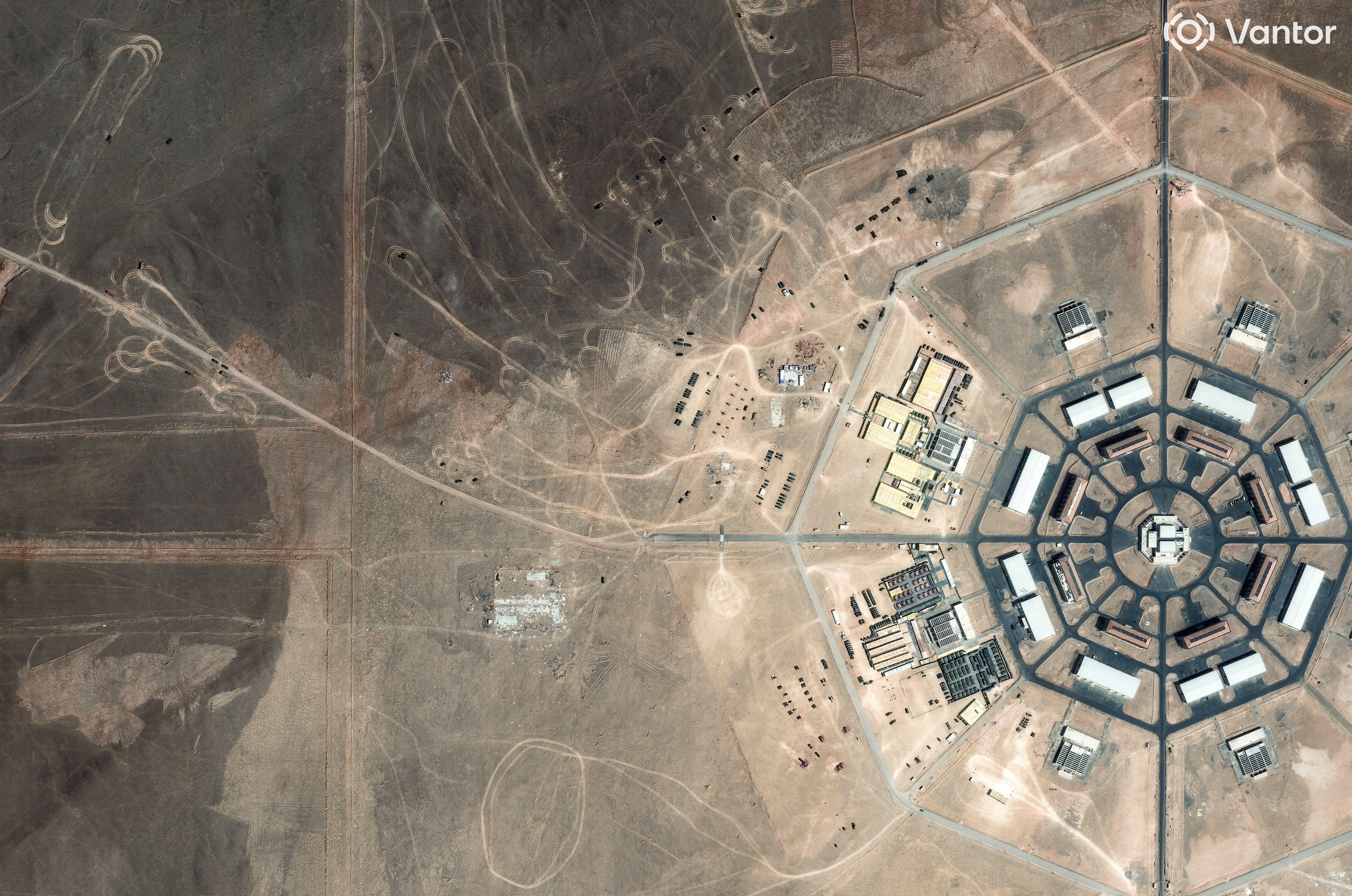
- China is building a defensive network of over 80 concrete launch pads and three octagonal command hubs near its Hami nuclear silo field in Xinjiang, to harden its land‑based nuclear forces and secure a second‑strike capability.
- Department of Defense projects China will have about 1,000 nuclear warheads by 2030, up from the roughly 600 warheads SIPRI reported in January 2025.
- Sajjad Ahamed says the survivable deterrent at Hami serves as a strategic “backstop” for conventional and gray‑zone competition over Taiwan rather than routine nuclear coercion.
- Emily Gill warns Chinese leaders fear U.S. missile defenses, precision‑strike weapons, and ISR could locate and destroy China’s relatively small nuclear force before retaliation, prompting the Hami expansion.
- Institute for Defense Analyses calls China’s nuclear buildup unprecedented since the late Cold War, projecting over 1,500 deployed warheads by 2035 and quantitative parity with the United States by the mid‑2030s.
- John Harvey argues that despite China’s shift to a larger silo‑based ICBM force, U.S. counterforce capabilities remain important for deterrence and escalation control.
- Tyler Bown recommends the United States should de‑emphasize damage‑limitation and warhead buildup, instead accept mutual vulnerability, pursue trilateral arms control with China and Russia, and strengthen its nuclear industrial base.
Why it matters: The Hami expansion strengthens China’s nuclear deterrent, narrowing U.S. options for a pre‑emptive strike and raising the risk of escalation in any Taiwan crisis; U.S. planners lose confidence in a disarming counterforce campaign and must adjust to a more survivable adversary.
Ask SkimNews