Bitcoin Drops Below $63K as Coldcard Losses Near $89M — SkimNews
Get the Finance newsletter
Daily finance — markets, central banks, M&A, the prints that move money. Free.
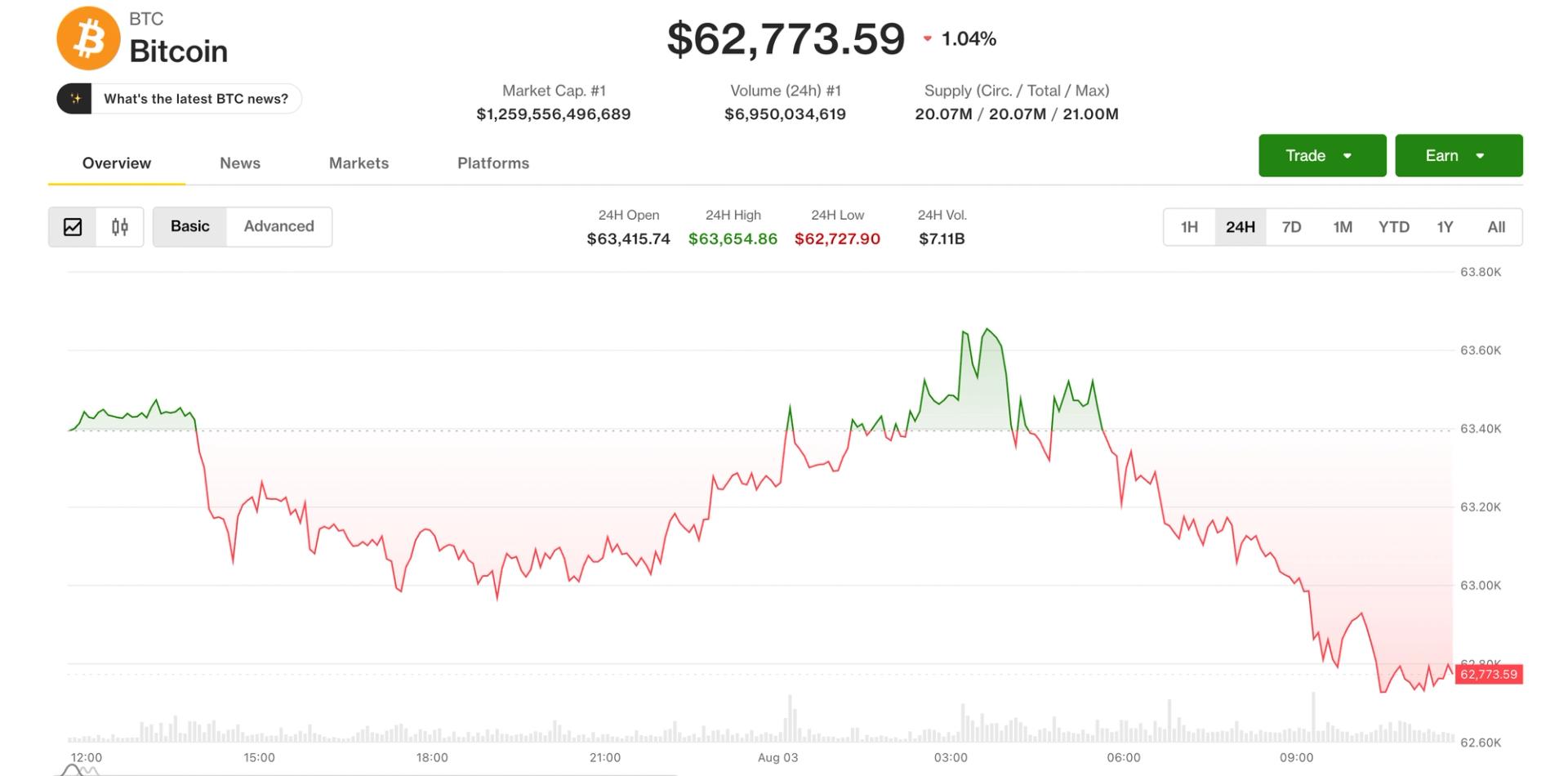
- Bitcoin dropped from a Sunday high of $63,600 to $62,800 on Monday, down 1% on the day and 4% on the week, failing to catch a bid even as oil, yields, and equities all turned favorable
- Ether fell over 1% to $1,858 — down 5% over seven days and unable to reclaim $1,900 since last week — while XRP slipped to $1.07 and Solana to roughly $73, leaving BNB as the only major in the green
- Coldcard hardware wallet exploit widened over the weekend with a third wave draining 208 BTC from 1,912 wallets, bringing cumulative losses across three waves since July 30 to 1,367 BTC (~$89 million) from 4,585 addresses
- Attack pattern shifted from large to small balances — wave one on July 30 took 1,083 BTC from 1,196 addresses, while wave three took one-fifth the bitcoin from nearly double the wallet count
- Brent crude futures for October fell as much as 7.3% to $81.55 after President Trump called off a strike on Iran and opened fresh talks, with Saudi Arabia pushing for a deal to reopen the Strait of Hormuz
- Treasury yields dropped across the curve, taking the 10-year yield down 4 basis points to 4.69% after it hit its highest since January 2025, while Nasdaq 100 futures gained 0.8% and gold added 0.3% to about $4,060
- Fund flows diverged unusually: ether funds took small inflows Friday while bitcoin funds saw outflows, in a market where bitcoin normally sets the direction
Why it matters: Falling oil, falling yields, and rising stock futures typically lift crypto — bitcoin ignored all three because the pressure is market-specific, not macro. If a Hormuz deal lands and bitcoin still can't rally, it confirms the drag is internal security rather than external economics, a much harder problem for the market to shake.
Ask SkimNews