Germany Loses UN Security Council Seat for First Time

Get the Geopolitics newsletter
Daily geopolitics — wars, elections, sanctions, the diplomatic moves that move markets. Free.
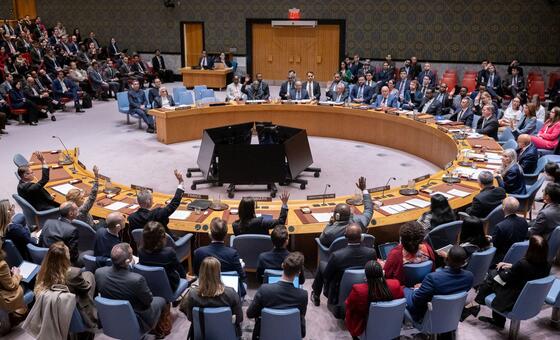
- Germany failed to win a non-permanent UNSC seat on June 3, 2026, receiving only 104 votes against the required two-thirds threshold of 127, while Portugal (134) and Austria (131) won the two Western European seats in Germany's first such defeat after six consecutive successful bids.
- Foreign Minister Johann Wadephul attributed the loss to Germany's firm support for Ukraine, which Russia opposed, and to Germany's 'special responsibility' for Israel in the West Asia conflict, suggesting these positions alienated member states.
- Chancellor Friedrich Merz told Israeli PM Netanyahu he would 'find ways and means' to let him visit Germany without facing the ICC arrest warrant issued in November 2024 for alleged Gaza war crimes, then restricted German arms sales to Israel in August 2025 before lifting the restrictions after a November 2025 ceasefire.
- Germany abstained from three UNGA resolutions on the Israel-Hamas conflict since October 2023, including the immediate ceasefire vote and the resolution on enhanced UN rights for Palestine, and refused to join a western initiative to recognize Palestine as a state.
- Merz declined to condemn the Iran-Israel-U.S. war that began February 28, 2026 as a violation of international law, saying Germany 'shares the goal of ending the terror of these regimes' alongside the U.S. and Israel, before turning critical as rising oil and gas prices hit Germany's already strained energy sector.
- The article argues Germany's selective enforcement of international law — robust on Ukraine, wavering on Israel, and initially aligned with the Iran war — may have eroded trust among Global South nations, who favored smaller European states with more consistent voting records.
Why it matters: Germany went six-for-six on UNSC bids before falling 23 votes short of the two-thirds threshold on June 3, a margin wide enough to suggest a structural repudiation rather than a narrow miss. The article ties the defeat to Merz's selective application of international law — staunch on Ukraine, ambivalent on Gaza, and initially deferential to the U.S.-Israel-Iran war coalition — and concludes that Global South nations may have chosen Portugal and Austria as safer, more principled bets on the Security Council.
Ask SkimNews