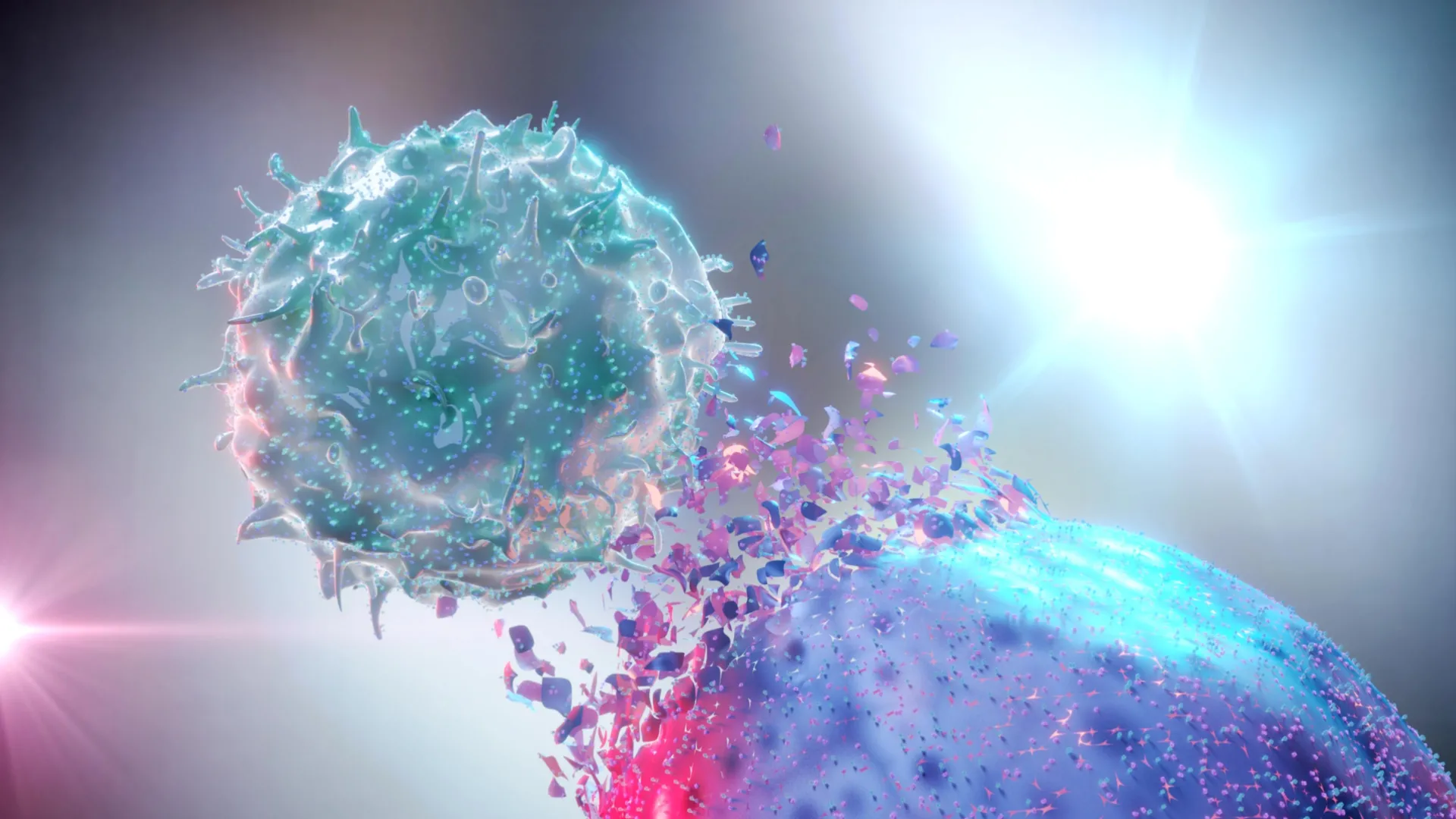
CRISPR could help doctors attack blood cancer without destroying healthy cells — SkimNews
Get the Health newsletter
Daily health & science — research, biotech, public health, the studies worth knowing. Free.
- Washington University researchers ran a 30-patient Phase 1/2 trial using CRISPR to remove the CD33 protein from donor stem cells before transplantation in patients with acute myeloid leukemia or myelodysplastic syndrome; results appeared in Nature Medicine.
- The edited product trem-cel (tremtelectogene empogeditemcel), developed by Vor Biopharma — which funded the study — achieved engraftment in all 30 patients by day 28, with platelet production returning on average by day 16, matching standard transplant recovery.
- Patients also received gemtuzumab ozogamicin, an FDA-approved CD33-targeted antibody-drug conjugate, as maintenance therapy and maintained blood cell counts across doses, suggesting the gene-edited transplant shielded them from the drug's typical blood-cell toxicity.
- A companion case published in JCO Precision Oncology described a high-risk AML patient who received CD33-deleted stem cells followed by donor-derived CD33 CAR-T cells after relapse; she entered complete remission and remained cancer-free more than a year later, with all blood cells lacking CD33.
- Seven patients died during the trial — four from cancer progression and three from transplant-related complications including kidney failure, liver toxicity, and sepsis; side effects otherwise mirrored those of standard stem cell transplantation.
- The strategy targets a core limitation of CAR-T therapy in AML and MDS: shared proteins on healthy and malignant blood cells cause CAR-T cells to destroy donor stem cells along with cancer, weakening the treatment and risking dangerous inflammation.
Why it matters: For AML and MDS patients facing relapse after stem cell transplant — a group with limited options — this approach could let doctors pair transplantation with CD33-targeted immunotherapies like CAR-T without destroying the healthy blood cells needed for recovery. All 30 patients achieved engraftment, but seven deaths, including three from transplant complications, show the risk remains steep.
Ask SkimNews