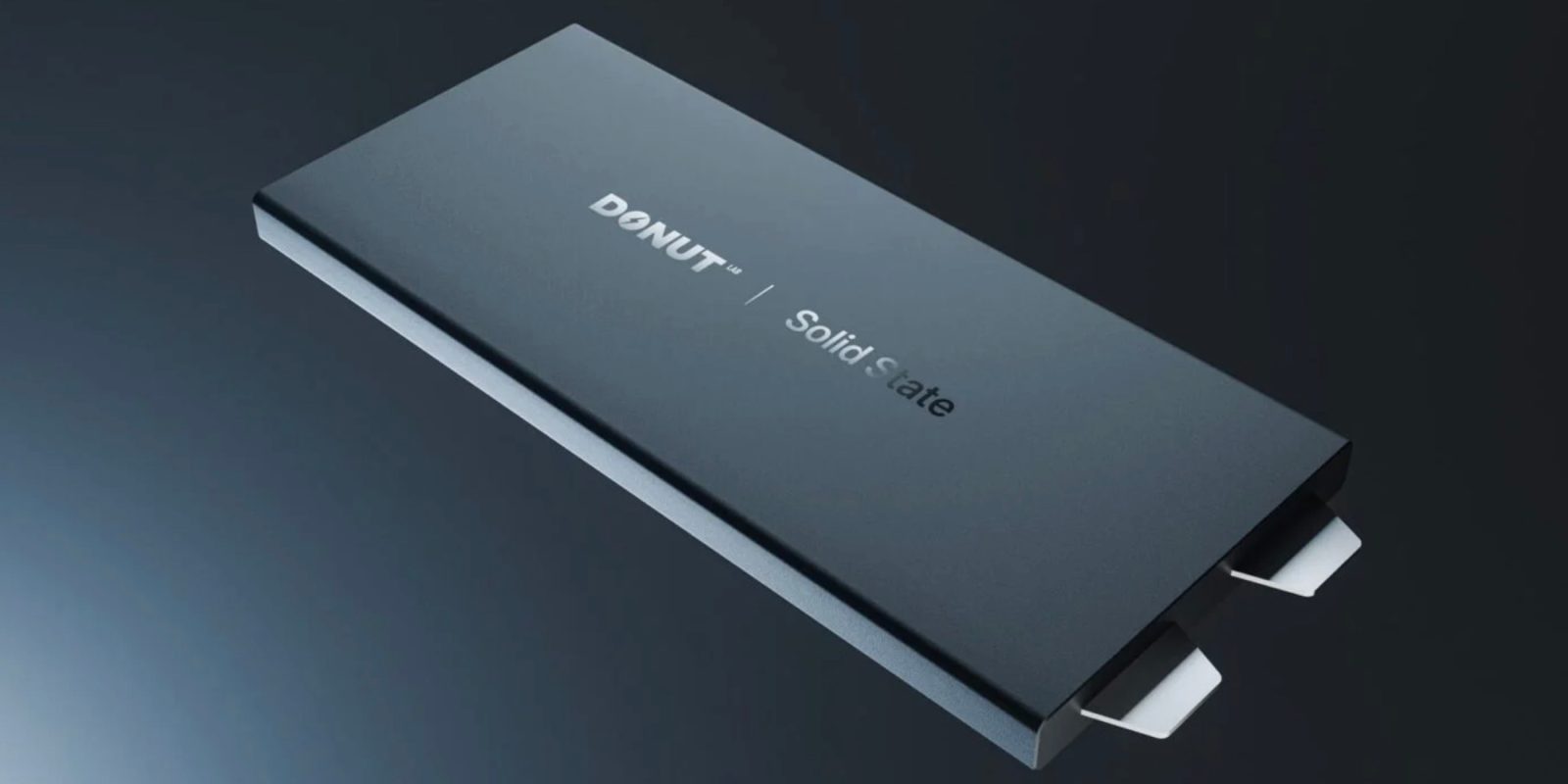
Donut Lab battery was lithium-ion, not solid-state — SkimNews
Get the Energy newsletter
Daily energy & climate — solar, EVs, oil, the policy fights and tech bets shaping the transition. Free.
- Ziroth's investigation consulted over 20 independent battery experts — including researchers from Fraunhofer, Justus-Liebig University, and Seinäjoki University — all of whom confirmed the tested cell was lithium-ion, not the sodium-ion solid-state chemistry Donut Lab had claimed.
- Electrochemical evidence proved the match: VTT voltage curves sat at 3.7–3.8V at 50% state of charge (NCM lithium-ion range), and cell expansion data showed a graphite-anode 'kink' at 50–70% SOC — a signature sodium ions are physically too large to produce. Calculated energy density came in at ~298 Wh/kg, not the claimed 400 Wh/kg.
- CT Coatings, the German company behind the technology, holds patents ranging from screen-printed paving slabs to menu folders and warning triangles; its representatives reportedly told a Fraunhofer expert they avoided lithium because it 'had nothing to do with rare earth minerals' — a basic chemistry error.
- Donut Lab raised approximately $25 million from over 1,300 shareholders — more than 900 of whom held 50 or fewer shares, representing investments of roughly $3,000 to $23,000 each — via Finland's Springvest crowdfunding platform, with CEO Marko Lehtimäki promising 'up to 10x return in 12 to 18 months.'
- Verge's 'first production motorcycle' was verifiably a pre-production vehicle for the company's internal fleet, not a consumer shipment, and Lehtimäki later admitted the 400 Wh/kg cells were not in the bikes; leaked emails show Donut Lab asking CT Coatings for proof of the claimed specs that was never provided.
- Finnish financial and criminal authorities are reportedly investigating, and the post-CES valuation of $1.25 billion now hangs over 1,300 small investors who lacked the technical resources to scrutinize the technology — a structure the investigation compared to Theranos but called more insidious for targeting retail money rather than venture capital.
Why it matters: More than 1,300 small investors — many putting in $3,000 to $23,000 based on promises of 10x returns — funded a company whose headline product did not exist, and Finnish financial and criminal authorities are now reportedly investigating. Donut Lab's $1.25 billion post-CES valuation was built on a lithium-ion cell misrepresented as a 400 Wh/kg sodium-ion solid-state battery, a gap the Ziroth investigation closed with 20 expert reviews and VTT's electrochemical data.
Ask SkimNews