U.S. Navy sends half its Japan destroyers to Iran war — SkimNews
Get the Geopolitics newsletter
Daily geopolitics — wars, elections, sanctions, the diplomatic moves that move markets. Free.
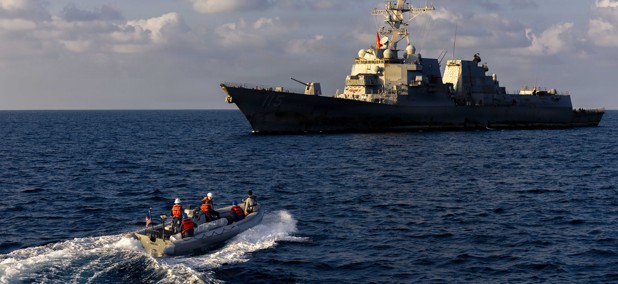
- U.S. Navy has committed five of the 10 destroyers homeported in Yokosuka, plus the Yokosuka-based aircraft carrier George Washington, to U.S. Central Command's area of responsibility to support the Iran war — described in the article as "a war of choice" — leaving half of the Japan-based destroyer force away from its home region.
- 7th Fleet sailors are being kept in the Navy Central region for a year; Navy officials have told crews of at least some of the diverted destroyers they won't return home until 2027, and one officer said the fleet has been told to expect a 17-destroyer requirement in the Middle East until 2029, which he called "insane."
- National Security Strategy — released less than a year ago — says "Preventing conflict requires a vigilant posture in the Indo-Pacific" and that the days when "the Middle East dominated American foreign policy" are "thankfully over," while the January National Defense Strategy named the homeland and deterring China as top priorities; Trump launched the Iran war five weeks later, and although Operation Epic Fury officially concluded in June, the Pentagon is keeping a large force in the region making occasional attacks.
- U.S. Pacific Command rejects the idea it is scaling back China deterrence, saying its commitment "remains steadfast" and pointing to the Keen Sword exercise with the Theodore Roosevelt carrier strike group; at TechNet Indo-Pacific in Honolulu, Deputy Commander Lt. Gen. George Rowell said deterrence is the command's "highest duty" and that the U.S. aims to establish "denial defense in the first island chain."
- Ralph Cossa of the Honolulu-based Pacific Forum called the diversion "a really big problem" for credibility and for Far East allies that plan carrier and battle-group visits months in advance: assets that would normally "show the flag" and remind allies of U.S. commitments are "nowhere to be found."
- Katherine Kuzminski of the Center for a New American Security said deploying Pacific-bound warships to the Middle East for longer than traditional rotations shows operations "are not aligning with the administration's stated national security strategy," and that the U.S. is now treating the CENTCOM area of responsibility as the region it pledged not to be bogged down in.
- China — Xi Jinping has reportedly told his military to be prepared to take Taiwan by 2027, and a Navy officer on Pacific security said most people he knows consider the Middle East drawdown China's clearest operational window for action against Taiwan if the military balance were its only consideration; Cossa said Chinese planners still factor the U.S. in, but now ask what the U.S. can do if it is there.
Why it matters: For China, the U.S. Navy's commitment of five of 10 Yokosuka destroyers and a carrier to CENTCOM — with some crews told they won't return until 2027 — weakens the deterrence Washington says it prioritizes and sharpens the 2027 Taiwan calculation. Japan and Pacific allies lose the carrier visits and flag-showing those ships provide.
Ask SkimNews